
I’ll be honest – Sofia wasn’t a city I thought much about before I landed there. I was passing through on a wider Balkans trip, figured I’d give it a day, maybe two. Three weeks later, I was still eating banitsa for breakfast every morning and wondering why nobody talks about this place. Bulgaria’s capital sits in the shadow of a proper mountain, has Roman ruins underneath its metro stations, and feeds you better for five quid than most European cities manage for fifty. Here’s what to do with your time.
The One-Day Foundation
1. Start your morning with banitsa from a proper stand
Before you do anything else, find a banitsa stand. Not a cafe. Not a hotel buffet. A stand with a queue outside it at 7:30 AM. Banitsa is phyllo dough layered with sirene (white cheese), sometimes eggs, baked until the edges shatter and the middle stays warm and creamy. It costs 1-2 BGN – less than a quid – and it’s the only breakfast that matters here. Banitsa has been feeding Bulgarians for centuries, and every neighbourhood has a spot that the locals swear is the best in the city. They’re all right. Wash it down with a boza (a fermented wheat drink that tastes better than it sounds), and you’re sorted until lunch.
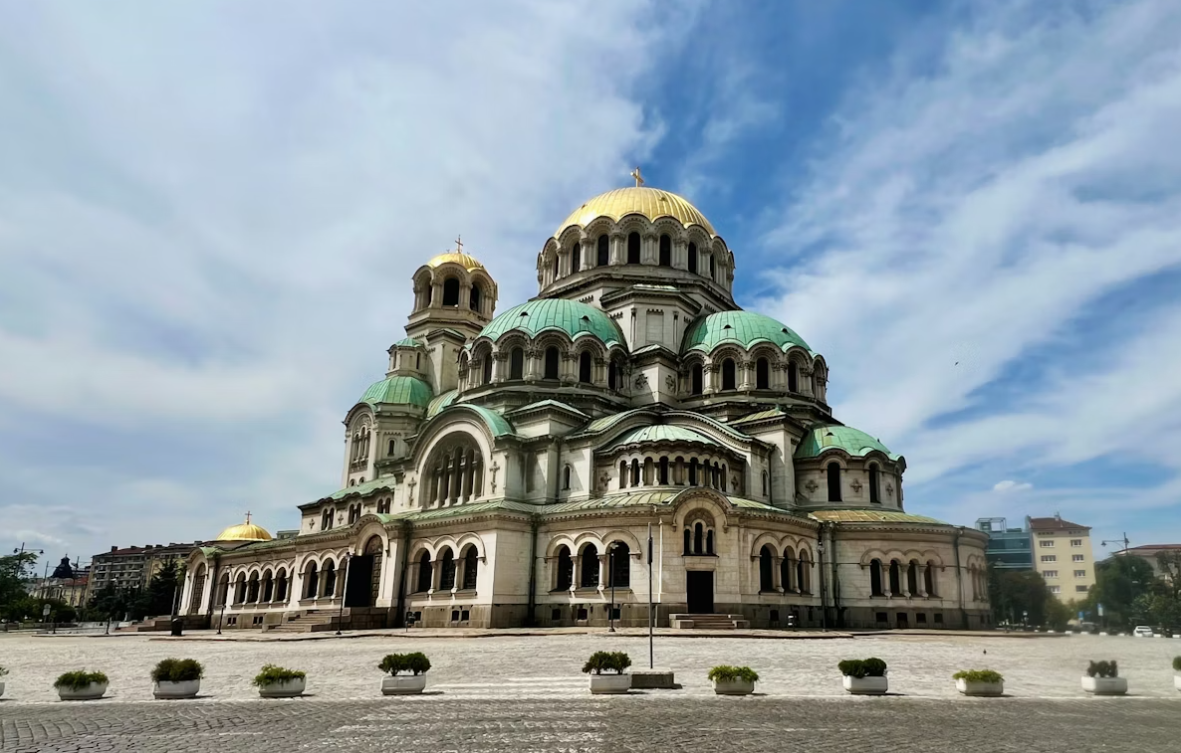
2. Walk through Alexander Nevsky Cathedral
You’ll see the golden domes before you see pretty much anything else in Sofia. Alexander Nevsky is one of the largest Eastern Orthodox cathedrals on the planet, and stepping inside feels like walking into a different century. The mosaics, the candles, the incense – it’s a lot, in the best way. Entry is free, which still surprises me for a building this impressive. Go early before the tour groups arrive, and you’ll have the space mostly to yourself. The crypt downstairs has a collection of Bulgarian icons that’s worth the small entrance fee if you’re into religious art. Even if you’re not, the building alone justifies the stop.
3. Eat your way down Vitosha Boulevard
Vitosha Boulevard is Sofia’s main pedestrian drag, and during the day it’s a solid mix of coffee shops, street vendors, and people watching. Grab a kebapche (grilled minced meat roll) from one of the stands near the south end – they cost about 2-3 BGN, and they’re proper good. Every city has its own meat obsession – whether it’s kebab culture like you find in Berlin or grilled mince like this in Sofia, street meat tells you everything about a place’s food priorities. The boulevard also gives you a clear view of Vitosha Mountain at the far end, which is a nice reminder that you’re in one of the few European capitals with a proper mountain on its doorstep.
4. Do a pub crawl and actually meet people
Look, I could tell you to wander around and find bars on your own, but Sofia’s nightlife is scattered across different neighbourhoods, and half the good places have no signage. A Sofia pub crawl sorts this out. You’ll hit four or five bars with a local guide, get welcome drinks at each, and end up at a club with free entry. The groups tend to be smaller than the massive 80-person crawls you get in Prague or Berlin, which means you actually talk to people. Most crawls run about 25-30 BGN. I went on my second night and spent the rest of the trip going out with the same group. Beats sitting alone at a rooftop bar refreshing Instagram.
Stretch to Two Days
5. Hike Vitosha Mountain without breaking a sweat (or do, your call)
The fact that you can take a city bus to the base of a proper mountain and be hiking through forest within an hour of leaving your hostel is mental. Vitosha is right there, looming over the city, and most tourists ignore it completely. The easier trails take you through beech forest to mountain huts where you can eat bean soup and drink rakia for about 8 BGN. If you’re feeling ambitious, the full push to Cherni Vrah summit takes around four hours and gives you views across the entire country. Bring water and snacks from the supermarket – the mountain restaurant prices aren’t bad, but the supermarket prices are better.
6. Sit down at a mehana and eat properly
A mehana is a traditional Bulgarian tavern, and eating at one is probably the most important food experience you’ll have in Sofia. Forget the tourist restaurants near the cathedral. Find a mehana with wooden furniture, a handwritten menu, and locals who look like they’ve been coming here for decades. Order shopska salad (tomatoes, cucumber, onion, white cheese – the national dish, basically), a clay pot of kavarma (slow-cooked meat stew), and a carafe of house wine. The whole thing will cost 25-35 BGN per person, including drinks. This is exactly the kind of food-led experience that works everywhere – just sit down, eat what the locals eat, and stop overthinking it. Pri Yafata and Hadjidraganovite Kashti are two solid picks in the centre.
7. Find the Soviet-era stuff before it disappears
Sofia’s got this fascinating architectural tension between its Ottoman past, its Soviet period, and the modern city trying to figure out what to do with all of it. The Monument to the Soviet Army in Knyazheska Garden is covered in graffiti and has been the subject of political debate for years. The Largo complex near the Presidency is pure Soviet grandeur – massive symmetrical buildings designed to make you feel small. And then there’s the Museum of Socialist Art, where Bulgaria’s communist-era sculptures and paintings are displayed without much commentary, which somehow makes them more powerful. Entry is about 6 BGN. Love it or hate it, this stuff is part of Sofia’s story, and some of it won’t be around forever.
8. Drink Bulgarian wine at a proper wine bar
Bulgaria has been making wine since the Thracians were doing it five thousand years ago, and the country’s wine tradition is one of the oldest on the planet. The reds are the stars – Mavrud is indigenous to Bulgaria and drinks like a wine that costs three times what you’ll pay here. Melnik is named after the smallest town in the country, and tastes like the earth it comes from. A glass of something properly good costs 8-12 BGN at a wine bar, and most places do tasting flights if you want to try several. Vino & Tapas in the centre is a decent shout. Just don’t fill up on wine before dinner – you’ll need the stomach space.
Go All In With Three Days
9. Take the day trip to Rila Monastery
If you’ve got a third day, get out of the city. Rila Monastery is about two hours south by bus and it’s one of the most important cultural sites in Bulgaria. The building itself is mad – striped arches, bright frescoes covering every surface, and a mountain setting that makes the whole thing feel removed from the modern world. It’s been a UNESCO World Heritage Site since 1983, and you can see why within about thirty seconds of walking through the gate. Buses run from Sofia’s Ovcha Kupel station and cost about 20 BGN return. Pack a sandwich because the food options near the monastery are limited and overpriced by Bulgarian standards.
10. Do a proper market breakfast at Women’s Market
Women’s Market – Zhenski Bazar – has been running since the 1800s, and it’s where Sofians actually buy their food. Not tourists. Locals. You’ll see vendors yelling over each other, people arguing about the quality of tomatoes, and mountains of fresh cheese, bread, and cured meats stacked on tables. Grab a burek (meat-filled pastry) from one of the stands for about 1.50 BGN, pick up some fresh produce, and assemble breakfast for less than the cost of a coffee back home. Just like hunting through the back-street markets in other European cities, the real stuff is always where the tourists aren’t. Get there by 9 AM on a weekday for the full experience.
11. End it at a rakia bar
Rakia is Bulgaria’s national spirit – a fruit brandy that’s usually grape-based here (unlike the plum versions in Serbia and Croatia) and strong enough to make your eyes water if you’re not careful. Rakia bars are everywhere in Sofia, but Rakia Raketa on Yanko Sakazov Blvd has the best selection I’ve found – dozens of artisanal rakias from small producers across the country. A glass costs 5-8 BGN, and the staff will walk you through a tasting if you ask. Order some meze alongside it – kashkaval cheese, lukanka sausage, pickled vegetables – and you’ve got a proper Bulgarian send-off. Sip slowly. This stuff demands respect.
Three days in Sofia changed how I think about Eastern European travel. The food is brilliant, the history is layered and complicated, the mountain is right there, and everything costs about a third of what you’d pay anywhere in Western Europe. Come with an open schedule and a big appetite. You’ll leave wondering why nobody told you about this place sooner.