
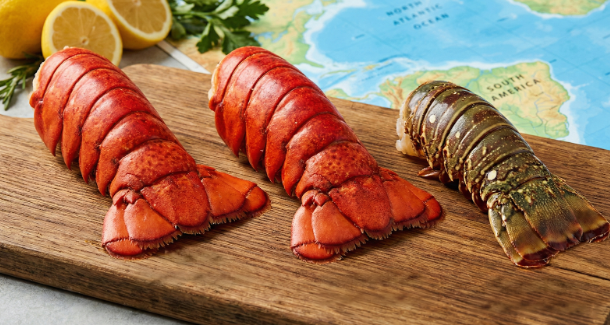
The location of the lobster’s harvest determines its taste, texture and price. Menus and supermarkets often lump them together under the generic label “lobster tails”, but there are important differences in the biological and gastronomic characteristics of cold-water tails harvested from North America versus warm-water ones from Brazil or Caribbean.
Unknowingly, consumers often purchase warm-water lobster tails, expecting the crisp, sweet bite of a Maine Lobster, only to discover the meat is soft or bland. It is important to know the difference between Canadian and Maine lobster tails, as well as how they compare with Brazilian lobster tails.
For those prioritizing texture and taste, authentic Maine lobster tails online set the benchmark. Suppliers like Lobster Anywhere focus exclusively on high-grade, cold-water options to avoid the inconsistency found in global imports.
Overview of Lobster Tail Types
The primary factor influencing lobster tail quality is water temperature. Lobsters are cold-blooded, meaning their metabolism and growth rates are determined by their environment.
Cold-Water vs Warm-Water Lobster Tails
| Feature | Cold-Water (Maine/Canada) | Warm-Water (Brazil/Florida) |
| Species | Homarus americanus (True Lobster) | Panulirus argus (Spiny Lobster) |
| Growth Rate | Slow | Fast |
| Meat Texture | Firm, crisp, succulent | Softer, fibrous, prone to mushiness |
| Flavor | Sweet, briny, clean | Mild, fishy, sometimes bland |
| Appearance | Greenish-brown shell (turns red when cooked) | Spotted, greenish, or brown shell |
This biological difference sets the stage for why pricing and culinary uses vary so drastically between regions.
Maine Lobster Tails Cold-Water Standard
Maine lobster tails come from the North Atlantic’s icy, rocky waters. The slow growth of these lobsters allows the muscle tissue to become sweeter and more dense. Maine lobster tails are widely regarded as the best in terms of premium dining.
Taste & Texture
Maine lobster meat is sweet and briny with a distinct sweetness. The texture is firm, and it holds well when cooked. The texture is firm and holds together well during cooking. Its structural integrity makes this a great choice for poaching, steaming or grilling.
Harvesting Conditions
Maine has strict regulations governing sustainable lobster sourcing. Fishermen inspect the size and condition of each catch before returning the females that are laying eggs to the water. This management is aimed at ensuring a constant supply of tails that are high quality.
Why Chefs Prefer Maine
Maine lobster is a favorite among professional chefs because it cooks evenly. The meat is virtually mush-free and shrinkage is minimal. A transparent retailer such as LobsterAnywhere will ensure that the product you purchase is authentic Homarus Americanus and not a substitute.
Canadian Lobster Tails (Cold-Water, Similar to Maine)
The Canadian lobster is also known as the Maine lobster (Homarus Americanus). The two species share the same habitat in North Atlantic, although Canadian waters can be deeper and colder.
Taste & Texture
The shells of these lobsters are thicker and more durable because the water is so cold in Canadian fishing grounds. The meat of the lobster is similar to that of Maine lobsters: it’s sweet, white and firm. Some experts claim that the colder waters produce slightly denser flesh, but the difference is not noticeable to the average consumer.
Price Difference
Due to their high catch volume and different export season, Canadian tails can be found at slightly lower prices than Maine tails. These tails are a great option for those who are on a tight budget but still want to get the best quality cold-water lobster.
When Canadian Tails Are a Good Choice
If you can’t find Maine tails, Canadian tails will do. They are a great alternative to warm-water species, and they deliver the same dining experience.
Brazilian Lobster Tails (Warm-Water Rock Lobster)
Spiny lobsters from warm water produce Brazilian lobster tails. The meat of these crustaceans is only found in the tail. Although they are available in most supermarkets, their North Atlantic counterparts differ greatly.
Taste & Texture
The metabolism of the lobster is accelerated by warm water, resulting in rapid growth. The meat becomes softer and fibrous. The taste is milder and more generic, with a seafood flavor rather than the distinctive sweetness of cold water lobster.
Common Issues
Brazilian lobster tails are often criticized for their texture. If not cooked properly, the meat can turn mushy. Processors often add sodium tripolyphosphate or other chemical additives to warm-water tails to make the meat retain more water. This can cause a metallic taste.
Why These Are Cheaper
Brazilian tails are abundant and easier to harvest in large quantities. They are frequently sold as “frozen lobster tails” without regional specification. While they serve a purpose for heavy sauces or stews where texture matters less, they are often a disappointment when served simply with butter.
Buyer Warning
Be cautious of generic labeling. If a price seems too good to be true, you are likely looking at a warm-water product. Retailers may use terms like “Atlantic” loosely to disguise the origin.
Side-by-Side Comparison
When trying to decide which lobster tail is better for your needs, this comparison highlights the trade-offs between origin and quality.
| Comparison Factor | Maine Lobster | Canadian Lobster | Brazilian Lobster |
| Water Temp | Icy Cold | Icy Cold | Warm |
| Taste Profile | Rich, Sweet, Briny | Sweet, Clean | Mild, Bland |
| Texture | Firm, Snap | Very Firm | Soft, Fibrous |
| Price | Premium | Moderate/High | Budget |
| Best Use | Steamed, Grilled, Surf & Turf | Boils, Chowders | Heavy Sauces, Stews |
Which Lobster Tail Should You Buy?

Your budget and how you intend to prepare your meal will determine the best choice.
Keep Maine lobster tails for special occasions. If you’re serving the tails simply, grilled or steamed with butter drawn from the lobster, texture and sweetness is important. This investment will yield a superior dish.
Canadian tails are a great choice for large gatherings. They offer high quality at a slightly lower price. The guests will enjoy the crunch of cold water without paying the highest price.
To Experiment: Brazilian tails work well if you’re chopping meat for a spicy dish, such as gumbo or a curry with strong flavors. The risk of an inconsistent texture is still high.
Lobster Anywhere is one of only a few retailers that offer a transparent and traceable origin.
How to Avoid Mislabeled Lobster Tails
Seafood fraud is an issue. If you are looking to purchase lobster tails in-store or online, you can identify the lower quality substitutes by identifying certain red flags.
- Avoid vague origins. Avoid packages that simply say “North American Lobster”, or “Imported.” Premium products will proudly display “Maine” and “Canadian.”
- Check the ingredients list for chemical additives. Genuine frozen lobster tails will only have one ingredient listed: lobster. If you see the words “sodium tripolyphosphate,” this is most likely a tail that has been treated in warm water.
- Cold-water tails tend to be sized strictly by weight. Bags of “random-size” tails are usually warm-water leftovers.
- Price that seems too low: The market price of premium seafood is not as low as it appears. If the price of a tail is significantly below market average, then it’s likely to be a warm water variety or an older product.
Lobster Anywhere, a reputable retailer, labels each tail with its origin – Maine and not the generic “Atlantic”, so that buyers know exactly what they’re paying for.
Conclusion
The difference between Maine and Canadian lobster tails are subtle. However, the gap between Brazilian cold-water lobster tails and Brazilian warm-water lobster tails can be huge. Maine and Canadian lobster tails are firm and sweet, which is what makes a great seafood meal. Brazilian tails are cheaper but often lack the signature taste and texture.
It is better to opt for cold-water lobsters when quality matters. LobsterAnywhere ships premium tails that are sustainably sourced to anyone looking for cold-water Maine lobsters. Prioritizing the origin of your food will ensure that you get the best taste.