
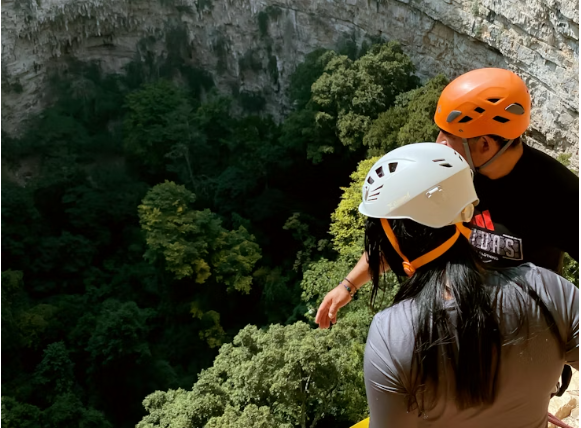
For many travelers, the standard vacation involving beaches and museums no longer provides the necessary spark. A growing segment of the tourism industry now caters to those seeking to push their boundaries, both physically and mentally, by engaging directly with the planet’s most formidable landscapes. This pursuit transforms a simple trip into a profound personal endeavor, where the reward is not just a photograph, but a deeply earned sense of accomplishment. The following sections explore the primary categories within this demanding realm of travel.
The Ultimate Challenge: High-Altitude Ascents
Scaling the world’s tallest peaks represents the most iconic and severe form of adventure travel. These expeditions are far removed from casual trekking; they are prolonged battles against thin air, volatile weather, and one’s own limitations. Success demands meticulous preparation, specialized technical skills, and often a significant financial and time investment. Participants typically spend weeks acclimatizing, moving between progressively higher camps, and waiting for a narrow window of acceptable conditions for a summit push.

The spectrum of such climbs is broad, offering routes for varying levels of expertise. While the Himalayas house the most famous objectives, other ranges present slightly more accessible, though still formidable, opportunities. The physical and psychological toll is immense, but the perspective gained from standing atop a continental crown is unparalleled. The world of guided extreme tours in mountaineering often includes the following notable objectives:
- Mount Everest (8,848 m): The apex of climbing ambitions. The commercialization of Everest has created a structured, though perilous, pathway for skilled climbers, yet the mountain’s extreme altitude and notorious hazards like the Khumbu Icefall ensure it remains a lethal and life-altering challenge.
- Manaslu (8,163 m): The eighth-highest mountain, sometimes considered a preparatory climb for Everest. Its remote location in Nepal and sustained technical sections on its standard route offer a slightly less crowded but still serious high-altitude experience.
- Mount Toubkal (4,167 m): As the highest peak in North Africa’s Atlas Mountains, Toubkal serves as an excellent introduction to altitude and winter mountaineering for those building experience. Non-technical routes in summer become snow-clad adventures in winter.
- Aconcagua (6,961 m): The highest summit in the Americas is often described as the highest “walk-up” mountain, as its normal route does not require ropes or technical climbing. However, its extreme altitude, fierce winds, and rapid weather changes make it a stern test of endurance and acclimatization.
Beyond the summit moment, these journeys foster a unique camaraderie among team members and a profound respect for the mountain environment. The descent, ironically, is where many accidents occur, requiring sustained focus long after the primary goal has been achieved.
Journeys on Foot: Long-Distance Trekking Trails
If vertical ascents represent a focused assault on height, long-distance hikes offer a horizontal immersion into a region’s soul. These adventures unfold over days or weeks, with travelers carrying everything needed for survival on their backs or supported by pack animals. The rhythm of life simplifies to walking, eating, and resting, allowing for a deep connection with the changing landscapes and cultures traversed. Such adventure tours test stamina and resolve through cumulative effort rather than a single dramatic push.

The beauty of these expeditions lies in their accessibility; many require determination more than technical climbing prowess. Trails wind through ancient pathways, coastal cliffs, and remote villages, revealing a country’s character inaccessible by road. Each day brings new vistas and small, personal victories over fatigue. A premier example of this category is the Lycian Way in Turkey.
The Lycian Way is a 540-km marked footpath along the Turquoise Coast, blending staggering natural beauty with the ghosts of ancient civilizations. The experience is characterized by:
- Historical Tapestry: The trail passes directly by the ruins of Lycian cities like Olympos and Patara, as well as countless rock-cut tombs and sarcophagi, making history an immediate part of the landscape.
- Geographical Diversity: Hikers navigate a dramatic sequence of pine forests, rugged mountain slopes, secluded beaches, and traditional olive groves, often with the Mediterranean Sea glittering far below.
- Cultural Encounters: The route dips into small villages and farming hamlets, offering chances for authentic interactions and sampling local cuisine far from resort crowds.
- Logistical Flexibility: Unlike remote wilderness treks, the Lycian Way allows for resupply in villages and offers a range of accommodation from camping to family-run pensions, enabling hikers to tailor the challenge to their preference.
Completing a long trail imparts a powerful sense of self-reliance and a narrative of journey that a flight or drive cannot provide. The blisters and aching muscles fade from memory, leaving behind a vivid tapestry of moments lived intensely outdoors.
Explorations of Culture and Terrain: Themed Expeditionary Travel
Not all profound adventures are defined solely by physical exertion. Another category combines demanding travel with deep cultural or historical exploration, often in challenging environments. These excursion tours are intellectually and physically engaging, focusing on reaching and comprehending remote sites of human achievement. The journey to the location is an integral part of the experience, frequently involving hikes, unconventional transportation, and adaptation to basic living conditions

A paradigm of this style is an expedition focused on the Inca civilization in Peru. The destination is, of course, the iconic Machu Picchu, but the true adventure lies in the multitude of ways to approach it, each offering a different perspective on the Andes and their ancient inhabitants. This goes far beyond a standard bus tour, immersing the traveler in the landscape that shaped the Inca worldview.
Such a journey might encompass several key elements that distinguish it from conventional tourism:
- The Inca Trail Trek: The classic four-day hike is a pilgrimage along original Inca pathways, passing through cloud forests and over high mountain passes like Dead Woman’s Pass, culminating at the Sun Gate for a dawn arrival at Machu Picchu.
- Alternative Treks: Less crowded routes, such as the Salkantay Trek or the Lares Trek, offer equally stunning scenery and pass through traditional Quechua communities, providing a broader view of contemporary Andean life alongside archaeological wonders.
- High-Altitude Adaptation: Exploring Cusco, the Sacred Valley, and sites like the fortress of Sacsayhuamán requires acclimatization to elevations above 3,000 meters, adding a physiological layer to the challenge.
- Contextual Depth: A meaningful expedition includes understanding the Inca engineering prowess at Ollantaytambo, the agricultural experimentation at Moray, and the history of Spanish conquest, weaving a complex narrative that makes the final arrival at Machu Picchu a truly earned revelation.
This form of travel demonstrates that adventure can be cerebral as well as physical. The fatigue from a day’s hike is complemented by the enrichment of understanding a sophisticated culture that mastered a formidable environment, leaving behind stones that tell a story of empire, astronomy, and resilience.