
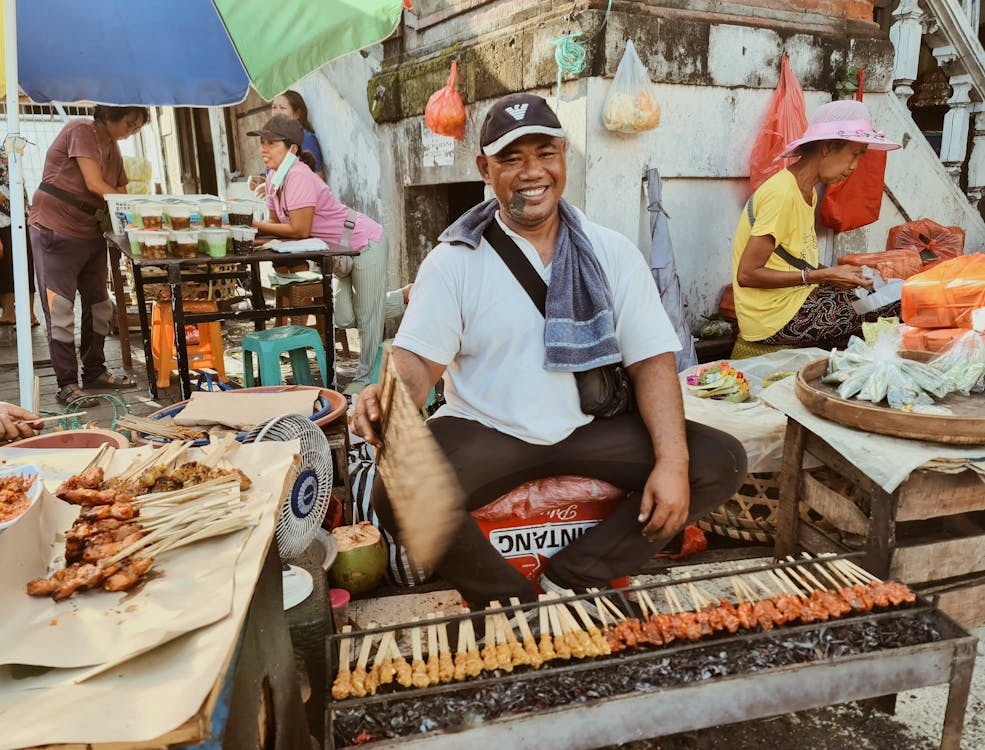
Bali does not reveal itself in a single glance. It unfolds slowly—through the scent of charcoal grills at dusk, the sound of scooters idling beside food carts, and the rhythm of daily offerings being placed before sunrise. While the island is often framed through beaches and temples, its true character lives in its markets and streets, where everyday life happens without ceremony.
Before stepping into these food-filled spaces, most travelers complete their entry formalities, including the Bali arrival tax, which is now part of the standard process for international visitors. The formality of arrival contrasts sharply with what follows. Bali’s markets are informal, intuitive, and deeply human—places where the island stops being an image and starts becoming a lived experience.
Ubud Market: Tradition Served Daily
Ubud Market sits at the cultural heart of Bali, and eating here feels like stepping into the island’s daily rhythm rather than a curated experience. Early mornings belong to locals buying produce and prepared foods, while later hours see simple eateries serving rice-based dishes, grilled vegetables, and spiced meats.
The food reflects Bali’s agricultural roots—ingredients are seasonal, preparations are familiar, and recipes are rarely altered. Many stalls have served the same dishes for years, sometimes decades. Eating at Ubud Market is unhurried; meals follow the pace of conversation, not schedules. It’s where Balinese food exists as routine, not performance.
Gianyar Night Market: Feeding the Evening Crowd
As daylight fades, Gianyar Night Market comes alive. This is where locals gather after work—families, drivers, vendors, and students all moving through tightly packed food lanes. The offerings are practical and filling: skewered meats, rice cakes, noodle soups, and sweet snacks prepared quickly and eaten standing or seated on plastic stools.
The market serves function over form. Meals are affordable, portions are generous, and speed matters. Eating here shows how Bali feeds itself when the workday ends—efficiently, communally, and without excess. The noise, heat, and movement are part of the experience, not distractions from it.
Badung Market, Denpasar: Everyday Eating at Scale

Badung Market in Denpasar is one of the island’s most important food hubs, operating nearly around the clock. This is where vendors, home cooks, and small eateries source ingredients—and where prepared food quietly supports the city’s daily routines.
The meals here are not designed for visitors. They are meant for repetition: the same breakfast stall, the same lunch counter, the same flavors day after day. Trust defines the relationship between vendor and customer. People return because consistency matters more than novelty. Dining at Badung Market feels less like exploration and more like briefly stepping into someone else’s normal life.
Kuta Backstreets: Street Food Beyond the Beach
Away from Kuta’s main roads, the backstreets tell a different food story. Here, small carts and roadside grills serve workers finishing late shifts and locals navigating the area daily. The food is fast, smoky, and straightforward—grilled chicken, rice parcels, fried snacks, and sweet drinks.
These streets operate on movement. Vendors depend on foot traffic, regulars, and timing. Eating in Kuta’s side streets is brief but grounding. It shows how Bali’s most visited area still functions as a living place, not just a destination.
What These Markets Say About Bali
Eating across Bali’s markets reveals an island shaped by repetition, balance, and practicality. Food is not an event—it is a daily anchor woven into work, worship, and rest. Each market serves a different role, but all follow the same quiet rule: meals must be accessible, familiar, and sustaining.
Ubud reflects tradition, Gianyar shows evening energy, Denpasar supports scale, and Kuta’s backstreets expose movement. Together, they form a complete picture of Bali beyond postcards.
The streets strip away spectacle and leave rhythm. They show how people eat without excess, how culture survives through habit, and how the island lives—one market, one stall, one plate at a time.