
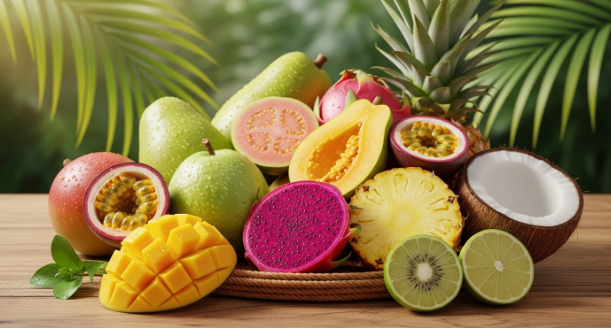
I used to spend $50 a month on those premium immune supplements. Vitamin C tablets, zinc lozenges, all that stuff. Then I got curious about where those supplements actually came from.
That’s when I started looking at what people in tropical climates have been eating for thousands of years. They weren’t taking pills. They were eating mangoes, papayas, and pineapples.
A mango gives you beta-carotene, fiber, enzymes, and compounds that work together in ways supplement companies still don’t fully understand. Your immune system doesn’t run on single nutrients. It runs on combinations.
Tropical Fruits Immunity Power Comparison
| Fruit | What It Does | Vitamin C | Why It Matters |
| Mango | Boosts vision & immunity | 36mg per 100g | Strengthens white blood cells |
| Papaya | Improves digestion & defense | 60mg per 100g | Helps nutrient absorption |
| Pineapple | Reduces inflammation | 47mg per 100g | Stops chronic damage |
| Guava | Massive immune boost | 228mg per 100g | Highest vitamin C available |
| Passion Fruit | Fights free radical damage | 30mg per 100g | Slows immune aging |
| Dragon Fruit | Feeds good gut bacteria | 3mg per 100g | 70% of immunity is in your gut |
| Kiwi | Protects cell walls | 112mg per 100g | Vitamin E is rare in fruits |
| Acai Berry | Cellular damage fighter | 15mg per 100g | Most potent antioxidant |
| Coconut | Acts as an antiviral | 4mg per 100g | Kills certain bacteria |
| Lime | Quick nutrient boost | 29mg per 100g | Helps your body absorb other nutrients |
Why You’re Probably Eating the Wrong Things
Let me be straight with you. Most people know fruit is healthy. They just don’t know why, so they eat whatever’s convenient. A banana here, an apple there. Then they wonder why their immune system is still weak.
Your body needs specific nutrients to build a strong immune response. Vitamin C, vitamin A, zinc, antioxidants, and enzymes. These aren’t optional. They’re how your immune cells actually function. Without them, your white blood cells are basically working with one hand tied behind their back.
Tropical Fruit Boxes actually make sense. Instead of wasting time hunting for quality fruit, you get it delivered fresh. It’s a small thing, but it’s the difference between having fresh mango in your kitchen on Tuesday versus not having it at all.
1. Mango
Last summer, I ate a mango every morning for three weeks straight. No supplements, no pills, just one mango with breakfast. By week two, I noticed I wasn’t getting those afternoon energy crashes. By week three, I realized I hadn’t been sick in over a month.
Benefits:
- Converts to vitamin A to train white blood cells
- 1,200 micrograms of beta-carotene per medium fruit
- Enzymes support digestive health (70% of immunity is in your gut)
- Buy tropical mangoes fresh for peak nutrition
2. Papaya
I was stuck with sluggish digestion for years. Then I started adding papaya to my breakfast routine. Within a week, my digestion completely changed. I was absorbing more nutrients, feeling fuller longer, and my energy was more stable.
Benefits:
- Papain enzyme breaks down proteins for better nutrient absorption
- Packed with 60mg of vitamin C per 100g
- Black seeds have natural antimicrobial properties
- Strengthens the immune response speed
- Easy to eat: cut in half, scoop with a spoon
3. Pineapple
Think of chronic inflammation like a slow fire burning inside your body. It exhausts your immune system over time. Pineapple contains bromelain, an enzyme that helps put out the fire.
Benefits:
- Bromelain enzyme reduces chronic inflammation
- Contains 47mg of vitamin C per 100g
- Manganese supports immune-building compounds
- Works best fresh (canned destroys the enzymes)
- Protects your immune system from exhaustion
4. Guava
Guava has 228 milligrams of vitamin C per 100 grams. An orange? 53. If you feel a cold coming on, guava is the fastest way to flood your system with what your immune cells need to fight it.
Benefits:
- 228mg of vitamin C per 100g (4x more than oranges)
- Floods your system with immune-fighting power
- Works quickly when illness approaches
- Harder to find but worth searching for
- Eat fresh or add to smoothie bowls
5. Passion Fruit
Oxidative stress accelerates cellular aging, including in immune cells. Passion fruit is packed with flavonoids and polyphenols that fight stress directly.
Benefits:
- Flavonoids fight oxidative damage
- Polyphenols slow immune cell aging
- Seeds and pulp contain all the nutrients
- Improves gut health for stronger immunity
- Cut in half and scoop with a spoon
6. Dragon Fruit
Your gut bacteria are like an army protecting your immunity. Dragon fruit is loaded with prebiotics—food for the bacteria you want. A stronger microbiome means stronger immunity.
Benefits:
- Tiny black seeds are packed with prebiotics
- Soluble fiber feeds beneficial gut bacteria
- Strengthens the foundation of your immunity (70% happens in your gut)
- Looks cool, works quietly
- Eat straight or add to smoothie bowls
7. Kiwi
Kiwi has more vitamin E per fruit than almost any other fruit. Vitamin E protects your cell membranes, the walls that keep your cells healthy and strong. Without it, your immune cells can’t function properly.
Benefits:
- High in vitamin E (rare in fruits)
- 112mg of vitamin C per two fruits
- Protects cell membranes from damage
- Enzymes support digestion
- Eat the skin for maximum nutrients
8. Acai Berries
These small berries pack more antioxidant power than most fruits. They contain anthocyanins, the same compounds that make blueberries blue, and they fight cellular damage at a deep level.
Benefits:
- Anthocyanins fight cellular damage
- Most potent antioxidant available in fruit form
- Works even when frozen
- Flash freezing preserves nutrients
- Add one tablespoon to smoothies or yogurt
9. Coconut
Coconut meat contains lauric acid, which your body converts to monolaurin. This compound has been studied for antiviral and antibacterial properties. That’s why coconut’s been used medicinally for thousands of years.
Benefits:
- Lauric acid has antiviral properties
- Monolaurin fights certain bacteria
- Coconut water is full of electrolytes
- Supports immunity even during illness
- Eat fresh, drink the water, use the butter
10. Lime
Lime has about 29 milligrams of vitamin C per fruit, plus limonene, a compound studied for immune support. More importantly, lime is something you can actually use every single day.
Benefits:
- 29mg of vitamin C per fruit
- Limonene compound supports immunity
- Acid helps your body absorb other nutrients
- Use daily in meals and drinks
- Squeeze into water, fish, smoothies
FAQ
- Can you eat too much tropical fruit?
You’d have to really try. The concern people mention is fructose content, but fruit is nothing like sugar. It contains fiber, which affects how your body processes it. One to three servings per day are safe and recommended by most nutritionists.
- Do frozen tropical fruits have the same benefits?
Mostly yes. Flash freezing locks in nutrients before they degrade. A frozen mango that was frozen fresh is often more nutritious than a “fresh” mango that’s been sitting in a store for two weeks. If you can’t get fresh, frozen is genuinely the better choice.
- Which one has the most vitamin C?
Guava by a mile. 228 milligrams per 100 grams. Kiwi comes second with 112. If you specifically want vitamin C density, those two are your answer.
- Is organic worth the money?
For some fruits, yeah. Mangoes and papayas have thick skins that block pesticides, so regular washing is fine. For fruits, you can eat the skin on kiwi and passion fruit— organic makes sense if you can afford it. But eating regular tropical fruit beats eating no tropical fruit.