
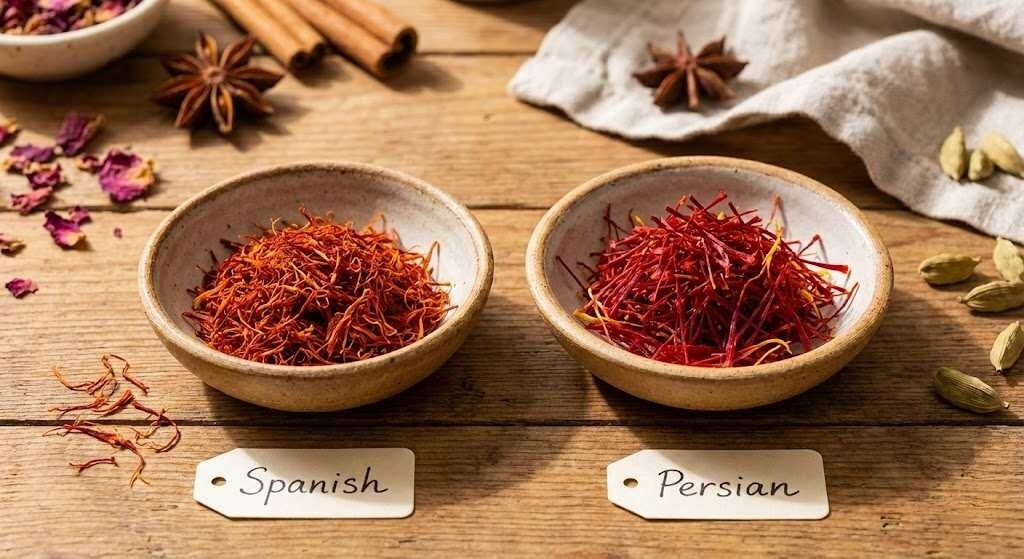
Saffron is widely recognized as the most valuable spice in the world, known for its vibrant color, distinctive aroma, and unique flavor. Among the different varieties available in the global market, two origins dominate the discussion: Spanish saffron and Persian saffron. Both types come from the same plant species, Crocus sativus, but differences in climate, cultivation techniques, processing methods, and grading systems create noticeable variations in quality, potency, and price. Understanding the real differences between Spanish and Persian saffron helps consumers, chefs, and businesses choose the right product based on flavor intensity, coloring power, and value. Those looking to buy saffron often favor Persian varieties for their stronger color and richer aroma
Origin and Cultivation
The geographical origin of saffron significantly influences its characteristics. Climate, soil composition, and traditional farming methods all play a role in determining the final quality of saffron threads.
Where Spanish Saffron Comes From
Spanish saffron is mainly cultivated in the La Mancha region of Spain. This area has a semi-arid climate with hot summers and cold winters, conditions that are favorable for saffron cultivation. Farmers in this region still rely heavily on traditional harvesting methods, picking saffron flowers by hand during a very short harvest period each autumn. After harvesting, the stigmas are carefully dried using traditional techniques that enhance aroma and flavor. Authentic Spanish saffron is often protected by a certification system known as PDO (Protected Designation of Origin), which guarantees that the product was grown and processed in the La Mancha region according to strict quality standards.
Where Persian Saffron Comes From
Persian saffron is primarily produced in Iran, which dominates the global saffron market. In fact, Iran accounts for roughly 90% of the world’s saffron production. The most important cultivation regions are located in South Khorasan and Razavi Khorasan provinces, where the dry climate and mineral-rich soil create ideal growing conditions. Afghanistan has also become a growing saffron producer in recent years, particularly in the Herat region, where environmental conditions closely resemble those of eastern Iran. These regions produce saffron with strong coloring power and intense aroma, making Persian saffron highly sought after worldwide.
Color, Aroma, and Flavor Comparison
One of the most noticeable differences between saffron varieties is their sensory profile. The appearance, fragrance, and taste of saffron threads can vary depending on origin and processing techniques.
Spanish Saffron Characteristics

Spanish saffron threads are usually slightly shorter and may contain small yellow portions near the base of the stigma. In terms of flavor and aroma, Spanish saffron is generally milder. It tends to have a floral fragrance with subtle honey-like and earthy notes. Because of this balanced flavor profile, Spanish saffron is often preferred in Mediterranean cuisine, where saffron is used to complement dishes rather than dominate them.
Persian Saffron Characteristics
Persian saffron is widely recognized for its long, thick, deep red stigmas. High-quality grades often consist entirely of red threads with little or no yellow section. Its aroma is typically stronger and more complex than Spanish saffron, while the flavor tends to be richer and slightly more intense. Due to its high coloring strength and powerful aroma, Persian saffron is commonly used in rice dishes, desserts, beverages, and traditional Middle Eastern cuisine.
Chemical Composition and Crocin Content
The overall quality of saffron is determined by three key natural compounds:
- Crocin – responsible for the strong golden color
- Picrocrocin – responsible for saffron’s unique taste
- Safranal – responsible for the characteristic aroma
These compounds are measured according to the ISO 3632 international saffron standard, which classifies saffron based on chemical strength and purity. Persian saffron often shows higher crocin values, frequently reaching levels above 250 on the ISO scale, which indicates stronger coloring power. Spanish saffron generally ranges between 180 and 210, still considered high quality but usually slightly less potent. This difference explains why smaller quantities of Persian saffron can sometimes produce stronger color and flavor in cooking.
Grading and Quality Standards
Different saffron-producing countries use their own grading systems to classify saffron based on thread quality and purity.
Spanish Saffron Grades
Spain uses several commercial grades such as:
- Coupe – the highest quality consisting mostly of red stigmas
- La Mancha – premium saffron often certified with PDO
- Rio and Sierra – lower commercial grades
The La Mancha PDO certification also ensures traceability and strict quality testing.
Persian Saffron Grades
Persian saffron is categorized into several well-known grades:
- Super Negin – the highest quality with long thick threads
- Negin – premium grade widely exported
- Sargol – all-red stigmas but shorter threads
- Pushal – includes some yellow styles
Among these, Super Negin and Negin are considered the most valuable and are often exported to international markets.
Price Comparison
Price differences between Spanish and Persian saffron are influenced by production volume, certification systems, and market supply. Spanish saffron tends to be more expensive because production is relatively limited and PDO certification increases costs. Prices typically range between $8 and $15 per gram in retail markets. Persian saffron is usually more affordable due to higher production volumes and stronger coloring power. Depending on the grade and supplier, prices generally range between $3 and $8 per gram. For many restaurants and bulk buyers, Persian saffron offers a better balance between potency and price.
Culinary Uses and Popularity
Both types of saffron are widely used in international cuisine, but each has become associated with different culinary traditions.
Spanish Cuisine
In Spanish gastronomy, saffron plays an essential role in dishes such as:
- Paella
- Seafood stews
- Fabada (traditional bean stew)
Spanish saffron’s milder flavor allows it to blend smoothly with other Mediterranean ingredients without overpowering the dish.
Persian and Middle Eastern Cuisine
Persian saffron is deeply integrated into Iranian and Middle Eastern cooking. It is commonly used in:
- Saffron rice dishes
- Kebabs and marinades
- Traditional desserts like Sholeh Zard
- Saffron tea and beverages
Because of its stronger aroma and coloring ability, Persian saffron often becomes a central flavor component in these recipes.
Which One Is Better? (Expert Opinion)
Choosing between Spanish and Persian saffron ultimately depends on what you value most. Persian saffron generally offers:
- Higher coloring strength
- Stronger aroma
- Better price-to-performance ratio
Spanish saffron, on the other hand, is valued for:
- Strict European quality certification
- Consistent flavor profile
- Prestige in traditional European cuisine
For large-scale cooking and stronger flavor impact, Persian saffron is often considered the more practical option. However, for classic Mediterranean dishes or culinary authenticity, Spanish saffron remains highly respected.
How to Identify Genuine Saffron

Because saffron is expensive, counterfeit products are common. There are a few simple ways to identify authentic saffron.
Warm Water Test
Place a few threads in warm water. Real saffron slowly releases a golden color while maintaining its structure.
Paper Test
Press saffron threads between moist paper. Authentic saffron will not leave artificial dye stains.
Final Verdict
Both Spanish and Persian saffron are premium spices with long culinary traditions. However, differences in strength, price, and usage make each suitable for different needs. Spanish saffron is known for its balanced flavor and strict certification systems such as Denominación de Origen Protegida La Mancha. In contrast, saffron produced in Iran and Afghanistan is widely valued for its stronger color, richer aroma, and better price-to-quality ratio. For consumers who want intense coloring power and aroma, Persian saffron is often the preferred option. Many global buyers looking to buy saffron for premium cooking choose Persian varieties, while chefs preparing classic Mediterranean dishes may prefer the more delicate profile of Spanish saffron.
FAQs
- What is the main difference between Spanish and Persian saffron?
The biggest differences lie in aroma strength, coloring power, and price. Persian saffron usually contains higher crocin levels, making it more potent and cost-effective. - Can both types be used in the same recipe?
Yes, but mixing them may alter the intended flavor profile of a dish. Most chefs recommend using one type consistently.
- Which saffron produces a stronger color?
Persian saffron generally has higher crocin concentration, which results in stronger coloring ability.
- Is Persian saffron always high quality?
Not necessarily. Quality depends on the grade and supplier. Premium grades such as Super Negin and Negin are considered the highest quality.