
Look, I’m just going to say it. If you haven’t eaten your way through Rome, you haven’t really eaten. Period. I’ve stuffed my face in cities all over the world, from Bangkok night markets to Mexico City taquerias, and nothing – absolutely nothing – hits quite like food in Rome, Italy.
This isn’t a city where you “grab a bite.” This is a city where a random Tuesday lunch at some hole-in-the-wall trattoria will bring you closer to a spiritual experience than any church ever could. And trust me, Rome has plenty of churches.
It Starts in the Streets
The thing about Rome Italy cuisine is that it doesn’t try to impress you. It doesn’t need to. There are no molecular gastronomy gimmicks here, no deconstructed nonsense on oversized plates. What you get is centuries of tradition, killer ingredients, and grandmas who would rather die than let you mess with their recipes.
Walk through any neighborhood in the early morning and the smell hits you before anything else. Fresh bread baking. Espresso pulling. Porchetta slow-roasting somewhere behind a counter that hasn’t changed since your grandparents were alive. Rome doesn’t wake up gently – it wakes up hungry.
And honestly? The best way to really dive into all of this is to let someone who knows the city guide you through it. There are some amazing city tours in Rome that take you through neighborhoods like Trastevere, where cobblestone streets are lined with family-run spots that have been serving the same recipes for generations. You’ll walk through one of the most picturesque quarters in the entire city, sampling everything from supplì to fresh pasta to porchetta sandwiches, while learning the stories behind each dish. It’s one of those experiences that completely changes the way you think about Italian food – because you’re not just eating, you’re understanding why Romans are so damn passionate about what ends up on their plate.
The Holy Trinity: Carbonara, Cacio e Pepe, and Amatriciana
You cannot talk about Rome traditional food without addressing these three. They’re sacred. Romans will actually get offended if you do them wrong. And after tasting the real thing, you’ll understand why.
Carbonara is not what you think it is. Forget everything you’ve ever made at home with cream and bacon. Real Roman carbonara is egg yolks, guanciale (that’s cured pork cheek, not pancetta, and definitely not bacon), Pecorino Romano, black pepper, and pasta – usually rigatoni or spaghetti. That’s it. No cream. Ever. The silky sauce comes entirely from emulsifying the egg and cheese with starchy pasta water. When it’s done right, it coats every single strand like liquid gold.
Cacio e Pepe is even more insane because it’s literally just three ingredients: pasta, Pecorino Romano, and black pepper. That’s all. And yet getting it right is one of the hardest things in Italian cooking. The cheese has to melt into this creamy, peppery sauce without clumping. When a chef nails it, you’ll wonder how something so simple can taste so complex. When they don’t? Clumpy cheese disaster. Choose your restaurants wisely.
Amatriciana rounds out the trio with a tomato-based sauce, guanciale, Pecorino, and a little chili. It’s bold, it’s punchy, and it’s the kind of dish that makes you order a second plate before you’ve finished the first.
Street Eats That’ll Change Your Life
Rome’s street food game is absolutely elite. Forget what you know about Italian food being all sit-down, white-tablecloth dining. The real soul of this city lives on the streets.
Supplì are Rome’s answer to arancini, and honestly? They’re better. These fried rice balls are stuffed with ragù and mozzarella, and when you pull them apart, the cheese stretches into long strings – that’s why they call them “supplì al telefono.” The cheese looks like a telephone cord. Old school reference, but it works.
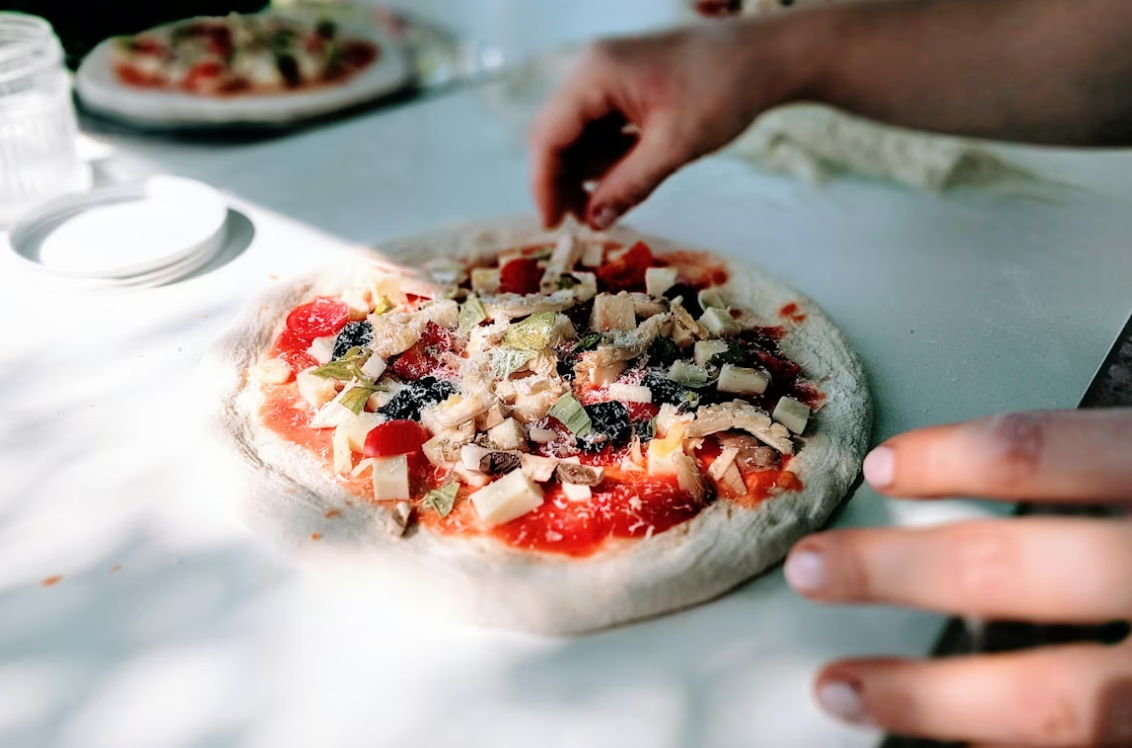
Pizza al taglio is pizza cut by the slice and sold by weight. You point, they cut, they weigh, you pay. Simple as that. The dough is thick, airy, and crispy on the bottom. Toppings range from classic margherita to potato and rosemary to mortadella and burrata. Places like Bonci near the Vatican have turned this into an art form.
Trapizzino is a newer invention but already a Roman classic. It’s a triangular pocket of pizza dough stuffed with traditional Roman fillings like chicken cacciatore, braised oxtail, or eggplant parmigiana. It’s basically the most genius street food crossover ever created.
And then there’s porchetta – slow-roasted pork that’s been seasoned with garlic, rosemary, and fennel, rolled up and cooked until the outside is shatteringly crispy and the inside is melt-in-your-mouth tender. Get it in a sandwich from a market stall and try not to make embarrassing sounds in public. I dare you.
The Jewish Ghetto: Rome’s Secret Food Weapon
One of the most underrated food neighborhoods in the city is the old Jewish Ghetto. The Rome Italy cuisine here is a beautiful blend of Roman and Jewish culinary traditions that goes back over 500 years.
Carciofi alla Giudia – Jewish-style artichokes – are the star of the show. Whole artichokes deep-fried until they’re golden and crispy, with leaves that shatter like chips and a tender heart that melts in your mouth. It’s one of those things you didn’t know you needed until you had it.
This neighborhood also does incredible fried cod fillets, beautiful pasta dishes, and some of the best ricotta-based desserts in the city. It’s slightly off the main tourist trail, which means the food is better and the prices are kinder to your wallet.
Dessert Isn’t Optional
Romans treat dessert like a fundamental human right, and I fully support this worldview.
Maritozzo is making a massive comeback right now. It’s a soft, slightly sweet brioche bun sliced open and piled high with fresh whipped cream. That’s it. No fancy frosting, no fondant, no Instagram-worthy decorations. Just pillowy bread and an obscene amount of cream. Breakfast, dessert, or 3 AM snack – it works anytime.
Gelato needs no introduction but I’ll say this: if the pistachio is neon green, walk away. Real pistachio gelato is a muted, brownish-green color. The bright stuff is artificial flavoring and it’s an insult to everything Rome stands for.
And of course, tiramisù – which, while debated between Rome and the Veneto region, is served everywhere in the city and done exceptionally well. Layers of espresso-soaked savoiardi, mascarpone cream, and cocoa powder. Simple. Devastating. Perfect.
The Bottom Line
Food in Rome, Italy isn’t just good – it’s life-altering. It’s the kind of food that rewires your brain so that every meal afterward is measured against that one plate of carbonara you had in a tiny restaurant near Campo de’ Fiori.
Come hungry. Leave heavier. And whatever you do, don’t you dare put cream in your carbonara.