
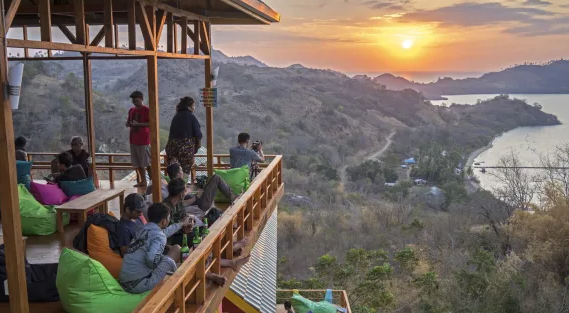
I didn’t come to Labuan Bajo for the food.
Like most people, I came for the obvious reasons—dragons, diving, those unreal island views inside Komodo National Park. The kind of place you think you’ll visit once, take a bunch of photos, and move on.
That was the plan.
But somewhere along the way, the place—and more specifically, the daily life here—got its hooks in me. And a big part of that ended up being the food.
Not in a “fine dining destination” kind of way. More in the way food becomes part of your routine, your rhythm, your reason to go somewhere at a certain time of day.
Nights at Kampung Ujung
If there’s one place that really captures the feeling of Labuan Bajo, it’s Kampung Ujung.
Every night, it comes alive.
You’ve got fresh fish laid out from the day’s catch, vegetables stacked up, smoke rising from makeshift grills, and a mix of locals and travelers all wandering through trying to decide what looks best. Some nights it’s mellow. Other nights, it turns into something bigger—events pop up, extra stalls appear, and suddenly there are little booths selling everything from grilled seafood to local crafts.
It’s not polished. It’s not curated.
And that’s exactly why it works.
You grab a plate, find a plastic chair somewhere, and just sit in it—watching everything unfold around you.
The Simple Stuff That Keeps You Coming Back
It doesn’t take long before you start gravitating toward the same foods.
A solid nasi goreng—simple, filling, always reliable.
A plate of capcay when you want something with a bit more balance.
And martabak late at night, which somehow tastes better the later it gets.
These aren’t “once-in-a-lifetime meals.” They’re the kind of food that quietly becomes part of your routine.
And that’s when you know you’ve stopped traveling and started settling in.
Finding Balance (and Good Coffee)
Of course, life here isn’t just fried rice and late-night snacks.
There’s a growing side of Labuan Bajo that caters to people sticking around longer—people working remotely, diving regularly, or just slowing things down.
Places like Bajo Bloom have become part of that rhythm. It’s one of those spots you go to after a morning workout or yoga session, when you want something clean, fresh, and actually good for you. Smoothie bowls, juices, proper meals—it balances out everything else.
And you end up appreciating it more than you expect.
When the Western Cravings Hit
No matter how much you love local food, it happens.
You wake up one day and just want something familiar.
That’s why I was genuinely excited when La Taqueria opened. It’s one of those places that actually delivers—proper flavors, no shortcuts. It hits the spot every time.
And for pizza, Fella’s is hard to beat. It’s the kind of place you go “just once” and then somehow end up back there again a few days later.
It’s Not Just About the Food
What makes all of this different isn’t just what you’re eating—it’s how it fits into life here.
There’s no rush to get in and out of a restaurant. Meals stretch. Conversations happen. Plans change halfway through the night.
You start recognizing people. The same faces show up in different places. Someone you met at a dive site is suddenly sitting at the next table over.
It’s a small town, and it feels like one.
More Than Just a Stop on the Map
For most people, Labuan Bajo is just the starting point for something like Komodo island tours—a gateway to the bigger experience out on the water.
And that’s fair.
But if you stay a little longer, you realize there’s a whole other layer here. One that has nothing to do with ticking off destinations and everything to do with daily life.
The food, the routines, the people you see over and over again—it all adds up.
Why It’s Hard to Leave
I’ve traveled a lot, and there are plenty of places that impress you.
But Labuan Bajo does something slightly different.
It doesn’t overwhelm you. It doesn’t try too hard.
It just slowly pulls you in.
And before you realize it, you’re not just passing through anymore—you’re part of it.