
A good coffee picnic comes down to five things: a market route, food that travels, easy coffee, smart packing and a picnic spot where you’re allowed to eat. Sort those out and the rest is easy. Here’s how.
What Should You Do Before You Leave for the Market?
Start with a loose plan, not a rigid one. Check the market’s opening hours, find out roughly where the stalls sit, and decide where you’ll eat before you buy anything. That order matters. If you know your picnic spot, you’ll know how far the food has to travel and how long it will sit.
Walk the whole market once before you spend a cent. It’s tempting to grab the first warm pastry you see, but a lap first shows you what’s on offer and keeps you from doubling up on bread, cheese or sweets. Then circle back and buy.
Bring your own bags and a small cooler or insulated bag. Markets reward people who show up prepared, and popular items such as baked goods, fruit and cheeses can go early, so an early start helps if you have your heart set on something.
A quick note on cash: some stalls may prefer it, so carry a little just in case.
How Do You Choose Market Food That Travels Well?
The best picnic food is snackable, easy to hold and happy to sit for a while. Think crusty bread, hard cheeses, fresh fruit, crunchy vegetables, jams, nuts and something sweet from the baker. Foods you can eat with your hands, at room temperature, make the whole outing simpler.
Pair the food with coffee in mind. A flaky pastry, a cinnamon-dusted bun or a slice of loaf cake sits well beside a cold coffee, while salty cheese, olives or a savory roll give you a pleasing contrast to something sweet in your cup. Picking one sweet item and one savory item gives you a built-in balance without overbuying.
Be a little careful with anything perishable. Cut fruit, dips, meats and creamy salads should stay cold, so keep them in your cooler and out of direct sun. If you’ll be out for more than a couple of hours, that cooler stops being optional, and it’s worth packing ice packs or ice. A whole apple or a loaf of bread forgives a warm afternoon far better than a tub of dip does.
And don’t skip the vegetables. Carrots, radishes and snap peas are cheap, sturdy and great for snacking.

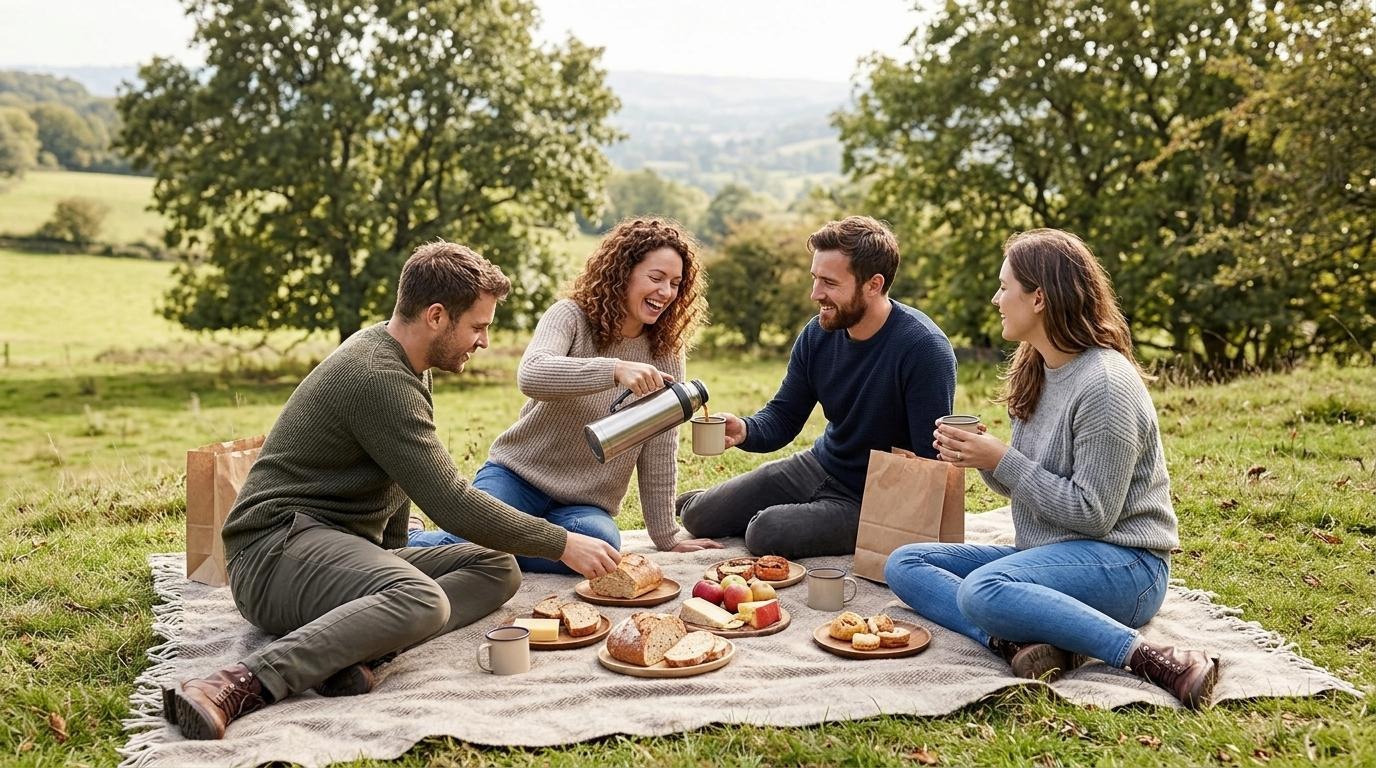
Alt text: Friends drinking from mugs on a picnic blanket in a rolling green field
What Coffee Should You Bring Without Brewing Gear?
A picnic spot rarely has hot water or outlets, so the easiest coffee is one that’s already made and travels in a cooler. Leave the kettle, grinder and pour-over cone at home.
Since the spot has no hot water, canned coffee from Bones Coffee Company for a market-day picnic is one ready-to-drink option that needs no brewing equipment. Chill the cans in your cooler alongside the food so they’re cold when you sit down, and pack a couple of cups and some ice if you like your coffee over ice. Check the label on the can you choose so you know what’s in it and how much caffeine you’re getting, especially if you’re sharing with friends.
Whatever coffee you bring, keep it cold by giving the drinks their own spot near the ice packs and keeping the bag shaded. If your picnic is a short walk from the market, that’s easy. If you’re heading a long way or the day is hot, a well-packed cooler makes all the difference.
It’s also kind to bring something non-coffee for anyone who doesn’t drink it. Many markets sell teas, juices and kombucha, and a bottle of water goes a long way on a warm day.
How Do You Pack a Coffee Picnic So Everything Stays Fresh?
Pack in the reverse order you’ll need things. Drinks and perishable food go in the cooler, sturdy produce and bread go in a tote, and the blanket, napkins and trash bag sit on top where you can reach them.
Here’s a simple tip you can use on any outing: freeze a couple of water bottles the night before and tuck them between your food and drinks. They keep everything cool, and by the time they melt you’ll have cold water to sip.
A few other basics are worth remembering. Bring plates or napkins, a knife for cutting bread and cheese, and a bag for rubbish. A thick, water-resistant blanket saves you from a damp patch of grass, and a few light stones or stakes keep the corners from lifting in a breeze. Try to pack as lightly as you can, because gear adds up faster than you’d think, and you’ll be carrying it all back through a busy market.
Keep things organized by grouping items. Food in one bag, drinks and cups in another, cleanup supplies in a third. When you arrive, you won’t be digging through everything to find the bottle opener or a spare napkin.
How Do You Find a Picnic Spot Where You Can Eat?
Look for a place that makes the afternoon easy. Shade is a big one, protecting both you and the food. A flat patch of ground keeps cups upright, and nearby bins or restrooms make life more comfortable. Parking or an easy walk from the market helps too, since you won’t want to haul a cooler uphill.
Before you commit, check that picnics are allowed. Parks and green spaces have their own rules, and some require permits for larger groups or limit where you can eat. Check the hours and rules before you go, and if bins aren’t provided, plan to take everything home with you.
The spot doesn’t have to be dramatic. A neighborhood park, a riverside bench or a quiet corner of a garden works nicely. If the market is in a town you’re visiting, ask a stallholder where locals like to sit. They often know the best shady bench within a few minutes’ walk.
Have a backup in mind, too. If your first choice is crowded or the weather turns, a second option nearby saves the day without cutting the picnic short.
Pack Light, Plan the Route, and Let the Market Set the Menu
The most relaxed coffee picnics start with a short plan and end with whatever looked best at the stalls. Pick your spot first, walk the market once, buy a sweet and a savory item, and keep the cooler close.
Then let the market surprise you. Choose the food that looks freshest, bring coffee that’s ready to pour, and leave a little room in the basket for something you didn’t plan on. That’s usually the bite you’ll remember.