
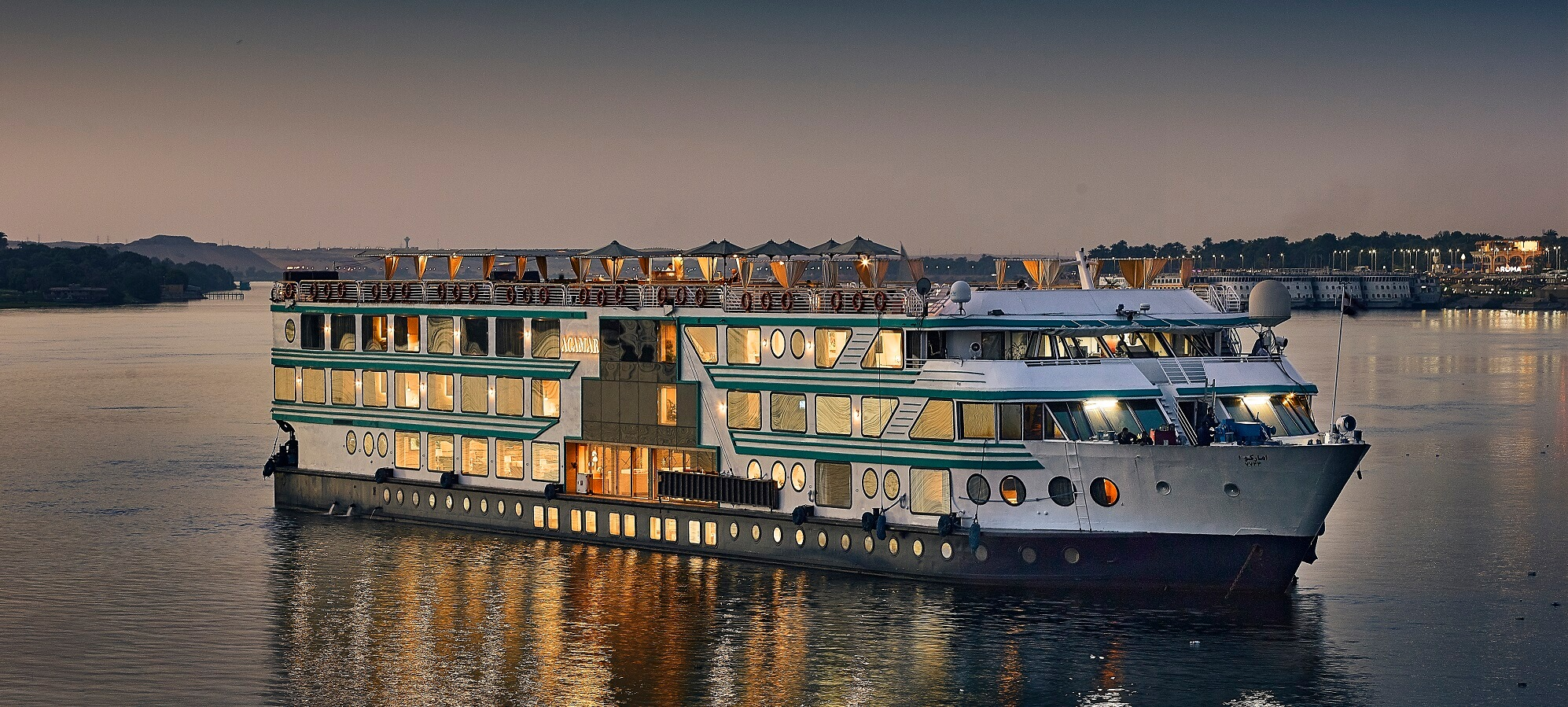
Something changes on Upper Egypt’s cruise ships once the sun starts dropping behind the sandstone cliffs. Pans clatter in a galley barely bigger than a shipping container. Garlic and cumin hit hot oil, and the smell drifts up through the stairwells before anyone’s officially called to the table. By the time the gangplank comes up and the engines settle into their low hum south, the real draw of the evening has nothing to do with the itinerary printed at the front desk. It’s dinner. A proper Nile River dinner cruise is one of the few travel experiences left where the food genuinely competes with the scenery, and on the water between Luxor and Aswan, that scenery happens to include floodlit temples sliding past the dining room windows.
What Food Is Served on a Luxor to Aswan Nile Cruise?

Ask five different boats what they’re serving tonight and the answers overlap more than they differ, which says plenty about how seriously this stretch of the Nile takes its cooking. Expect a mixed grill stacked with kofta, chicken cooked slow in a tomato-and-spice base, and lamb that’s been marinated since breakfast. Expect rice studded with vermicelli and toasted nuts, a bowl of molokhia for anyone willing to try it, and flatbread pulled warm from an onboard oven. Travelers who spend an afternoon visiting Aswan before boarding will recognize a lot of the same spice blends from the local markets showing up on their dinner plate that same night, just plated a little more formally.
Traditional Egyptian Kofta on a Nile Cruise
Fresh From the Riverside Towns, Not a Warehouse
Kofta is the dish that separates a forgettable cruise dinner from a memorable one, and the difference almost always comes down to where the meat and spices were bought that morning. Boats docking along the river between Luxor and Aswan send runners into the riverside towns before most passengers are even awake, picking through butcher stalls and produce stands that never make it into a guidebook. The onion gets grated fresh rather than dried. The parsley is still damp when it hits the mixing bowl. Cumin and coriander are toasted in a dry pan, not poured from a jar that’s been sitting open for months. Chefs working this part of the river often lean on techniques passed down through the Nubian communities of Aswan, where grilling meat over open flame has been a point of pride for generations, not a tourist gimmick added for the cruise crowd.
Boarding the Journey: From Luxor Dock to Dinner Service
The culinary trip starts before anyone sits down to eat. Most travelers board a nile cruise from luxor, settle into a cabin, and only then realize how much of the day will end up revolving around meal times rather than monument schedules. That’s by design. Unlike overland alternatives, such as figuring out how to take the train in Egypt, a cruise ship keeps its kitchen running the entire time it’s underway, so lunch can be timed around a temple stop and dinner can be timed around sunset. There’s no rushing, no vendor stall, no plastic cutlery. Just a dining room with proper linen and a kitchen crew that’s spent years refining the same regional recipes.
Nile Cruise Dinner Experience
Calling it a buffet undersells what actually happens most evenings. There’s often a spread, sure, but the better boats treat dinner as a showcase of Upper Egyptian cooking rather than a quantity contest. Trays of baba ghanoush and hummus land on the table before the mains arrive, servers refill the bread basket without being asked, and somewhere around the third course the lights outside reveal a temple complex glowing against the dark water. Anyone booking a 5 days nile cruise from luxor gets to watch this ritual repeat itself with small variations each night, enough time for the kitchen to rotate through its full range of regional dishes without serving the same plate twice.
Traditional Egyptian Mezze on a Nile Cruise

Fresh Bread, Traditional Dips & Egyptian Hospitality
Dinner rarely starts with the main event. It starts with a wall of small plates: tahini thinned with lemon and garlic, baba ghanoush with a faint char of smoked eggplant, pickled vegetables sharp enough to cut through the richer dishes still to come. Warm bread does the heavy lifting here, torn and dragged through whatever plate happens to be closest. Pair any of it with a cold Egyptian Stella and the whole evening stops feeling like a scheduled meal and starts feeling like the kind of spread a family puts out for guests they actually like.
Traditional Egyptian Desserts on a Nile Cruise
Dessert on a Nile cruise usually means Om Ali, a warm bread pudding soaked in cream and milk and scattered with toasted almonds, coconut, and pistachios. It’s heavier than most desserts travelers expect from a dinner cruise, closer to a baked custard than anything resembling a light finish, and it tends to disappear from the serving dish within minutes of being set down. Dishes like this sit comfortably within the broader food traditions found across the Middle East, where dessert is rarely an afterthought and sugar gets balanced carefully against nuts, dairy, and rosewater.
Is Nile Cruise Food Worth It?
Temples and tombs get most of the attention when people plan this route, and fairly so. But travelers who go in expecting the food to be an afterthought usually leave surprised by how many of the trip’s best memories happened at a dinner table gliding past the riverbank after dark. Fresh ingredients, real technique, and a kitchen crew that clearly takes pride in what it’s cooking turn a routine dinner service into one of the better meals most people will eat anywhere in Egypt. The scenery changes every single night. The quality of what lands on the plate doesn’t.