
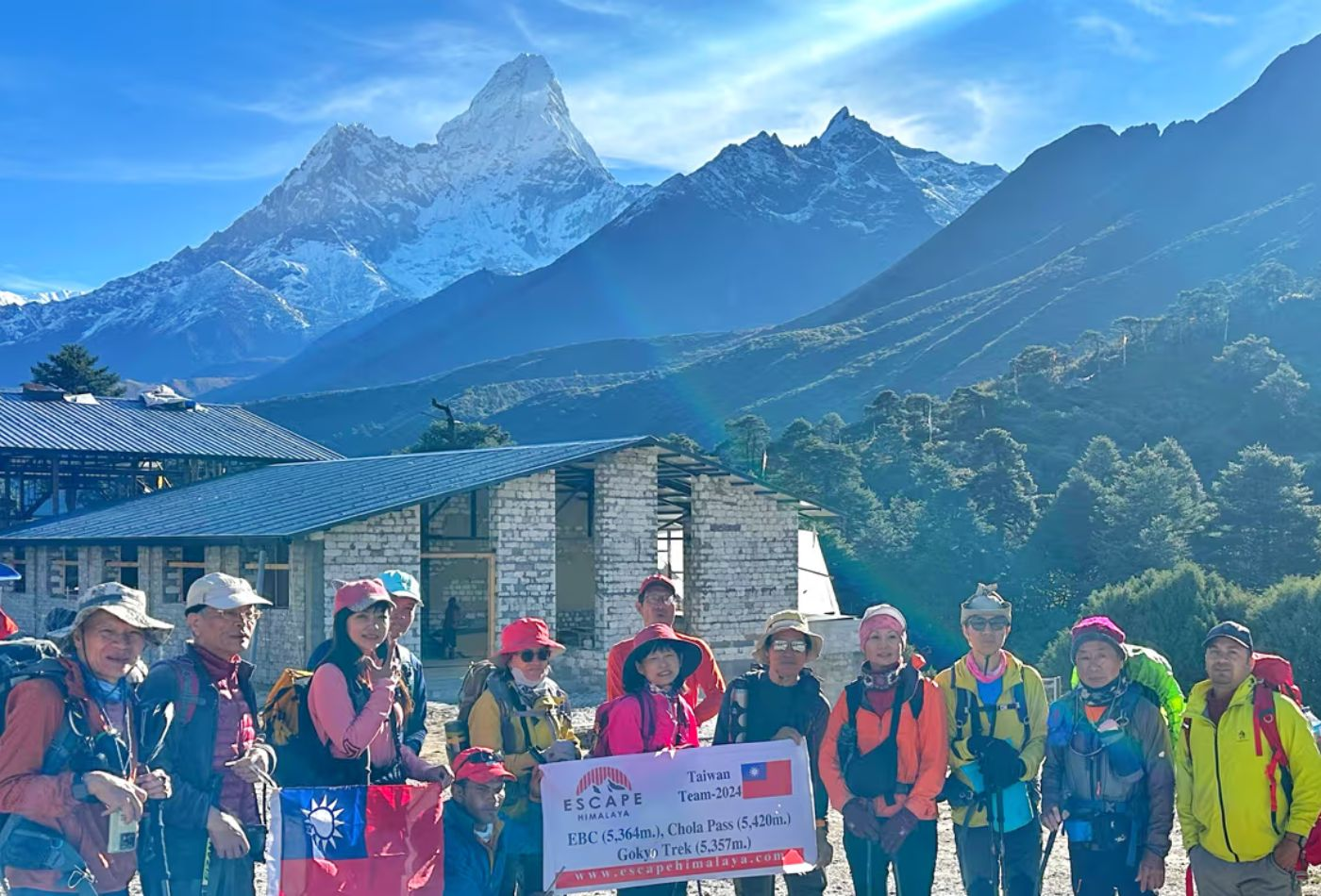
Most people picture one thing when they hear “Everest trek” — a long line of trekkers winding up a dusty trail toward a pile of rocks at 5,364 meters. That image isn’t wrong, exactly, but it’s incomplete. The Everest region offers at least three genuinely different ways to encounter the same mountains, and each one leaves you with a completely different story to tell afterward.
There’s the Everest Base Camp Trek, the slow, on-foot journey that most people mean when they say “EBC.” There’s the Everest Base Camp Heli Trek, which swaps days of walking for a bird’s-eye view and a much tighter schedule. And there’s the Gokyo Lake Renjo La Pass Trek, a route that trades the crowded EBC trail for turquoise lakes and a demanding high pass, with its own angle on Everest entirely.
Walking gives you altitude gained step by step. A helicopter gives you the whole range at once, folded into a single afternoon. A high pass gives you a wide, wind-scoured view that most trekkers never bother chasing. So — quick answer, if you’re short on time: the Everest Base Camp Trek is the classic, boots-on-the-ground journey through the Khumbu; the Heli Trek condenses that experience into a short, aerial version; and the Gokyo Renjo La route leans harder into lakes, mountain passes, and a quieter corner of the same region.
Three Different Ways to Experience the Everest Region
Everest Base Camp Trek: The Journey Matters as Much as Everest
You fly into Lukla, and from there it’s all on foot. The trail moves through the Khumbu Valley gradually — Phakding, then the steep climb into Namche Bazaar, where most trekkers take their first proper acclimatization day. From Namche the route pushes on through Tengboche, home to one of the region’s most recognizable monasteries, then continues up through Dingboche, Lobuche, and finally Gorak Shep, the last settlement before the trail to Base Camp itself.
What this slow build does — and it’s easy to underestimate until you’re actually doing it — is change how your body and your eyes adjust to altitude. You’re not dropped into thin air; you earn it, day by day, and that gradual exposure is part of what makes the whole thing manageable rather than brutal. Along the way you pass through Sherpa villages strung with prayer flags, walk beside mani walls carved with Buddhist mantras, and spin prayer wheels without really thinking about it after the first few days — it just becomes part of the rhythm of walking. Reaching Everest Base Camp is the headline, sure, but it’s really the last page of a much longer story that started back in Lukla.
Everest Base Camp Heli Trek: Seeing the Himalaya Differently

The Everest Base camp heli Trek exists for a simple reason: not everyone has two or three weeks to spare, and not everyone wants to walk for eight hours a day at altitude. Combining a helicopter flight with time on the ground near Everest gives travelers a way to see the same peaks, glaciers, and valleys without the sustained physical grind of the full trek.
The appeal here is mostly about perspective and time. From the air, you see how the ridgelines actually connect, how the Khumbu Glacier snakes down between peaks, and how small the villages look tucked into the valleys below. It’s efficient in a way walking simply can’t be. That said, it shouldn’t be sold — or thought of — as a shortcut version of the EBC Trek. It’s a different kind of experience altogether, and landing locations at higher altitude depend heavily on weather and operational conditions on the day, so flexibility matters more here than people expect going in.
Gokyo Lake Renjo La Pass Trek: Lakes, Passes, and a Different Side of Khumbu
Turn off the main EBC trail toward the Gokyo Valley and the landscape shifts noticeably. This route is built around the Gokyo Lakes — a series of glacially fed lakes with that striking blue-green color — and Renjo La, a high pass that most Everest-bound trekkers never cross.
There’s something particular about the pull of a high pass. It’s not just a viewpoint; it’s a physical accomplishment, a line you cross rather than a point you walk up to. From Renjo La, and from various points around the Gokyo Valley, you get genuine views toward Everest and its neighboring peaks — not the closest possible vantage point in the region, but a wide, layered perspective that’s arguably more dramatic precisely because it’s less familiar. For trekkers who’ve read about EBC a hundred times and want something that feels a bit more like their own discovery, this route delivers that.
What the Landscape Feels Like Along These Routes
The lower Khumbu doesn’t look like most people expect the Everest region to look — it’s forested, with rivers cutting through the valley and small settlements scattered along the trail. Around Namche, the landscape starts opening up: the trees thin out, the mountains get bigger, and you start catching your first real glimpses of the high peaks. Higher up the EBC trail, vegetation all but disappears and the terrain turns rugged and rocky, closer to what you’d picture when you think “Himalaya.”
The Gokyo side of things feels different from the start. It’s defined by glacial lakes and moraine — loose rock and debris left behind by shifting ice — with peaks rising steeply around the valley. Renjo La itself is exposed, windy, and physically demanding in a way that’s hard to describe until you’re standing on it, lungs working hard, looking out at a view that stretches across the whole region.
And then there’s the helicopter’s version of all this — not a step-by-step unfolding but a single connected sweep, where valleys, ridgelines, and glaciers read as one continuous geography instead of a trail you’re slowly working through.
The Cultural Experience Behind the Mountains
It’s easy to talk about the Everest region purely in terms of scenery, but that misses a lot of what actually makes the trek memorable. This is Sherpa homeland, and Buddhist tradition shapes daily life throughout the Khumbu — monasteries, prayer flags strung across bridges and ridgelines, mani walls you’re supposed to pass on the left, chortens marking the trail.
Namche Bazaar and Tengboche stand out as particularly significant stops — Namche as the unofficial capital of the Khumbu, Tengboche for its monastery and the sense of stillness around it — but really, cultural contact happens constantly if you’re walking rather than flying. You pass through people’s actual villages, buy tea from someone’s actual kitchen, watch daily life continue around you. That kind of contact is harder to get from the air. None of this needs turning into a lecture; it’s more about paying attention and treating these places — and the people who live in them — with the respect they’re due.
How the Three Experiences Differ in Physical Demands
| Experience | Main Character | Physical Demand | Main Attraction |
| Everest Base Camp Trek | Long-distance walking journey | High | EBC, Khumbu landscapes, gradual acclimatization |
| Everest Base Camp Heli Trek | Shorter aerial/high-altitude experience | Lower walking demand, but altitude still matters | Everest views, helicopter access |
| Gokyo Lake Renjo La Pass Trek | High-altitude route with pass crossing | High | Gokyo Lakes, Renjo La, wider mountain scenery |
Worth being honest about: “shorter” doesn’t mean “risk-free.” Altitude affects the body regardless of whether you walked up to it or flew there, so even a condensed Heli Trek itinerary needs to take acclimatization seriously. Renjo La adds real physical difficulty on top of that — it’s a demanding pass crossing, not a casual walk. And the classic EBC route simply requires sustained effort, day after day, which is its own kind of challenge.
What Makes Each Route Memorable?
For the Everest Base Camp Trek, it’s the accumulation — the villages you passed through, the trail days that started to blur together, and then, finally, arriving somewhere you’d only seen in photos, on your own two feet.
For the Everest Base Camp Heli Trek, it’s the contrast — the shift from ground-level walking to sudden aerial perspective, watching entire valleys and ridgelines pass beneath you. It suits travelers with limited time, or those who’d rather experience the Himalaya without committing to weeks of trekking.
For the Gokyo Lake Renjo La Pass Trek, it’s the combination — glacial lakes, a genuinely tough pass crossing, and the sense of having gone somewhere slightly off the well-worn EBC path. Operators like Escapehimalaya, who work across these different Everest-region routes, often point newer trekkers toward Gokyo specifically because it offers that alternative angle without straying from the wider Khumbu.
Choosing the Experience That Fits Your Travel Style
Go with the Everest Base Camp Trek if the journey itself matters to you — if you want the full, traditional trekking experience and don’t mind (or actively want) the time it takes. Consider the Heli Trek if seeing Everest and the surrounding peaks is the priority, and your available time or trekking interest is limited. And lean toward Gokyo Renjo La if high mountain lakes, a serious pass crossing, and a less conventional route through the Everest region appeal to you more than following the main trail.
There’s no single “best” choice here. It comes down to how much time you have, how your body handles sustained walking or high-altitude passes, and honestly, what kind of Himalayan experience you’re actually after.
Practical Questions to Think About Before Going
Altitude and acclimatization deserve real attention regardless of which route you pick — this isn’t optional groundwork, it’s central to staying safe. Mountain weather in the Khumbu is genuinely unpredictable, and that matters even more for helicopter operations, which can be delayed or rerouted with little notice. Physical preparation should match the route: sustained daily walking for EBC, a demanding pass crossing for Renjo La. Travel insurance that actually covers high-altitude trekking and, where relevant, helicopter evacuation is worth sorting out properly rather than as an afterthought. And throughout all of it, a bit of humility toward the local culture and the mountain environment goes a long way.
Frequently Asked Questions
What is the difference between the Everest Base Camp Trek and Everest Base Camp Heli Trek?
The EBC Trek is a multi-day walking journey through the Khumbu Valley, while the Heli Trek combines helicopter flights with a much shorter time on the ground, cutting the overall duration significantly while still offering close views of Everest.
Is the Gokyo Lake Renjo La Pass Trek harder than Everest Base Camp?
It depends on the specific itinerary and your own fitness, but Renjo La adds a genuinely demanding high-altitude pass crossing that the standard EBC route doesn’t require.
Can you see Mount Everest from the Gokyo Valley?
Yes — the Gokyo region offers notable views toward Everest and several neighboring peaks, particularly from higher viewpoints like Gokyo Ri and Renjo La.
Is the Everest Base Camp Heli Trek suitable for people who do not want a long trek?
It significantly reduces the amount of walking compared to the traditional route, which makes it appealing for time-limited travelers — though altitude and weather still need to be taken seriously.
Which Everest-region trek is better for mountain scenery: EBC or Gokyo Renjo La?
Both deliver strong scenery in different ways — EBC offers the classic Khumbu journey and the Base Camp itself, while Gokyo Renjo La brings glacial lakes, a high pass, and a wider mountain perspective that many find equally striking.
The Everest Region Is More Than One Trek
These three routes aren’t really competing versions of the same trip — they’re different lenses on the same stretch of Himalaya. The EBC Trek is about the journey and the accumulated effort of getting there on foot. The Heli Trek compresses that into an aerial perspective built for limited time. Gokyo and Renjo La pull you toward lakes, a high pass, and a quieter read on the same mountains. Which one suits you probably says less about the trek itself and more about how you want to meet the Himalaya in the first place.