
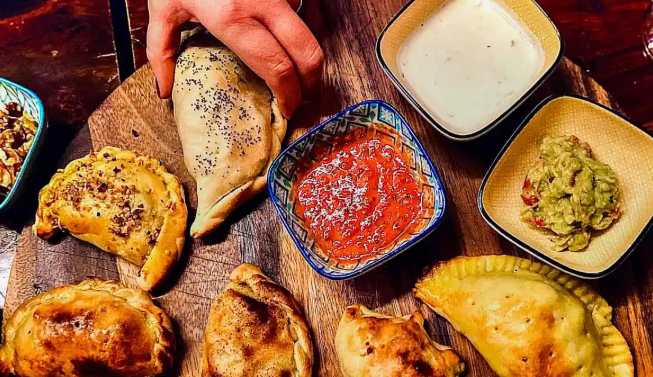
Spain doesn’t look like Bangkok at midnight – you won’t find every pavement buried beneath smoking woks and one heroic cook feeding half the neighbourhood from their cart. But that doesn’t mean Spain lacks street food; it simply hides it differently! Spain is a country of regional snacks and public eating, so the real question is not whether street food exists, but whether you know where to look.
What actually counts as street food?
Street food is ready-to-eat food sold for quick, informal eating in a public setting. A cart qualifies, obviously, but so does a market counter, kiosk, food truck, festival stall, bakery hatch or tiny takeaway. The food can be cooked in front of you or prepared nearby; what matters is that it is accessible, portable and tied to everyday local life.
This broader definition suits Spain far better than the lazy idea that street food must involve noodles, flames and a man shouting over motorcycle traffic. When you eat your way through a new city, central markets, neighbourhood stalls, fairs, bakeries and family-run snack counters all belong on the map.
So, does Spain have street food?
Yes, but much of it has a roof over its head. Spanish cities are packed with municipal markets and newer food halls where produce stalls sit beside counters serving croquetas, tortilla, jamón, seafood, bocadillos and whatever the region does best. The country’s official guide to gastronomic markets points to everything from Madrid’s San Miguel and San Fernando markets to Barcelona’s La Boqueria, Valencia’s Central Market and Málaga’s La Merced. Add beach kiosks, churrerías, roasted-nut stands, food trucks and temporary stalls at fairs, and the case is pretty much closed, if you ask me. Plan a holiday in Spain solely around white tablecloths, and you will miss the fun bit!
Markets first, tourist traps second
Madrid is the easy starting point. Mercado de San Miguel is polished, central and busy, which makes it useful for sampling several Spanish flavours without crossing the entire city. But it can also feel priced for visitors, so push into Lavapiés and neighbourhood markets such as San Fernando for a more everyday atmosphere.
Barcelona offers the same split. La Boqueria is famous for a reason (colour, noise, fruit, fish, cured meat and prepared bites all squeezed beside La Rambla!) while Santa Caterina brings local produce and tapas beneath its wavy roof. There is also a timely reason to look again: Barcelona City Council’s August 2026 update says La Boqueria is being revamped while trading continues, with a lovely new balance between fresh and prepared products.
Valencia delivers a more Mediterranean version of street eating. Start around the Central Market for sandwiches, tapas, olives and local produce, then hunt down horchata with fartons or pumpkin buñuelos when the season is right. San Sebastián plays by Basque rules: the essential move is a pintxos crawl, taking one or two small bites at a bar before moving on. It’s technically bar food, but in spirit it is mobile and social. Málaga shifts the action outdoors. Markets cover the daily food, while fairs and public celebrations bring temporary counters, grilled meats, fried fish and sweets into the streets.
So, bottom line: Yes, Spain absolutely has street food; it just refuses to copy somebody else’s template. Start with the local market, follow the queue that looks least interested in tourists and order the regional thing that everyone else is eating. You may end up with tortilla in Madrid, pintxos in San Sebastián, buñuelos in Valencia or fried fish in Málaga. None needs a silver cloche. Most barely need a plate. And that, for my money, is street food.