
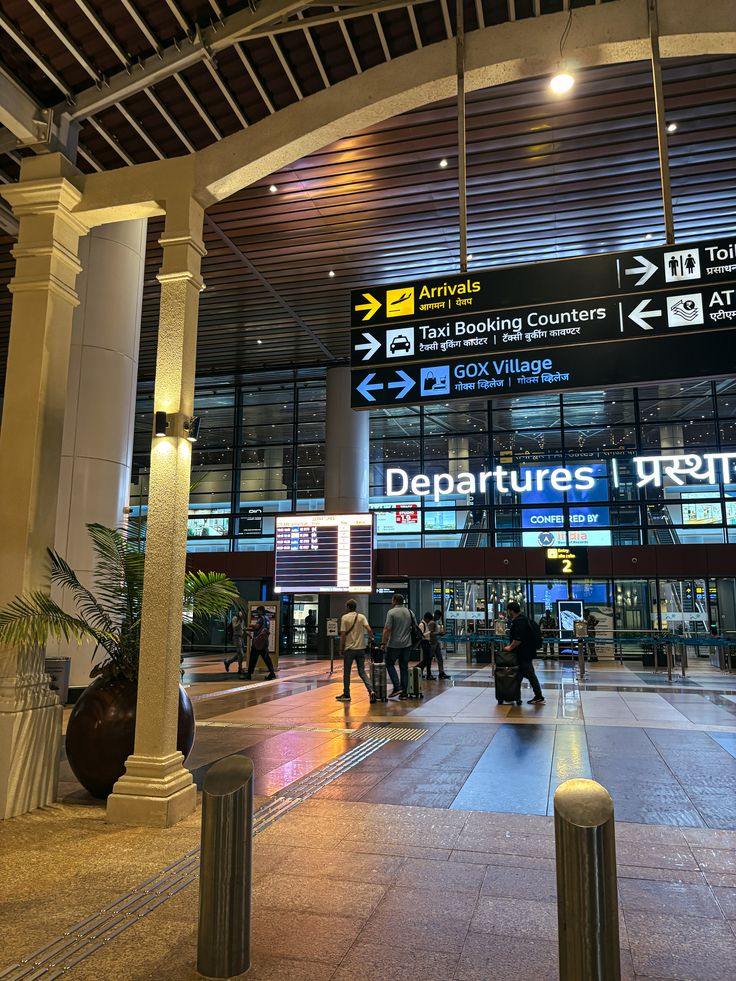
India has been building airports and putting on flights galore in order to position itself as a major player in the airport hub sector. The problem though is that while everything looks shiny from the outside, there are far too many political, infrastructural, and operational problems to make it truly viable as a transit hub.
Here’s a guide to why you should not transit Mumbai Airport, as well as survival tips should you absolutely have no choice.
Table of Contents
What the Mumbai Airport?
Chhatrapati Shivaji Maharaj International Airport in Mumbai opened in 1942 as the Bombay Airport and has since become India’s second busiest airport. Handling over 50 million passengers a year, it is a hub for both domestic and international flights.
Roughly 10 million of these passengers are in transit, though the actual experience is far from smooth. Owned by the Airports Authority of India with a mix of private operators at the terminals, the airport has grown rapidly but infrastructural bottlenecks, outdated facilities, and political interference make it a nightmare for anyone trying to transit efficiently.

India is obsessed with vaping
India has some of the strictest vaping regulations in the world. The sale, import, and use of e-cigarettes has been effectively banned since 2019, and violators face severe fines or prosecution. This is applied aggressively, not just for people living in India, but for transiting passengers too. Airport staff have been instructed to confiscate devices without hesitation, and there is very little room for discretion. The upshot is that even if you are only passing through, you cannot have a vape on your person or in your luggage.
The irony is that smoking traditional cigarettes is tolerated in the airport’s single smoking room, which fills up to absurd levels. This like banning beer, but letting everyone drink firewater.
Getting your bag is far from guaranteed
Transit passengers at Mumbai Airport face two main baggage risks. First, anything the authorities do not approve of, whether electronics, liquids, or vaping paraphernalia, can be removed from checked luggage. Second, in some cases, bags simply do not arrive at the connecting flight. Mishandled baggage is common enough that even with travel insurance it is a headache; without it, you are taking a serious risk.
Corruption and dishonesty remain a problem across Indian airports (and India), with luggage occasionally tampered with, diverted, or even stolen outright. Reports suggest a measurable percentage of complaints involve lost or tampered bags at Mumbai, reflecting systemic issues in security and handling.
The transiting process at Mumbai Airport
Transit at Mumbai Airport is notoriously slow and stressful. Security checks are tight but inefficient, walking distances are long, and the signage is confusing. Indian passengers are famously indifferent to queues, meaning shoving and cutting are common. For anyone trying to make a connecting flight, the process is unpredictable and time-consuming.
Even those with lounge access or priority boarding can find themselves stuck waiting, with limited support from staff. Overall, transit Mumbai Airport is a logistical headache rather than a smooth experience.

What is there to do when you transit Mumbai Airport?
On paper, Mumbai Airport offers options for eating and drinking, but it is largely window dressing. There are some high-end chains, Indian fare, and a few pseudo-street food concepts, but nothing of real substance. Burger King and McDonald’s exist, but menus are heavily restricted by local dietary norms.
Some main options include:
- The Irish House – Bar and casual dining, Terminal 2, Concourse D.
- SodaBottleOpenerWala – Parsi and Indian food, Terminal 2, Concourse D.
- Starbucks – Coffee and pastries, multiple locations, Terminal 2.
- Bar & Canteen – Local and international drinks, Terminal 2.
- Ginger & Lime – Quick snacks, Terminal 1.
Oh and of course there is Indian McDonalds, which can only described as a culinary abortion.
How well organized is it?
Organization at Mumbai Airport is poor. Baggage handling is inconsistent, security is slow, and boarding procedures are chaotic. Transit is poorly managed, flights are often delayed or gates changed without notice, and passengers are left to fend for themselves in crowded, poorly marked spaces.
Even airlines operating from the same terminal can have completely different processes, which adds to the confusion. Lounges, even those accessible with Priority Pass, are overrun and under-resourced. In short, the airport infrastructure is not ready to support smooth transit.
How to avoid having to transit Mumbai Airport
If possible, avoid transiting Mumbai entirely. For routes to South or Southeast Asia, the Middle East offers a far superior alternative. Airlines in Doha, Dubai, Abu Dhabi, and Doha operate efficiently, handle baggage correctly, and provide a consistent transit experience.
Even with slightly longer flight times or added miles, bypassing Mumbai is worth it if you value sanity and reliability. For Bhutan, Nepal, or certain parts of India, options are more limited, but routing through a Middle Eastern hub remains the simplest and safest approach.