
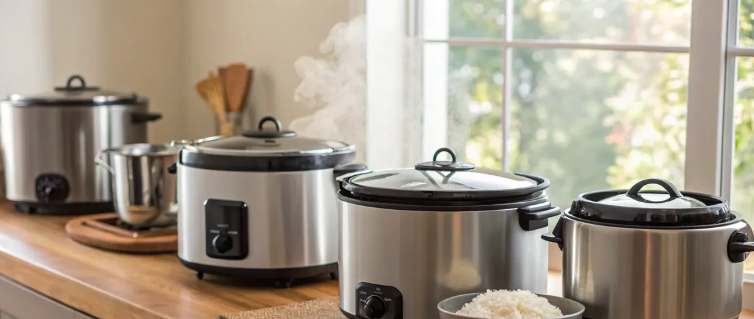
Modern restaurant kitchens operate under constant pressure to deliver uniform quality at scale. Rice plays a central role across cuisines, menus, and service formats, which places high expectations on preparation methods. Commercial rice cookers have become a dependable solution for professional kitchens that value accuracy, speed, and repeatable results.
Consistency defines a restaurant’s reputation more than creativity alone. Guests expect the same texture, aroma, and portion every time a dish arrives at the table. This expectation explains why modern restaurants rely on commercial cookers to achieve dependable output without disrupting workflow.
Precision Cooking That Supports Menu Consistency
A Commercial Rice Cooker can apply precise heat control throughout the cooking cycle. Internal sensors monitor temperature and moisture to ensure even cooking from start to finish. This level of control helps maintain the same grain texture across every batch. Consistency supports menu integrity across multiple shifts. Thus, kitchen teams can serve identical rice quality during peak hours and quieter service periods.
Such reliability strengthens trust between the kitchen and the dining room. Additionally, the advanced technology in these cookers reduces the likelihood of overcooking or undercooking, which ensures optimal texture every time. This reliability allows for a seamless dining experience, which enhances customer satisfaction with every dish served.
High-Capacity Output for Demanding Service Hours
Modern restaurants face intense volume during lunch and dinner rushes. Commercial cookers handle large quantities without sacrificing texture or flavour. This capacity allows kitchens to prepare rice in advance while maintaining quality. High output reduces pressure during service windows. So, staff can focus on plating and timing rather than constant monitoring.
This efficiency supports smoother operations during demanding periods. Additionally, the ability to prepare rice in bulk helps minimise delays during peak hours, ensuring that orders are completed on time. With rice already ready and at the proper temperature, the kitchen can respond more quickly to customer demands, which further enhances service speed.
Capacity Advantages That Enhance Service Flow:
- Large batch sizes reduce frequent refilling and supervision.
- Stable heat distribution supports uniform results at scale.
- Continuous production aligns with high-traffic dining schedules.
Time Efficiency That Improves Kitchen Productivity
Speed plays a vital role in professional kitchens. A Commercial Rice Cooker can reduce preparation time through automated cycles. Once loaded, the process runs independently without constant oversight. Time savings allow staff to focus on higher skill tasks.
Prep teams can manage multiple stations without delay. This efficiency contributes to faster service and better coordination. Moreover, the reduced need for manual monitoring ensures that staff can prioritise other important tasks, such as plating or customer service.
Consistent Texture Across Multiple Rice Varieties
Modern menus feature diverse rice styles across cuisines. Commercial cookers deliver consistent, fluffy rice for up to 60 servings through reliable automatic cooking and keep‑warm cycles, which support uniform texture in large batches. It handles a variety of rice types with dependable results thanks to its robust design and advanced heating system that maintains steady temperature and moisture.
Uniform texture enhances dish presentation and taste for every plate served. Guests thus receive the same quality regardless of rice type, even during busy service periods. This adaptability supports menu expansion without operational risk in professional settings. Additionally, the cook‑and‑keep‑warm function ensures rice remains ready at an optimal temperature, which improves efficiency for kitchens with varied rice offerings.
Reduced Training Requirements for Kitchen Staff
Staff turnover remains a challenge in foodservice operations. Commercial cookers simplify training by standardising the cooking process. Clear controls reduce the learning curve for new team members. Simplified operation limits human error during busy shifts. Consistent procedures help maintain output regardless of staff experience.
This reliability protects food quality during transitions. Moreover, the straightforward nature of the cookers ensures that even less experienced staff can quickly understand their functionality, which leads to faster integration into the team. With minimal supervision required, the kitchen becomes more adaptable to changes in staff, ensuring that operations run smoothly without compromising the quality of the food.
Energy Efficiency That Supports Cost Control
Operational costs influence every restaurant decision. A Commercial Rice Cooker uses controlled energy output to maintain steady temperatures. This design reduces waste caused by overheating or repeated cooking cycles. Efficient energy use supports long-term savings. Professional kitchens thus benefit from stable utility expenses without compromising performance.
Such a balance appeals to restaurants managing tight margins. Additionally, the energy-efficient design of these cookers ensures that kitchens can run at peak capacity without spiking electricity costs. By minimising power consumption, restaurants can allocate resources to other critical areas, like food quality and staff training, without sacrificing overall profitability.
Durability Built for Continuous Commercial Use
Restaurant equipment must withstand constant use. Commercial cookers feature reinforced construction and heat-resistant components. This durability supports daily operation without frequent breakdowns. Reliable equipment reduces maintenance disruptions. Kitchens avoid service delays caused by equipment failure.
Long lifespan protects investment value over time. The robust design of these cookers ensures they can endure high-volume cooking sessions, making them ideal for busy kitchens. Additionally, their ability to handle continuous use without significant wear helps reduce the long-term costs associated with frequent repairs or replacements.
Improved Food Safety Through Controlled Cooking
Food safety standards demand precise temperature control. Commercial cookers maintain safe cooking conditions throughout the process. Consistent heat minimises risks linked to undercooked rice.
Limited intervention lowers contamination risks during preparation. These safeguards support compliance with health regulations. The self-regulating nature of these cookers ensures that rice remains at safe temperatures for serving, further reducing potential foodborne illness risks.
Scalable Solutions for Growing Restaurant Operations
Growth requires equipment that adapts to increasing demand. Commercial cookers offer scalable options across sizes and capacities. Restaurants can expand output without altering core preparation methods. Scalability supports consistency across multiple locations. Standardised equipment ensures the same results across branches.
This uniformity strengthens brand identity. As restaurants expand, these cookers provide a reliable solution for maintaining quality and speed in high-demand situations. Their ability to meet varied volume needs makes them an essential tool for scaling operations without compromising the dining experience.Thus, a Commercial Rice Cooker can deliver consistency, efficiency, and reliability that modern restaurants require. Precision cooking, high capacity, and durable design support steady output