
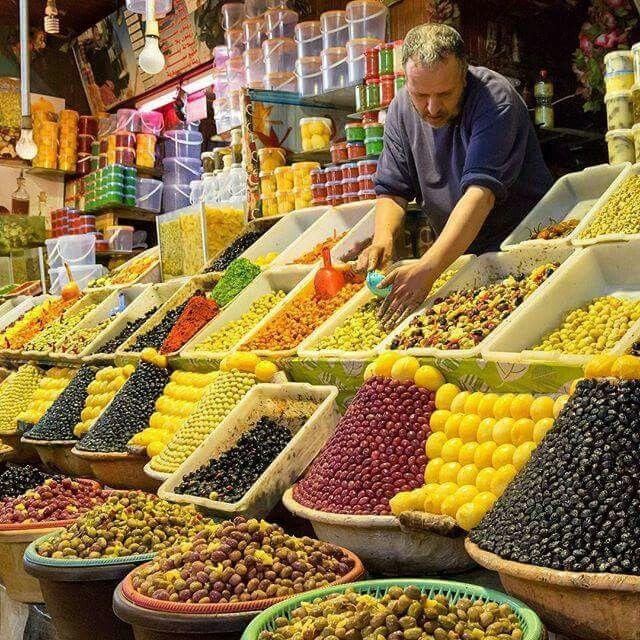
Marrakech isn’t a city you simply look at — it’s a city you taste. Behind the ochre ramparts of the medina lies one of Morocco’s most vibrant culinary scenes, a maze of aromas where cumin meets orange blossom and every alley hides a new discovery. Taking a Marrakech food tour means diving straight into this food culture, understanding the central role of spices, and often extending the experience with a cooking class to carry a little of that magic home. Here is the complete guide to tasting Marrakech like a true insider.
Why take a food tour in Marrakech?
A food tour is far more than a string of tastings. It’s a way of reading the city. In Marrakech, food tells the story of the caravans that crossed the Sahara, of Berber heritage, of Arab-Andalusian influences and the refinement of palace kitchens.
Wandering the souks alone can quickly feel overwhelming: you don’t know where to stop, what to order, or how to tell a great local spot from a tourist trap. A local guide removes those barriers. They take you where Marrakchis actually eat, translate the names of dishes, order on your behalf and encourage you to try specialties you’d never have dared to pick yourself. It’s also a deeply human experience — you chat with the vendors, perch on a wobbly stool in the middle of the crowd and share a genuine moment.
For the discerning traveler, a food tour is also the fastest way to grasp the codes of the Moroccan table before venturing into the city’s fine-dining restaurants and riads. Many visitors combine it with broader morocco luxury tours to weave the country’s gastronomy into a wider journey across imperial cities, the Atlas Mountains and the desert.
What to taste on a Marrakech food tour

The question everyone asks: what can you eat in Marrakech? The answer is dizzying. Here are the essentials you absolutely shouldn’t miss.
The street food of Jemaa el-Fna
As night falls, the famous Jemaa el-Fna square transforms into a vast open-air restaurant. Dozens of numbered stalls light up, smoke rises from the grills and vendors invite you to try a little of everything. This is where the beating heart of any nighttime marrakech street food tour can be found.
Here you’ll taste:
- Harira, the emblematic soup made with tomatoes, lentils, chickpeas and coriander, often served with dates and chebakia. A Ramadan classic that has become a year-round favorite.
- Skewers and mechoui, lamb slow-roasted until meltingly tender, carved in front of you and served with cumin and salt.
- Tanjia marrakchia, the city’s signature dish. Not to be confused with tagine: tanjia is an earthenware urn in which meat is slow-confited with garlic, preserved lemon, saffron and ras el hanout. Traditionally prepared by men and cooked in the embers of the hammam, it was historically the dish of bachelors and laborers.
The dishes that intimidate — and delight
A real food tour is also about stepping outside your comfort zone. Two specialties leave a lasting impression:
- Babbouche (snails), served in a broth infused with anise, thyme and a dozen spices. You draw them from their shells with a pin, then drink the broth, long prized for its digestive virtues.
- Lamb’s head and offal, enjoyed in the popular gargotes — an experience for the most curious, yet deeply rooted in local tradition.
The snacks and breads of the medina
Between dishes, the food tour showcases smaller bites:
- Msemen, a flaky, crisp griddle pancake served plain, with honey or stuffed.
- Batbout, a soft skillet-cooked pocket bread, filled with kefta or cheese.
- Maakouda, a breaded and fried potato patty, tucked into a sandwich with spicy sauce.
- Chermoula sardines, marinated in garlic, coriander, cumin and paprika before being fried or grilled.
Moroccan sweets and pastries

You can’t leave Marrakech without giving in to its honey-and-almond pastries:
- Gazelle horns (cornes de gazelle), delicate crescents filled with almond paste and scented with orange blossom.
- Chebakia, flower-shaped fried dough coated in honey and sesame.
- Sellou (or sfouf), a dense blend of toasted flour, almonds, sesame and honey.
- Sweet briouates, crisp honey-and-almond triangles.
The essential drinks
No food tour is complete without mint tea, a genuine national ritual. Served scalding, generously sweetened and poured from a height to create a foam, it embodies Moroccan hospitality. You’ll also want to try the freshly squeezed orange juice of Jemaa el-Fna, the silky avocado juices and, for the curious, a glass of lben (fermented buttermilk).
The spice square: the beating heart of the medina
No Marrakech food tour truly makes sense without a stop at the spice square, known locally as Rahba Kedima. Set a few steps from Jemaa el-Fna, this historic square concentrates the city’s aromatic soul. Here, spices are sold in colorful pyramids that seem to defy gravity: golden saffron, scarlet paprika, ochre cumin, blazing turmeric.
Ras el hanout, king of blends
If you were to remember a single spice, it would be ras el hanout — literally “the head of the shop,” meaning the best the merchant has to offer. This complex blend can gather up to thirty ingredients: ginger, cinnamon, pepper, cardamom, nutmeg, dried rose buds, galangal and more. Every family, every spice trader has their own jealously guarded recipe. It’s what gives tagines and tanjia their incomparable depth.
The square’s other treasures
Around ras el hanout you’ll find:
- Saffron from Taliouine, Morocco’s red gold and one of the most precious spices in the world.
- Cumin, everywhere — dusted over hard-boiled eggs, skewers and snails.
- Blends for couscous and for fish (chermoula).
- Dried herbs, orange blossom, rose water, and traditional cosmetics such as black soap, ghassoul clay and argan oil.
The spice merchant is often a wonderful storyteller: they let you smell each powder, explain its culinary and medicinal uses, and introduce you to grandmother’s remedies made from nigella or ginger. It’s a highlight of the food tour, sitting at the crossroads of gastronomy and craft.
Marrakech cooking classes: cook to understand

After tasting and inhaling, all that’s left is to get your hands into the dough. A marrakech cooking class has become one of travelers’ most sought-after experiences — and for good reason: it turns a simple tasting into a lasting skill. Booking a dedicated marrakech cooking class is the natural next step after a food tour.
How does a cooking class work?
Most workshops follow an immersive arc. It often begins with a guided market visit, where the chef teaches you how to choose vegetables, recognize spices and haggle like a local. You then head back to a riad or a traditional villa and gather around the worktop. There, you learn to make the great classics:
- Tagine (chicken with preserved lemon and olives, lamb with prunes, kefta with eggs), mastering the secret: slow cooking and the careful balance of spices.
- Couscous hand-rolled from scratch — an art in itself.
- Moroccan salads, both cooked and raw (eggplant zaalouk, pepper taktouka).
- The famous mint tea, served by the book.
The class always ends by tasting your own creations, often on a terrace overlooking the rooftops of the medina or the gardens of a villa.
Who is it for?
Cooking classes adapt to every level, from the first-time traveler to the seasoned gourmet. Some high-end experiences take place in exceptional riads or private residences, with a dedicated chef, for an intimate immersion far from the crowds. It’s the perfect chance to bring home not just another souvenir, but a genuine repertoire of recipes and techniques.
Practical tips for a great Marrakech food tour
- Come hungry — the tastings pile up quickly.
- Go in the evening for the atmosphere of Jemaa el-Fna, or in the morning for the markets and cooler air.
- Choose stalls busy with locals — high turnover means fresh produce.
- Be cautious with water — stick to bottled water and juices pressed in front of you.
- Book with a guide or agency to reach the best spots and travel with peace of mind.
Frequently asked questions about Marrakech food tours
How long does a Marrakech food tour last? Usually between 3 and 4 hours — enough time to sample around ten savory and sweet specialties without rushing.
Is a food tour suitable for vegetarians? Yes. Between harira, zaalouk, msemen, cooked salads, pastries and juices, Moroccan cuisine offers plenty of meat-free options.
Should I book a cooking class in advance? Highly recommended, especially in high season and for private or premium experiences, where places are limited.
When should I visit to enjoy Marrakech’s food scene? Year-round, though spring and autumn offer the most pleasant climate for exploring the souks and markets.
In conclusion
A Marrakech food tour is far more than a meal: it’s a full sensory journey, from the smoke of the Jemaa el-Fna grills to the spice pyramids of Rahba Kedima, all the way to the patient gestures of a cooking class. Taste, smell, cook: three ways to understand a city that has always placed conviviality and sharing at the center of its table. Leave with your memory full of flavors — and your hands full of recipes.