
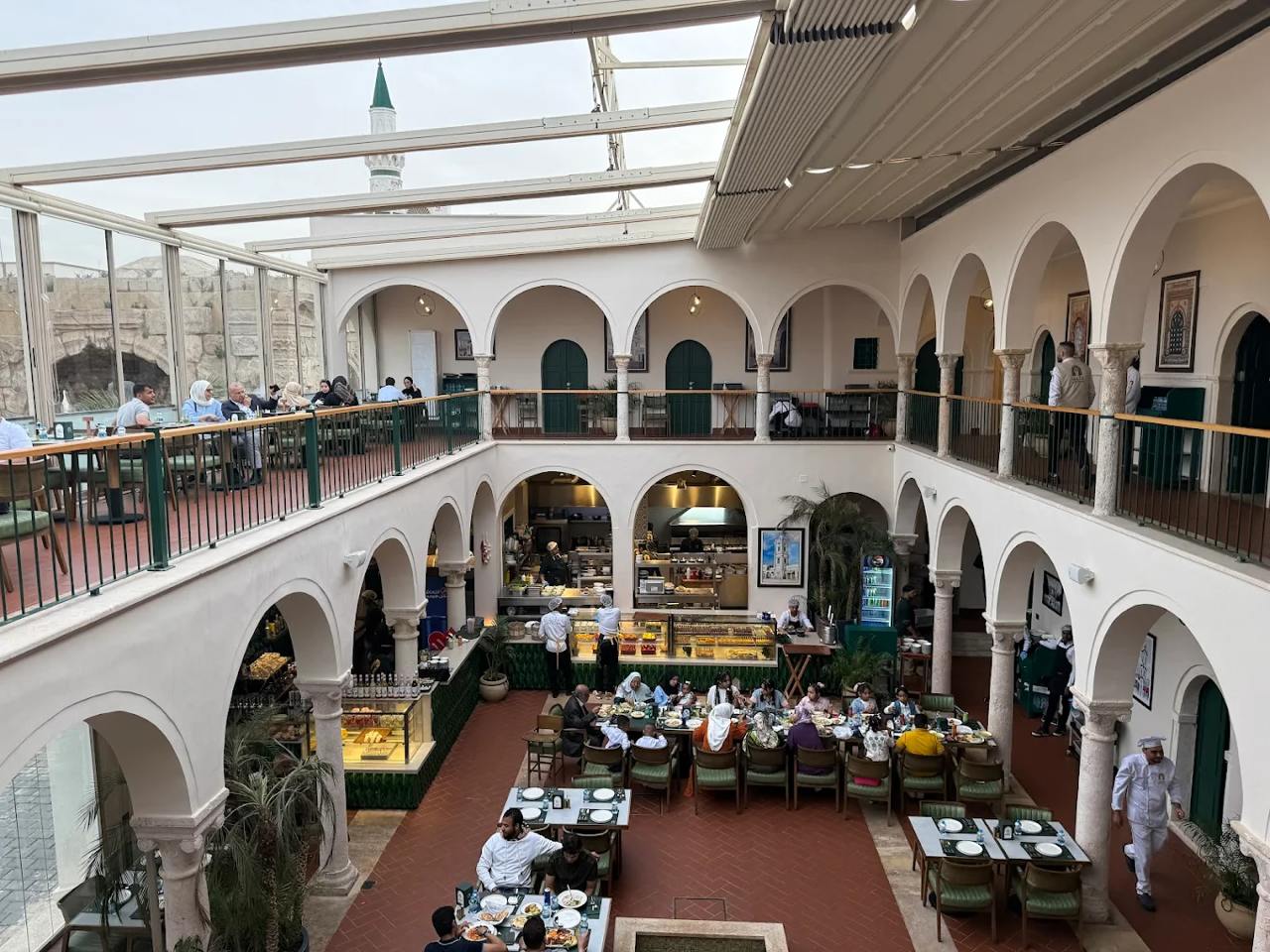
Planning a restaurant party can seem easier than hosting at home. The tables, chairs, kitchen, staff, and cleanup are already handled, so all you need to do is invite people and arrive, right? Not quite. A restaurant celebration runs smoothly only when the host understands how the venue operates and plans around its normal service.
The best approach is to think like a temporary event manager rather than an ordinary diner. Whether you are considering a banquet room, a neighborhood favorite, or a Mediterranean restaurant in San Francisco, you are asking the restaurant to coordinate a large group while continuing to protect food quality, timing, and guest comfort. Clear decisions made early will help the kitchen and service team do their best work.
A successful restaurant party is not defined by how many decorations you bring or how long the menu is. It is defined by how naturally the celebration fits into the space. When the guest count, meal format, schedule, and venue policies support one another, the event feels relaxed even though a great deal of planning is happening behind the scenes.
Start With an Honest Guest Count
Your guest count affects nearly every part of the event. It determines the size of the space, the number of servers, the menu format, the seating arrangement, and often the minimum amount you must spend.
Begin with a realistic estimate rather than inviting everyone you know and hoping the numbers work out later. Ask the restaurant about its minimum and maximum capacity for private events. A room may technically hold fifty people, but that does not mean fifty guests will be comfortable once tables, serving stations, gifts, decorations, and personal belongings are added.
Find out when the restaurant needs the final count. Many venues require a guaranteed number several days before the event. You may be charged for that number even when some guests do not attend, since the kitchen will have purchased ingredients and prepared portions in advance.
It is also useful to ask how the restaurant handles unexpected arrivals. A few extra guests may be easy to accommodate in a flexible space, but they can create serious problems in a full private room with assigned seating.
Send invitations early and give guests a clear response deadline. Follow up with anyone who has not answered instead of assuming silence means they will not attend.
Decide How Private the Party Needs to Be
Restaurants usually offer several levels of separation. You may be seated at a large table in the main dining room, placed in a section reserved for your group, or given a completely private room.
A large table in the dining room is often the simplest and least expensive option. It works well for birthdays, casual family gatherings, and small celebrations. However, noise from nearby diners may make speeches or group conversations difficult.
A semiprivate space gives the party a little more separation while allowing guests to enjoy the energy of the restaurant. The boundary may be created by curtains, plants, furniture, or a partial wall rather than a closed door. Ask what guests will be able to see and hear from the surrounding dining area.
A private room provides more control over sound, seating, decorations, and timing. It may also require a room fee, food and beverage minimum, deposit, or service charge.
Visit the space when possible. Photographs can make a room look larger or more secluded than it feels in person. Check sight lines, lighting, restroom access, noise levels, and the distance between the room and the kitchen.
Ask for the Complete Price
Restaurant event pricing can include more than the advertised menu cost. Before paying a deposit, request a written estimate that explains every expected charge.
Ask whether the restaurant has a food and beverage minimum. A minimum is not always the same as a room rental fee. It usually means your group must spend at least a certain amount on qualifying menu items during the reserved period.
Find out whether taxes, gratuity, administrative fees, cake cutting fees, corkage, rentals, and service charges are included. Do not assume that a service charge goes directly to the employees serving your party. Ask how it is distributed and whether additional tipping is customary.
Some restaurants charge extra for table linens, audiovisual equipment, custom menus, extended hours, or changes to the room arrangement. There may also be fees for bringing desserts, flowers, entertainment, or specialty decorations.
Confirm the deposit amount, payment schedule, and cancellation policy. Ask what happens if the event must be moved to another date. Weather, illness, transportation problems, and personal emergencies can affect even the best organized celebration.
A detailed proposal may feel less exciting than choosing appetizers, but it is one of the most important parts of planning. It allows you to compare venues based on the actual total rather than an appealing starting price.
Choose a Menu the Kitchen Can Serve Well
A restaurant’s regular menu may offer dozens of choices, but allowing a large group to order freely can slow the kitchen and produce uneven service. Some guests may finish eating before others receive their meals.
A limited menu usually creates a better experience. The restaurant can prepare ingredients more efficiently, servers can take orders quickly, and guests still have enough variety to find something appealing. A thoughtful selection might include two or three main dishes, several sides, and a dessert choice.
A fixed price menu can make budgeting easier because you know the basic cost per person in advance. It may include multiple courses, shared dishes, or a set combination of food and beverages. Ask whether substitutions are available and how changes affect the price.
Family style service can create a warm, social atmosphere because dishes are placed on the table for guests to share. It works best when tables have enough room for platters, glasses, plates, decorations, and personal belongings.
Buffets can offer more choice and allow guests to control portions, but they require space for serving tables and lines. Discuss how food will be replenished, labeled, and kept at appropriate temperatures.
The best format is not always the fanciest one. Choose the option that the restaurant can execute consistently for your group size and schedule.
Collect Dietary Information Early
Do not wait until guests are seated to discover that someone has a severe allergy or cannot eat anything on the selected menu.
Ask about allergies, vegetarian preferences, vegan requirements, gluten concerns, and religious or cultural food practices during the response process. Share the information with the restaurant well before the final menu deadline.
Be specific about medical needs. A guest avoiding an ingredient by preference presents a different situation from someone who could experience a serious allergic reaction. Ask the restaurant how it handles ingredient separation and contact between foods.
The venue should explain what it can reasonably accommodate without making promises it cannot keep. Some kitchens have enough space and equipment to prepare meals separately. Others may work in compact areas where shared surfaces, fryers, utensils, and storage create unavoidable risks.
Confirm how special meals will be identified and delivered. Place cards, seating charts, or discreet markers can help servers bring each dish to the correct person without requiring guests to explain their needs publicly.
Dietary accommodations should feel like complete meals, not collections of leftover side dishes. Every guest deserves food that feels planned rather than improvised.
Clarify the Alcohol Policy
Alcohol arrangements deserve a direct conversation because restaurant licenses and house policies can limit what is permitted.
Ask whether beverages will be paid for by the host, purchased individually by guests, or limited to a selected menu. An open bar offers convenience but can make the final cost uncertain. Drink tickets, hosted wine and beer, or a defined spending limit may provide more control.
Find out whether the restaurant allows outside wine or other beverages. Even when outside wine is permitted, a corkage fee may apply. Other types of alcohol may be prohibited.
Do not assume that hiring an outside bartender allows you to create a separate bar inside the restaurant. California’s official Alcoholic Beverage Control frequently asked questions explain important distinctions involving bartending services, alcohol sales, and licensed catering. The restaurant’s license and policies will ultimately determine what can happen on its premises.
Ask how the staff handles identification, last service, and guests who should no longer receive alcohol. You should also consider transportation. Encourage rideshare services, public transit, taxis, or designated drivers when alcohol is part of the celebration.
Check the Rules for Cakes and Outside Food
Bringing a birthday or wedding cake may seem harmless, but restaurants often have specific rules about outside food. These policies may be based on health requirements, insurance concerns, staffing needs, or existing dessert offerings.
Ask whether outside cakes are allowed and whether they must come from a licensed bakery. Find out if there is a cutting fee and what that fee includes. The restaurant may provide plates, utensils, candles, serving tools, storage, and staff assistance.
Discuss delivery timing and refrigeration. A cake that arrives several hours early may require storage space the restaurant does not have. Large tiered cakes may also need a dedicated table and careful handling.
Outside appetizers, snacks, homemade dishes, and food gifts may be prohibited. Do not bring them without written approval.
The same rule applies to specialty beverages, candy displays, and edible party favors. Something that appears decorative may still count as outside food under the venue’s policy.
Keep Decorations Appropriate for the Space
Decorations should enhance the celebration without creating extra work or safety problems for the staff.
Ask what the restaurant allows before purchasing anything. Many venues prohibit glitter, confetti, open flames, adhesives, wall attachments, smoke effects, and items that block exits or sprinklers. Balloons may need weights, and large displays may require advance approval.
Table decorations should leave enough room for food, beverages, serving dishes, and conversation. Tall centerpieces can prevent guests from seeing one another, while wide arrangements can interfere with family style platters.
Find out when you can enter the space for setup and who is responsible for removal. A private room may be booked immediately before or after your event, leaving less decorating time than expected.
Use a few strong details rather than covering every surface. Flowers, printed menus, framed photographs, place cards, or coordinated table accents can establish the mood without overwhelming the room.
Remember that cleanup may be part of your responsibility. Bring containers for personal items and assign someone to collect decorations before the reservation ends.
Plan Music, Speeches, and Entertainment Carefully
A restaurant party does not automatically include permission for amplified music, dancing, performances, or a disc jockey.
Ask what the room can support and whether the restaurant has sound equipment. A small speaker may be acceptable in a private space but distracting in a semiprivate dining area. Live performers may require additional floor space, electrical access, insurance, or venue approval.
San Francisco regulates certain entertainment activities and event spaces. The city’s official guidance for an indoor entertainment permit explains when permits and related safety documentation may be required. The restaurant should know what its existing permits allow, but hosts should still describe their plans clearly.
Keep speeches short and schedule them at a time that does not interrupt service. The restaurant may recommend speaking before the main course, after plates are cleared, or during dessert.
Test microphones, projectors, screens, and music equipment before guests arrive. Technical problems are much easier to solve in an empty room than in front of a waiting audience.
Create a Schedule With Breathing Room
Restaurant kitchens work according to timing. If guests arrive late, speeches run long, or the host delays ordering, the entire meal can fall behind.
Create a simple schedule that includes arrival, drinks, food service, speeches, cake, entertainment, and departure. Share it with the restaurant coordinator and ask whether the timing is realistic.
Avoid placing activities between courses without consulting the staff. A kitchen may already be preparing the next dish, and an unexpected thirty minute speech can affect food quality.
Tell guests whether the event begins with a flexible arrival period or a firm seating time. A phrase such as “drinks at six, dinner at seven” gives everyone useful guidance.
Plan a clear ending as well. Private rooms are often reserved for a specific period, and overtime charges may apply. Ask when final beverages will be served, when decorations must be removed, and whether guests can continue socializing elsewhere in the restaurant.
Give One Person Final Authority
Too many decision makers can confuse the restaurant team. One relative asks to delay dinner, another requests more tables, and someone else changes the music plan. The staff may not know whose instructions to follow.
Choose one host or coordinator as the restaurant’s main contact. That person should understand the agreement, guest count, menu, schedule, and payment arrangements. A second person can serve as backup if the primary contact becomes unavailable.
During the party, the coordinator should handle questions quietly rather than discussing every issue with the entire group. Guests can continue enjoying themselves while the host and restaurant solve small problems.
Provide the venue with a phone number that will be answered on the day of the event. Confirm who from the restaurant will be in charge and how that person can be reached.
Clear authority does not make the celebration feel formal. It simply keeps practical decisions from becoming public distractions.
Make the Restaurant’s Strengths Part of the Party
A restaurant party works best when you cooperate with the venue rather than trying to transform it into something it is not. Choose a space whose food, atmosphere, and service style already fit the occasion.
Lock in the guest count, understand the full price, select a manageable menu, and communicate dietary requirements early. Confirm the rules for alcohol, outside food, decorations, entertainment, and timing before sending final details to guests.
The restaurant should feel like a partner in the event. Ask for recommendations and listen when the team explains what works well in the space. Staff members have seen how different layouts, menus, and schedules perform under real conditions.
When the planning supports the restaurant’s normal operations, guests never see the coordination behind the celebration. They simply arrive, find their seats, enjoy the food, and spend time together. That sense of ease is the clearest sign that the party was carefully planned.