
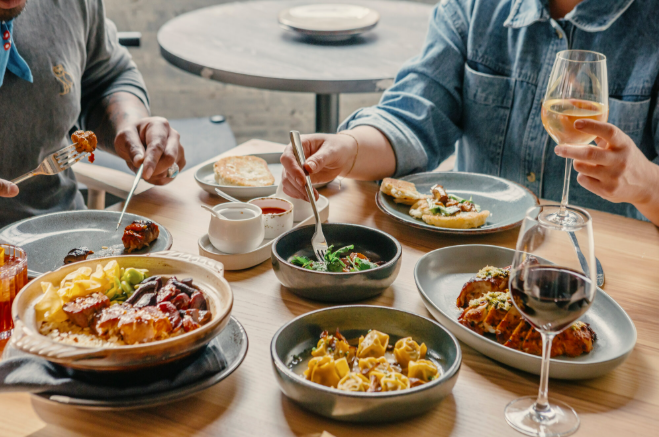
Think back to a night out that actually stands out in your memory, and it’s rarely just about the food. It’s the table full of shared appetizers passed around mid-conversation, the game playing on a screen everyone glanced at between bites, the deal that turned a casual Tuesday into an actual plan with friends. Great restaurants understand this instinctively, and a spot like St. Louis Bar & Grill shows exactly how the right combination of food, atmosphere, and timing turns an ordinary meal into something people actually look forward to.
Shared Food Creates Shared Moments
Some of the most socially memorable dining experiences center around food meant to be shared, not individually plated meals eaten in isolation. A plate of wings passed around the table, a shared order of poutine or nachos everyone digs into together, these formats naturally encourage conversation, laughter, and a sense of togetherness that a solo entrée simply doesn’t create in the same way.
This is part of why shareable menu items tend to anchor so many memorable restaurant experiences. They turn the meal itself into a shared activity rather than a series of individual experiences happening at the same table, which is exactly the kind of dynamic that makes a night out feel genuinely social rather than just functional.
Signature Flavors Give a Place an Identity Worth Talking About
A restaurant known for a specific, distinctive flavor, a signature sauce, a specialty dish, gives guests something concrete to talk about and recommend to others. “You have to try their garlic dill wings” is a far more memorable, specific endorsement than a vague “the food was good,” and it’s exactly the kind of detail that gets a restaurant recommended by word of mouth long after a single visit.
This kind of signature identity also gives regulars something to look forward to and something to introduce to friends who haven’t tried it yet, turning first-time visitors into repeat guests who bring others along for the experience.
Recurring Deals Turn Random Visits Into Regular Habits
A restaurant that offers a consistent, well-known deal, a specific day for discounted wings, a regular happy hour, gives people a reason to plan around it rather than visiting only when the mood strikes. Knowing that Tuesday means discounted wings or that happy hour starts at a specific time creates a rhythm that turns a restaurant into a recurring part of someone’s social routine, rather than an occasional destination they visit without any particular pattern.
This predictability matters more to social dining than people often realize. Groups of friends or coworkers are far more likely to establish a regular hangout around a place with a known, reliable deal than around a restaurant with no consistent reason to choose it over anywhere else.
Atmosphere Shapes Whether People Actually Talk to Each Other
The physical environment of a restaurant has a direct influence on the kind of social experience guests have. A casual, comfortable atmosphere with screens for watching a game, enough noise to feel lively without drowning out conversation, and a layout that encourages groups to settle in rather than rush through a meal all support the kind of relaxed, extended social interaction that people remember fondly afterward.
This is a big part of why casual, sports-bar-style restaurants tend to become such reliable gathering spots for groups. The atmosphere itself is designed to support socializing, not just efficient meal service, which changes the entire feel of a visit.
Loyalty Programs Turn Individual Visits Into an Ongoing Relationship
A rewards app or loyalty program does more than offer discounts, it gives guests a reason to think of a restaurant as an ongoing relationship rather than a one-time transaction. Earning points on every visit, being able to redeem them for food or deals, creates a small but meaningful sense of connection to a specific place, which subtly reinforces why a group might choose to return there over an unfamiliar alternative.
This kind of ongoing engagement helps a restaurant become a genuine part of someone’s regular social life, rather than just one option among many interchangeable choices.
Restaurants That Support Their Communities Build Deeper Loyalty
Guests increasingly pay attention to how the businesses they frequent engage with their broader community. A restaurant that visibly supports causes, through fundraising, awareness campaigns, or community events, gives guests an additional reason to feel good about choosing that spot beyond the food and atmosphere alone. This kind of community connection can deepen loyalty in a way that menu items and deals alone don’t fully accomplish, turning customers into genuine supporters of the brand.
The Bottom Line
Memorable restaurant experiences rarely come down to any single factor. They’re built from shareable food that encourages connection, a distinctive identity worth talking about, predictable deals that create habits, an atmosphere designed for socializing, and a sense of ongoing relationship through loyalty programs and community involvement. Restaurants that get this combination right don’t just serve meals, they create the backdrop for the moments people actually remember and keep coming back for.