
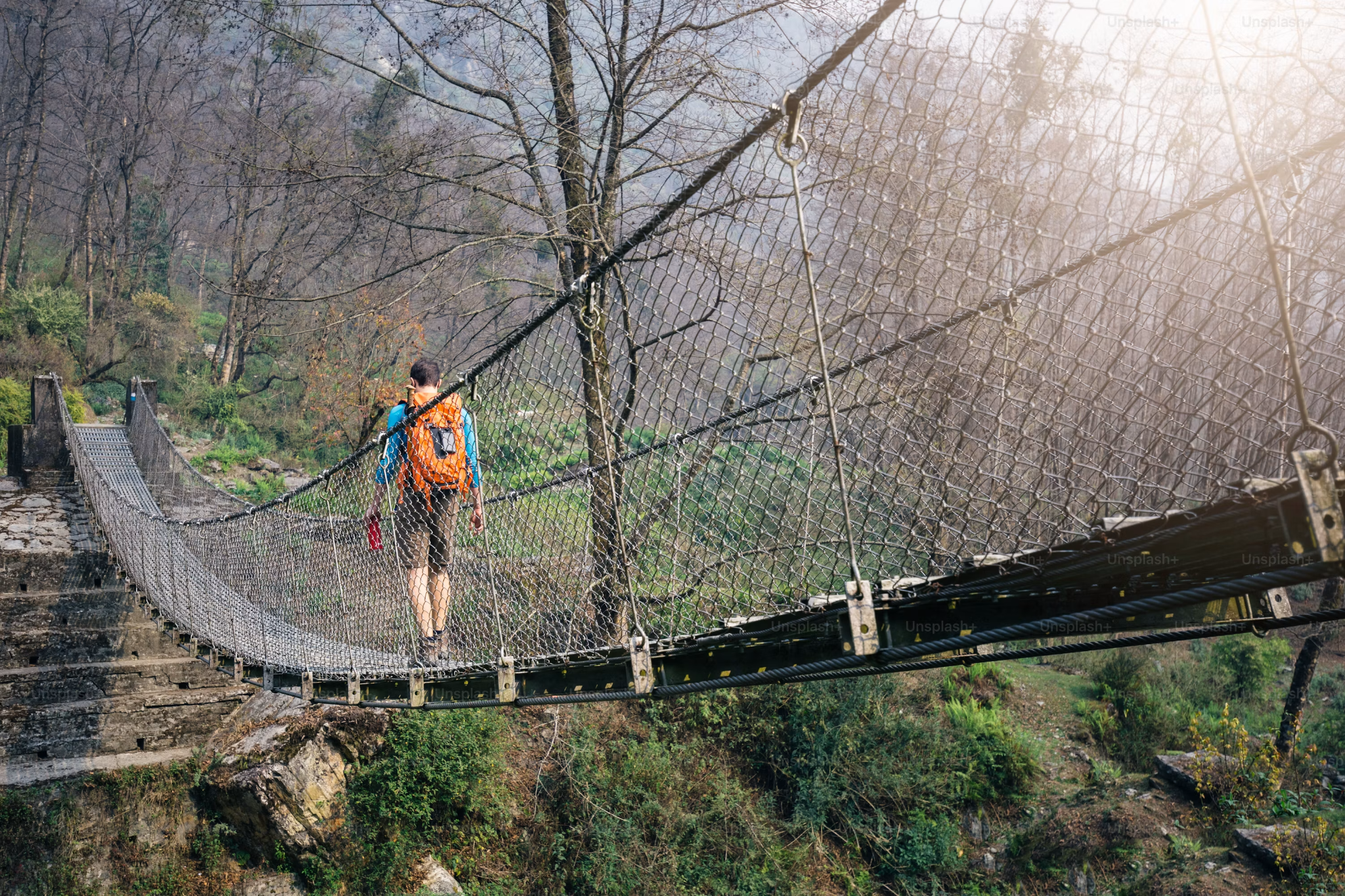
Ask ten people who’ve been to Nepal which trek they did, and you’ll probably get three different answers repeated over and over: Annapurna Circuit, Annapurna Base Camp, Manaslu Circuit. Search for any one of them online and the other two show up in the results anyway, usually lumped together as if they’re interchangeable versions of the same walk. They’re not. Anyone who’s actually done more than one of these routes will tell you the days feel completely different — not just in scenery, but in pace, in the towns you pass through, in how tired you are by evening.
This isn’t a “which trek is the best” piece, because that question doesn’t really have an answer. It depends on how much time you’ve got, how your body handles altitude, and honestly, what kind of trip you’re in the mood for. What this article does instead is walk through how each route actually plays out on the ground — the terrain, the villages, the tough sections, and the kind of trekker each one tends to suit.
Put simply: the Annapurna Circuit loops around the Annapurna massif, Annapurna Base Camp heads straight into the Annapurna Sanctuary, and the Manaslu Circuit traces a path around the Manaslu region before crossing Larke Pass. Same mountain range, three very different journeys.
How the Three Trekking Routes Are Different
Before getting into day-by-day detail, it helps to understand what separates these routes at a structural level — because that’s really what shapes the experience.
Annapurna Circuit Trek — A Changing Himalayan Journey
The Annapurna Circuit trek is built around transition. You start low, in farmland and river valleys, and the landscape keeps shifting under your feet for days — forest gives way to drier terrain, terraced fields give way to stone villages that look more Tibetan than Nepali. It’s a circuit in the true sense, wrapping around the mountain rather than heading to a single point, and that’s what gives it its shape: the trek feels less like reaching a destination and more like watching an entire region unfold, valley by valley, until you’re standing at Thorong La looking at a world that barely resembled where you started.
Annapurna Base Camp Trek — Destination-Focused Mountain Walking
The Annapurna Base Camp Trek works differently. Instead of circling the range, you’re walking straight into it — through rhododendron forest, past Gurung villages built into steep hillsides, and gradually into a natural amphitheater of peaks known as the Annapurna Sanctuary. Machhapuchhre dominates the skyline for most of the trek before Annapurna itself comes into full view. There’s a clear sense of arrival with ABC that the Circuit doesn’t really offer in the same way — you’re walking toward something specific, and you know exactly when you’ve gotten there.
Manaslu Circuit Trek — Remote and More Rugged
The Manaslu Circuit trek shares some DNA with the Annapurna Circuit — it’s also a loop, also builds toward a high pass — but it feels rawer. Fewer trekkers, narrower trails, villages that still run on a rhythm closer to subsistence farming than tourism. As you climb toward Larke Pass, the trail moves through terrain that shifts fast: green valleys one day, high alpine desert the next.
Annapurna Circuit: What the Route Feels Like Day by Day
The trek generally moves from lower valleys into the middle hills, then climbs steadily into high mountain terrain before the Thorong La crossing, after which the landscape opens into the drier, Mustang-influenced side of the range on the descent.
Early days pass through farmland and forest, with rivers cutting through the valley floor. As elevation increases, trees thin out and the architecture changes — you start seeing flatter-roofed stone houses built for wind and cold rather than monsoon rain. It’s a gradual shift, which is part of what makes the trek memorable; nothing changes overnight, but by the time you’re near the pass, you’d barely recognize the terrain from where you began.
The Thorong La Section
Crossing Thorong La is less about the view from the top and more about the process of getting there. It’s typically an early start, walking slowly in cold, thin air, with weather that can turn without much warning. The pass isn’t a quick photo stop — it’s the payoff of days of gradual acclimatization, and treating it that way matters more than trying to rush the ascent.
Annapurna Base Camp: Entering the Mountain Sanctuary

Where the Circuit unfolds gradually, ABC narrows in on you. The trail moves from terraced hillsides into forest, through rhododendron stands that bloom heavily in spring, and then into a tighter mountain valley that eventually opens into the Sanctuary itself — a bowl of peaks with Annapurna South, Machhapuchhre, and Annapurna I closing in around you.
There’s a noticeable shift in mood once you pass through the narrow gorge leading into the Sanctuary. The trail feels enclosed, almost hushed, before it opens up at Base Camp itself.
Why do people choose ABC instead of the full Annapurna Circuit? Mostly because it delivers a concentrated Himalayan experience — you get the high-altitude payoff without committing to the full loop around the massif, which matters a lot if your time or fitness is limited.
Manaslu Circuit: A Different Kind of Himalayan Experience

The Manaslu Circuit Trek runs through river valleys and traditional villages before climbing into increasingly high terrain, culminating in the Larke Pass crossing and a descent into an entirely different landscape on the other side.
What stands out here isn’t just the scenery — it’s the cultural texture. Upper villages carry strong Buddhist influence, with stone houses, prayer flags, and monasteries that feel woven into daily life rather than staged for visitors. Himalchuli and the Manaslu massif loom over much of the trail, and the sense of remoteness comes less from the landscape alone and more from how sparse the infrastructure is compared to the Annapurna region.
Crossing Larke Pass
Larke Pass is a long, demanding day, and altitude makes itself known. Weather in this part of the range shifts quickly, so pacing and acclimatization aren’t optional extras — they’re what makes the day manageable. It’s not a pass you cross for a photo; it’s one you cross because the days before it prepared your body for exactly this.
Landscapes You Notice on the Trail, Not Just on a Map
| Trek | Landscape character | Major visual experience |
| Annapurna Circuit | Highly varied | Valleys, forests, high passes, dry mountain terrain |
| Annapurna Base Camp Trek | Concentrated mountain environment | Forests, sanctuary valley, close-up peaks |
| Manaslu Circuit | Remote valley-to-high mountain progression | River valleys, traditional settlements, high Himalayan terrain |
None of these treks are really “about” one mountain view. What sticks with most people is the transition — walking out of forest into open alpine terrain, or watching farmland slowly give way to stone villages that feel like a different century. That gradual change is often what people remember more clearly than the summit-day photo.
Culture and Village Life Along the Three Routes
Trekking in this part of Nepal means passing through people’s actual homes and farms, not walking through empty wilderness. Teahouses double as someone’s living room. Gurung communities dominate much of the Annapurna region, while upper Manaslu carries a stronger Tibetan Buddhist character. Daily life along the trail revolves around farming, livestock, and increasingly, tourism itself — and that mix changes noticeably from one valley to the next, so it’s worth not expecting every village to feel the same.
Good local guidance makes a real difference here too — outfits like Adventure Great Himalaya, with genuine on-the-ground route knowledge, can shape how well a trekker actually experiences these communities rather than just passing through them.
Difficulty, Altitude, and What Actually Makes These Treks Demanding
Slapping an “easy, moderate, hard” label on these treks oversimplifies things. Real difficulty comes from a combination of factors — daily distance, total elevation gain, how many nights you spend sleeping at altitude, trail conditions, and weather. Fitness matters, but so does how well your body handles thin air, which isn’t always predictable in advance.
The highest point isn’t the only measure of difficulty. Thorong La, Annapurna Base Camp, and Larke Pass all sit at serious altitude, but how demanding each feels depends just as much on the ascent profile and rest days built into the itinerary as it does on the number on the sign at the top.
Which Trek Fits Your Travel Style?
Choose the Annapurna Circuit if you want a longer journey with major landscape shifts, village life, and a high pass to work toward.
Consider Annapurna Base Camp if you want something more concentrated — a direct route into the Sanctuary with close mountain views in a shorter window.
Consider the Manaslu Circuit if you’re after a more remote feel, with traditional settlements and a demanding pass crossing away from the busier trails.
The right pick really comes down to your available time, trekking background, and how much infrastructure you want along the way.
Practical Planning: What Trekkers Should Think About Before Leaving
Build in enough days for acclimatization rather than rushing the itinerary. Check current permit requirements ahead of departure, since these routes require specific permits that can change. Confirm road and trailhead access too — conditions shift year to year. Beyond that, solid footwear, proper layering for temperature swings, and staying on top of hydration go a long way. Keep the plan flexible enough to absorb a weather delay without derailing the whole trek, and don’t judge difficulty by distance alone — altitude changes everything.
The Real Difference Is in the Journey
The Annapurna Circuit trek is defined by progression — a long loop around a vast mountain region that keeps changing under your boots. The Annapurna Base Camp Trek is about arrival, walking directly into a mountain sanctuary. The Manaslu Circuit trek blends remoteness, cultural depth, and a serious pass crossing into something that still feels a little less traveled.
What tends to stay with people, though, isn’t usually the summit moment. It’s the ordinary stretches — a village waking up around you in the morning, the slow realization that the valley looks nothing like it did two days ago, or the quiet between one pass and the next.
Frequently Asked Questions About Annapurna and Manaslu Trekking
Is the Annapurna Circuit harder than Annapurna Base Camp?
It depends on the itinerary, altitude exposure, and your own fitness. The Circuit involves a major high-pass crossing at Thorong La, while ABC has its own sustained climbing and descending, just over a shorter overall route.
How high is Annapurna Base Camp?
Annapurna Base Camp sits at roughly 4,130 m (13,550 ft). That’s still high enough that acclimatization and sensible pacing matter, even on a shorter trek.
What is the highest point of the Annapurna Circuit?
Thorong La Pass, at around 5,416 m (17,769 ft). Crossing it requires proper acclimatization beforehand and reasonably favorable weather.
How high is Larke Pass on the Manaslu Circuit?
Larke Pass sits at approximately 5,106 m (16,752 ft), and the crossing day is widely considered one of the more physically demanding stretches of the route.
Which trek is better for first-time trekkers: Annapurna Circuit, ABC, or Manaslu?
There’s no universal answer here. It comes down to trekking experience, time available, comfort with altitude, and logistical preferences. First-timers are better off evaluating the full itinerary of each route rather than picking based purely on which one is most talked about.