
Most people land in Kathmandu, walk through Thamel, visit a couple of temples, eat their first dal bhat, and think they’ve “done” Nepal. They haven’t. Kathmandu is where the country introduces itself — it’s not where the story ends. The real shift happens once you leave the valley and start moving toward the hills, where the roads narrow, the air thins, and the pace of life changes completely.
There are a few different ways to make that shift. Some travelers walk it, step by step, over days or weeks. Others take an Everest base camp helicopter tour because their schedule simply won’t allow for two weeks on the trail. Some do both — walking in and flying out — through what’s usually called an Everest base camp trek with helicopter return. And then there’s a smaller group who want something more physically demanding, who go beyond trekking altogether into Mera Peak climbing, Nepal’s most accessible real mountaineering objective.
None of these is “better.” They’re just different doors into the same mountains. Nepal’s Himalayan experience isn’t only about reaching a famous viewpoint — it’s walking through mountain settlements, sharing a meal with people who’ve lived there for generations, standing quietly outside a monastery, and figuring out how your body handles altitude along the way.
Why Go Beyond Kathmandu?
Kathmandu Valley earns its reputation. Durbar Square, Swayambhunath, Boudhanath — these are genuinely significant places, historically and spiritually. But the valley is also crowded, noisy, and increasingly urban, and it gives you almost none of the texture that defines the rest of the country.
Head north or east and the landscape starts changing fast. Terraced fields give way to pine forest, then rhododendron, then rock and ice. You’ll cross suspension bridges strung over rivers that look impossibly turquoise, pass mani walls you’re supposed to walk clockwise around, and stop for tea in lodges run by the same families for decades. Tourism out here isn’t an industry sitting on top of daily life — it basically is daily life for a lot of these communities. Slow down for a few days on any trekking route and you notice things a packed sightseeing itinerary just can’t show you.
The Everest Region: More Than a Mountain View
Walking Into Sherpa Country
The trail toward Everest doesn’t hit you with altitude all at once — it builds gradually, village by village. Lukla drops you into the lower Khumbu, and from there the settlements get higher and the culture gets more distinctly Sherpa with every day. Namche Bazaar is the obvious hinge point: part market town, part acclimatization stop, part unofficial capital of the region. A day or two later you reach Tengboche, home to one of the most important monasteries in the Khumbu, where monks still hold daily prayers that visitors are welcome to sit in on, quietly.
It’s worth remembering these aren’t stage sets built for trekkers. They’re people’s homes, workplaces, and places of worship first.
What Trekkers Notice on the Trail
Ask anyone who’s done it and they’ll tell you the same thing: pace matters more than fitness. Altitude reshapes an ordinary day — you drink more water than feels necessary, you rest when your itinerary allows for it, and you layer clothing constantly because temperatures swing hard between sun and shade. And you learn, usually within the first day or two, to walk clockwise around mani walls and stupas, and to leave prayer wheels spinning in the direction they’re meant to spin.
For travelers who don’t have two or three weeks free, this is exactly where an Everest base camp helicopter tour becomes a realistic option — a way to see this landscape without committing to the full walk.
Everest Base Camp by Helicopter: A Different Himalayan Perspective
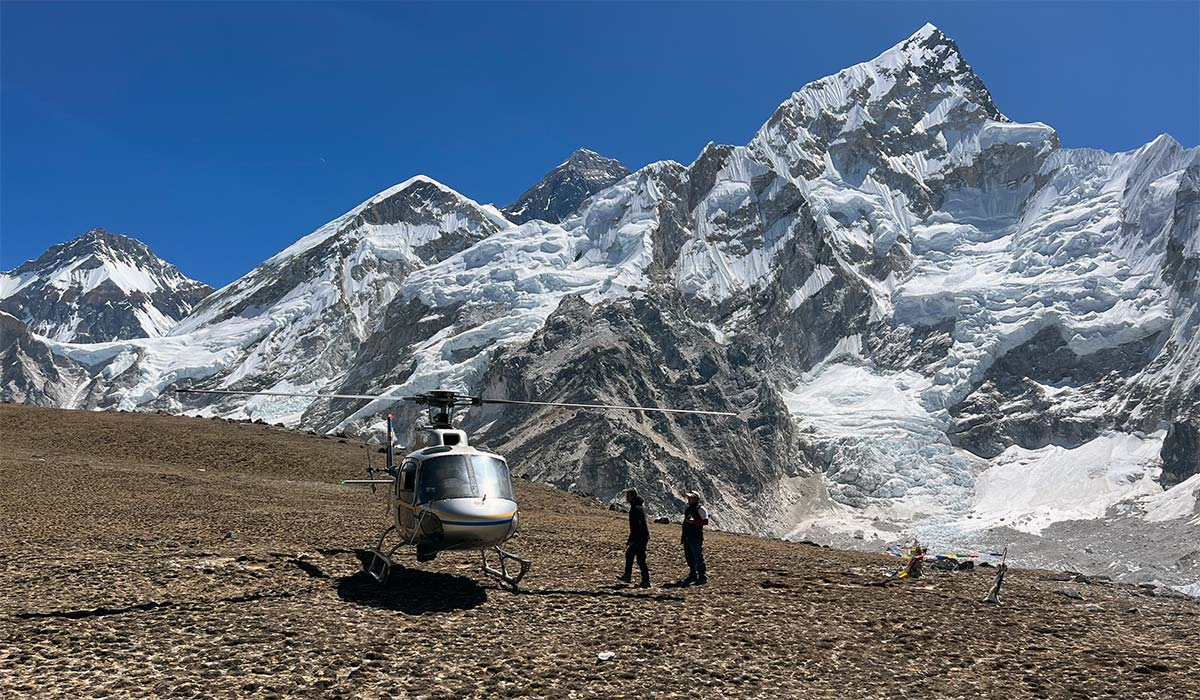
An Everest base camp helicopter tour tends to appeal to people in a specific situation: limited vacation time, limited altitude tolerance, or simply no interest in multi-day trekking, but a strong pull toward seeing Everest up close. And it does deliver that — the flight route out of the Kathmandu or Lukla area opens up ridgelines and glaciers that most people only ever see in photographs.
What it doesn’t deliver is the trek itself. Seeing the Himalayas from a helicopter window is a genuinely different experience from walking beneath them for a week, and a good travel writer — or a good operator, for that matter — won’t pretend otherwise. Weather and visibility control almost everything about mountain flying in Nepal; flights get delayed or rerouted more often than people expect. Before booking, it’s worth understanding where the helicopter actually lands, how altitude affects that landing, and what happens if the weather doesn’t cooperate. Go with an operator that has experienced mountain pilots, a clear weather policy, and a real plan for delays — not just a nice brochure.
Trek First, Fly Back: The Experience of Returning by Helicopter

Why Combine a Trek With a Helicopter Return?
This is the hybrid option, and honestly, it’s a smart one for a lot of people. You walk in — through Namche, past Tengboche, up toward base camp — getting the villages, the trail life, the food, the slow build of altitude and landscape. Then, instead of retracing every one of those steps on the way down, you fly out.
An Everest-base camp trek return by helicopter gives you the physical and cultural core of the trek without doubling the time commitment. That said, it shouldn’t be treated as a guaranteed add-on. The flight depends on weather, on your itinerary’s pacing, and on how the helicopter operators are running that week — so plan the trek assuming you might walk the whole thing, and treat the flight as a bonus if conditions line up.
What the Flight Cannot Replace
A helicopter can save you days. It can’t replace the version of Nepal you only get by walking — the conversations at teahouses, the small kindnesses from lodge owners, the slow realization of how your body and mind adjust to thin air over time. Flying back is efficient. Walking in is where the actual relationship with the place gets built.
Mera Peak Climbing: From Trekking Into Himalayan Climbing

What Makes Mera Peak Different?
Mera peak climbing sits in a category of its own — not quite a “trek,” not full technical mountaineering either. It’s often described as Nepal’s highest trekking peak, and getting to the summit involves real climbing skills: using crampons, roping up with a guide, moving across glaciated terrain. It demands a level of endurance and altitude tolerance that goes well past a standard trekking itinerary.
The approach itself runs through remote country in the Hinku Valley, well off the busier Khumbu trails, which is part of the appeal for people who’ve already trekked and want something quieter and harder. Prior high-altitude trekking experience helps, though it’s not a strict requirement — what matters more is going with an experienced climbing guide, proper equipment, and honest acclimatization time built into the schedule.
The Cultural Side of a Climbing Journey
Even on a climbing trip, the human side doesn’t disappear. You’re still passing through small mountain communities, still relying on local guides and porters whose knowledge of the terrain is the real reason these trips work, still stopping at teahouses that double as the only social hub for miles. Adventure tourism here is tied directly to local livelihoods — the guides, porters, lodge owners, and yak herders you meet along the way aren’t background characters in your trip; they’re the reason it’s possible at all.
Culture You Experience on the Trail, Not Just in a Museum
This, more than anything, is what separates trekking in Nepal from a checklist of destinations. Hospitality in the hills is real, not performative — someone will offer you tea before you’ve even asked. Monasteries are functioning religious sites, so a quiet, respectful visit matters more than a quick photo. Prayer flags, prayer wheels, and mani stones all carry meaning, and walking around them the correct way is a small but genuine sign of respect.
Food is simple and repetitive by design — dal bhat, noodle soups, potatoes cooked a dozen different ways — and there’s something honest about eating what the mountains actually provide. Always ask before photographing someone, and think twice before wandering into a home or ceremony uninvited. These villages are where people live their whole lives, not attractions built for visitors passing through.
Practical Tips for Experiencing Nepal Responsibly
A little preparation changes the whole trip. Before you go, it helps to build fitness around sustained uphill walking, give your itinerary enough acclimatization days rather than rushing the altitude gain, check weather and flight conditions in the days before departure, book through guides and operators with a solid local track record, and pack the right clothing, medication, insurance, and documents well ahead of time.
Responsible trekking matters just as much once you’re out there. Cut down on plastic waste where you can, respect local water sources, stick to marked trails and park regulations, and pay guides and porters fairly for genuinely hard work.
Choosing the Right Himalayan Experience
| Traveler situation | Relevant experience |
| Limited time | Everest base camp helicopter tour |
| Wants days of walking and mountain culture | Everest Base Camp trekking |
| Wants trekking plus a faster return | Everest-base camp trek return by helicopter |
| Wants a technical mountain objective | Mera Peak climbing |
| Mainly interested in culture | Villages, monasteries, local food, slower trekking |
| Wants a bit of everything | Trekking combined with a helicopter return |
The Nepal You Remember Is Often Between the Destinations
Kathmandu starts the trip, but it’s rarely what people talk about afterward. Ask someone who’s been and they’ll usually mention a conversation at a lodge, a hard morning climb that felt impossible until it wasn’t, a monastery at dusk, or the moment the landscape suddenly opened up into something they weren’t prepared for. Helicopter tours, treks, and something like Mera Peak climbing are just different ways of getting close to that. The value isn’t in collecting viewpoints — it’s in paying attention to the people and places you pass through on the way there.
Frequently Asked Questions About Experiencing Nepal Beyond Kathmandu
Is an Everest base camp helicopter tour suitable for travelers with limited time?
Yes — it’s built for exactly that situation. It saves days compared to trekking, though it’s a different kind of experience, not a substitute for walking in. Weather and visibility can affect scheduling, so build in some flexibility.
Can I trek to Everest Base Camp and return by helicopter?
Yes, an Everest-base camp trek return by helicopter is a common option. You walk in for the cultural and physical experience, then fly back down. The return flight depends on weather and operator scheduling, so it’s best treated as a likely option rather than a certainty.
Is Mera Peak climbing suitable for a first-time climber?
It’s more demanding than standard trekking and involves basic climbing skills, glacier travel, and serious altitude. It’s possible for a motivated first-timer with the right preparation, a qualified guide, and realistic acclimatization time — but it shouldn’t be treated casually.
What cultural customs should I respect while trekking in Nepal?
Walk clockwise around mani walls and stupas, ask before photographing people, dress modestly near monasteries, and treat religious ceremonies and ordinary homes with the same respect you’d want shown to your own.
How can I experience Nepal beyond the main tourist attractions?
Spend real time in mountain villages, use local guides and lodges, eat what’s actually offered rather than seeking familiar food, and slow down enough to let conversations and small moments happen instead of rushing between stops.