
Turin doesn’t get the food attention that Bologna or Naples do, and I think that’s a shame. This is the city that gave Italy vermouth, hazelnut chocolate and the breadsticks that turn up on restaurant tables across the country. The cooking is rich and buttery, built for cold winters at the foot of the Alps.
It’s also an easy city to eat your way around, with most of the good stops a short walk apart. Here’s how I’d plan a food day in Turin, from the first coffee to the aperitivo hour.
Start with a bicerin
Turin’s own hot drink is the bicerin: espresso, thick drinking chocolate and a layer of cream, served in a small glass and left unstirred, so you taste each layer in turn. The name means “little glass” in Piedmontese. The café most associated with it, Caffè Al Bicerin, has been on Piazza della Consolata in the old Quadrilatero Romano since 1763. The room is small, so I’d go first thing in the morning or mid-afternoon to get a table.
If you’d rather start with a proper breakfast, the historic cafés around Piazza San Carlo and Piazza Castello do a good cappuccino and pastry at the bar, in rooms full of mirrors and dark wood. Standing at the counter costs less than sitting down, and it’s how most people in Turin drink their morning coffee.
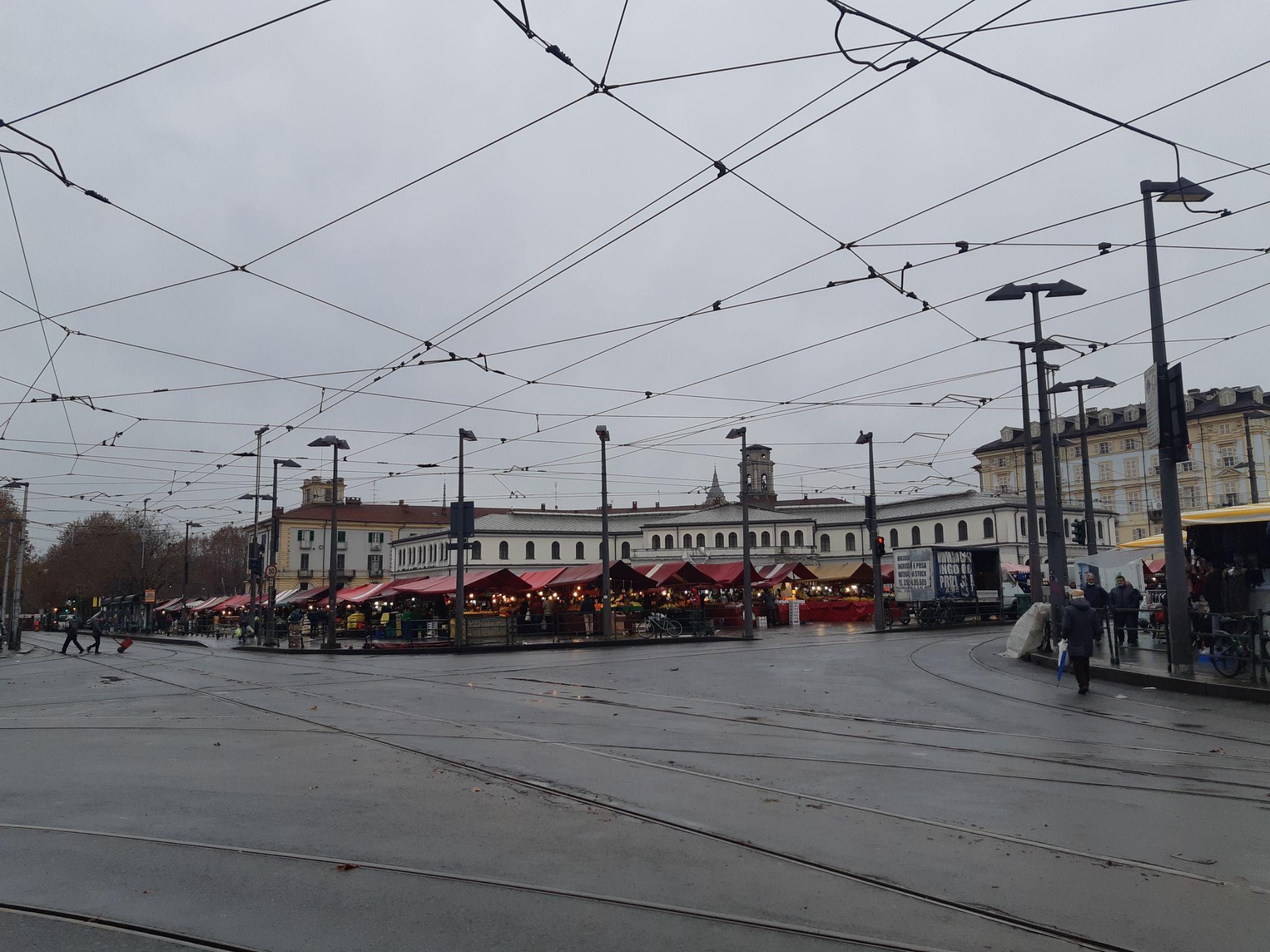
Porta Palazzo, the city’s market
A few minutes’ walk from the bicerin café, Porta Palazzo fills Piazza della Repubblica with stalls from Monday to Saturday. It covers around 50,000 square metres and is often called the largest open-air market in Europe. Go in the morning, because the stalls start packing up by early afternoon.
The outdoor stalls sell fruit and vegetables, much of it from farms just outside the city. The covered hall with the clock tower holds the butchers and cheesemakers. It’s a good place to see Piedmontese produce before you meet it on a menu: Piedmont hazelnuts, fresh agnolotti, local cheeses and, in autumn and winter, the tall pale cardoons that go into bagna cauda.
I wouldn’t come here for a sit-down meal. Buy some fruit, a wedge of cheese or a bag of hazelnuts to snack on, and save your appetite for lunch.
What to order at lunch
Piedmontese cooking leans on butter, eggs, slow-cooked meat and good red wine, and lunch is where you see it best. These are the dishes I look for on a trattoria menu:
Agnolotti del plin: small pinched pasta parcels filled with meat, served with butter and sage or with the juices from a roast.
Tajarin: fine, golden egg pasta, often served simply with butter.
Vitello tonnato: cold sliced veal under a creamy tuna and caper sauce. It sounds unusual, but it’s one of the most popular starters in the city.
Battuta di fassona: finely chopped raw beef from the local Fassona breed, dressed with olive oil and lemon.
Bollito misto: a winter spread of boiled meats served with green sauce and mostarda.
Bagna cauda: a warm dip of garlic, anchovy and olive oil for vegetables, eaten in autumn and winter.
Many trattorie offer a fixed-price lunch on weekdays, which is the cheapest way to try two courses. A glass of Barbera or Dolcetto, both everyday local reds, goes with almost all of it.
There will be grissini on the table too. The thin breadsticks were first made in Turin, and the hand-rolled ones from a good bakery are a world away from the packaged kind.
Chocolate and gianduja
Turin’s best-known chocolate is gianduja, a smooth blend of chocolate and ground hazelnuts. It came about in the 19th century, when a blockade made cocoa scarce and expensive and the city’s chocolate makers stretched it with Piedmont hazelnuts. The gianduiotto followed in the mid-1800s: a small, ingot-shaped chocolate wrapped in gold or silver foil, its shape said to echo the hat of Gianduja, the comic character who represents Piedmont.
The historic confectioners in the centre sell gianduiotti loose by weight or in boxes, along with chocolate-coated hazelnuts and pralines. A bag of them is the easiest edible souvenir to take home, as long as you aren’t travelling in the heat of summer.
When to do aperitivo
Vermouth was born here. In 1786 Antonio Benedetto Carpano infused white wine with herbs and spices in Turin, and it became so popular that his shop was soon open around the clock. More than two centuries later, the city still takes its pre-dinner drink seriously.
Aperitivo runs from about 6pm to 9pm. You order a drink, usually a vermouth on ice with a twist of orange, a spritz or a glass of wine, and it comes with food. In some bars that means olives and crisps. In others it’s a spread of focaccia, pasta salads and small hot dishes, with the drink priced a little higher to match. Plenty of locals treat a generous aperitivo as a light dinner, and I’d do the same.
My favourite part of town for it is the Quadrilatero Romano, the old grid of narrow streets near Porta Palazzo, where the bars spill onto the pavement in the warmer months. It’s also a short walk from Porta Susa station. If you’re catching an evening train, drop your bags near the station in the afternoon, then spend your last couple of hours over a vermouth in the Quadrilatero before strolling back for your train.
Arrive early if you can. The popular bars fill up by 7pm, especially on Fridays and Saturdays, and the food is at its best at the start of the evening.