
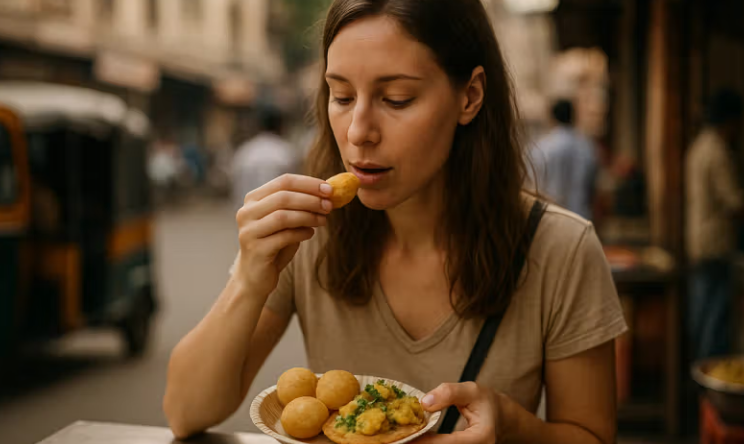
For many travellers, street food is the highlight of any trip. It is where the genuine character of a place reveals itself, cooked at a roadside stall by someone who has prepared the same dish countless times. The one thing that deters people is the worry of falling ill and losing several days of a holiday to an upset stomach. The reassuring reality is that, with a little care and common sense, it is perfectly possible to enjoy street food widely and remain well. The following guide explains how.
Choose busy, popular stalls
The most useful principle is also the simplest: eat where the locals eat. A stall with a long queue of local customers tells you two things at once. The food is good, and it is selling quickly. A high turnover means the ingredients are fresh and little is left standing for long. By contrast, a quiet stall displaying food that has clearly been sitting out for hours is best avoided. In most cases, the queue is the most reliable review available.
Prioritise food that is freshly cooked and served hot
Heat is one of your greatest allies. Food that is cooked to order in front of you and served piping hot has had most potential contaminants destroyed in the process. A hot wok, a charcoal grill or a steadily boiling pot are all working in your favour. It is wise to be more cautious with anything served lukewarm, anything pre-cooked and left standing, and the room-temperature spreads that are more exposed to contamination. If you can watch a dish being cooked and it arrives too hot to eat immediately, you are generally in a strong position.
Be cautious with raw and unpeeled foods
The long-standing traveller’s guidance still holds true. If you cannot peel it, boil it or watch it being cooked, it is worth pausing to consider. Fruit that you peel yourself is usually a safe choice. Salads and raw garnishes carry more risk, as they are often rinsed in tap water and served without further preparation, which leads to the next point.
Take care with water and ice
Water is responsible for more travellers’ illness than food itself. In destinations where the tap water is not safe to drink, it is sensible to rely on sealed bottled water, including when brushing your teeth. Ice deserves particular attention, as it is easy to avoid the tap all day and then add ice of unknown origin to a drink. If you are unsure where the ice has come from, it is best declined. The same caution applies to freshly squeezed juices diluted with water, and to any raw item that has been washed rather than cooked.
Heartburn and acid reflux
There is a second issue that receives far less attention. Even when the food itself is entirely safe, a sustained period of street food can affect the digestive system in a quite different way. Consider what is typically involved: fried dishes, generous amounts of chilli and garlic, large portions, a number of alcoholic drinks and a tendency to eat the most tempting food late at night. Together, these are common triggers for heartburn and acid reflux, the uncomfortable burning sensation behind the breastbone that often appears on lying down.
For the occasional episode, the remedies are straightforward. It helps to avoid lying down immediately after eating, to moderate portion sizes and spice, to ease back on alcohol, and a standard antacid will usually provide relief. For those who experience symptoms frequently, or who are undertaking a long trip centred on food, it is worth being prepared in advance. Frequent heartburn is often managed with a treatment such as omeprazole, which works by reducing the amount of acid the stomach produces rather than neutralising it afterwards. It is worth noting that it takes a few days to reach full effect, making it a measure to plan ahead for rather than an immediate solution, and any persistent or severe symptoms should always be assessed by a doctor.
“Rich, spicy and fatty food, large late meals and alcohol are all classic heartburn triggers, so it is unsurprising that an extended eating trip can bring it on,” says Ana Carolina Goncalves, Superintendent Pharmacist at Pharmica. “For occasional symptoms, antacids and a few sensible habits usually suffice. Where it occurs regularly, a proton pump inhibitor can help, but persistent heartburn should always be properly reviewed by a medical professional rather than simply medicated indefinitely.”
If you do become unwell
Even experienced travellers are occasionally caught out. Should you develop an upset stomach, the priority is to stay well hydrated, as dehydration is what causes most of the associated discomfort. Sip water regularly, and consider packing a few sachets of oral rehydration salts, which are inexpensive, take up almost no space and are genuinely valuable. Most episodes resolve within a day or two. If symptoms persist, if there is any blood, or if you develop a high fever, it is important to stop and seek medical attention.