
Planning a family safari in Tanzania is more than just a vacation—it’s a shared adventure your kids will talk about for years. Imagine watching elephants wander past your vehicle, spotting lions in the wild, or seeing your child’s face light up during their first giraffe sighting. Tanzania offers safe, well-managed parks, family-friendly lodges, and activities designed to keep young travelers curious and engaged. From easy game drives to cultural visits and nature walks, a safari here balances excitement with comfort. This guide explores the best parks and kid-friendly activities to help you plan a smooth, fun, and unforgettable family safari experience.
Tanzania Safari With Kids: Quick-Decision Planner (Age, Energy, Interests)
Getting your safari approach aligned with your kids’ actual temperament—not some idealized version turns potential chaos into extraordinary memories. A well-planned family safari accounts for attention spans, comfort levels, and energy cycles, not just bucket-list sightings. Shorter game drives, flexible schedules, and lodges that welcome children can make wildlife encounters feel exciting rather than exhausting. When the experience is built around how your family truly functions, kids stay engaged, parents stay relaxed, and the safari becomes a shared adventure everyone remembers for the right reasons.
Best-fit safari styles by child age
Little ones between zero and three need breathing room. Private vehicles give you control, lodge pools provide afternoon respites, and shorter transfer times prevent total meltdowns. Look for shade, flexibility to bail on activities, and accommodations that understand nap schedules matter.
Children from four to seven shine on condensed game drives, particularly when lodges incorporate “bush breaks” where running around is safe and encouraged. Junior ranger activities feel like games at this stage, keeping them wonderfully engaged. Eight to twelve-year-olds manage extended drives comfortably and love night drives where allowed, while activities like conservancy cycling break up routine beautifully.
Teenagers crave experiences with genuine substance. Multi-layered itineraries featuring balloon safaris, canoeing excursions, or chimp tracking satisfy their appetite for both social media moments and meaningful adventure.
Family goals checklist
Stop right now and list your three must-haves: experiencing the Great Migration, ticking off the Big Five, intimate elephant moments, bush walks, aquatic adventures, beach unwinding, cultural immersion, or escaping tourist swarms. Once you’ve clarified priorities, route planning becomes remarkably straightforward. Attempting everything guarantees exhausted children complaining from the backseat.
Comfort-first planning rules that prevent meltdowns
Cap lengthy transfers at one per three-day period. Schedule midday lodge downtime even when wildlife viewing peaks. Bring snacks your kids genuinely enjoy, not just convenient options. Living by the “single highlight daily” principle—cramming balloon rides, walking tours, and village visits into one day practically guarantees someone will fall apart. Now that you’ve mapped family dynamics and priorities, selecting destinations becomes clearer—because Tanzania’s parks differ dramatically in wildlife concentration, travel demands, and family-appropriate pacing.
Best National Parks in Tanzania for Families (Low-Stress, High Wildlife)
Matching parks to your family’s endurance threshold trumps chasing famous names. These options blend remarkable wildlife with sensible considerations like transfer duration and visitor density.
Serengeti National Park
The Serengeti absolutely lives up to expectations when you approach it intelligently. Rather than crisscrossing the entire expanse chasing sightings, focus on regions matching seasonal wildlife movements. Between December and March, southern Serengeti becomes calving headquarters with open grasslands perfect for observing newborns. June and July transition action westward and centrally where river corridors draw predators.
Private guides willing to head home when your toddler reaches capacity? Game-changer. Balloon safaris generally require six-year minimum age and very early departures around 4:30 AM—set expectations accordingly. Motion sickness remedies and bathroom planning become essential on bumpy park roads.
Ngorongoro Crater
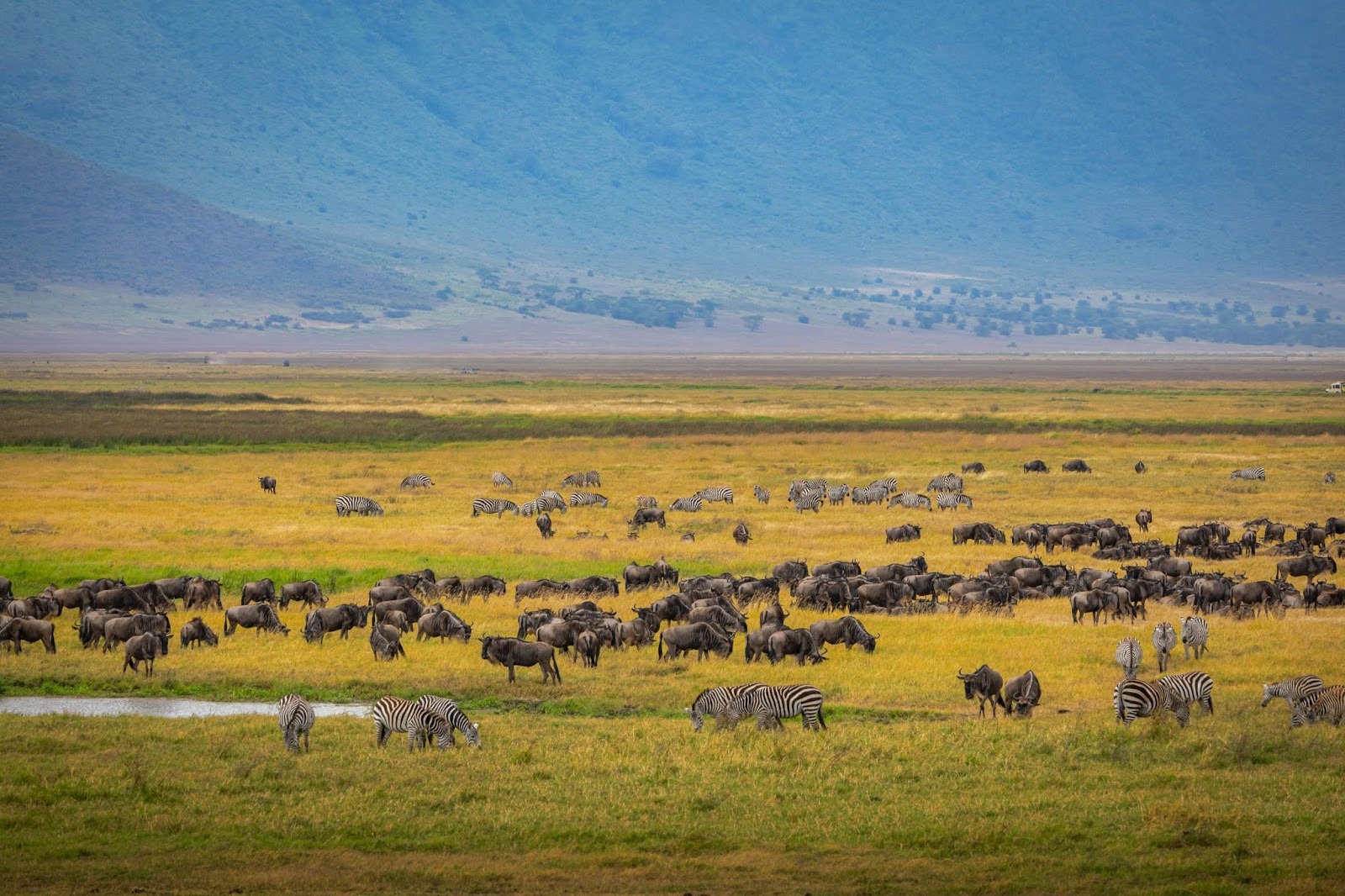
This ancient volcanic bowl concentrates the Big Five into one phenomenal day-trip, perfect for families who prefer guaranteed sightings. Early crater descents avoid congestion and capture prime viewing before afternoon heat arrives. Bring warm clothing for chilly high-altitude mornings at 7,500 feet, and strategize picnic logistics since existing vehicles happen only at designated locations.
Shoulder-season visits during April-May or November mean dramatically fewer safari vehicles crowding animal sightings. Consider combining crater visits with Ngorongoro Highlands farm stays where children decompress through gardens, friendly animals, and open running space.
Tarangire National Park
Tarangire excels for younger families and first-time family safari adventures. Impressive elephant congregations gather along the Tarangire River throughout dry months, while the park’s manageable footprint enables shorter driving loops. Traffic remains significantly lighter than Serengeti, creating peaceful atmospheres.
The baobab-studded scenery photographs gorgeously, and river-centered routes keep wildlife predictably concentrated. Combine Tarangire with Ngorongoro and abbreviate Serengeti time for satisfying variety without punishing drive schedules.These park foundations matter, but maintaining engagement between drives determines whether you preserve sanity. Here’s how activities transform “Are we there yet?” into “That was amazing!”
Family-Friendly Safari Activities (Beyond Game Drives)
Tanzania safari with kids reaches its full potential when blending classic game drives with participatory experiences matching how children actually learn. These activities shift kids from spectators to active explorers.
Junior Ranger & “Safari School” programs
Animal track identification, dung analysis (wildly popular with elementary-aged kids), bird spotting games, stargazing sessions, and navigation basics transform children into engaged participants rather than passive observers. Before committing, verify lodges provide dedicated children’s guides, age-suitable equipment, appropriate supervision ratios, and shaded outdoor learning environments. These programs generate stories your kids enthusiastically retell for years.
Boat safaris and water-based experiences
Children who struggle sitting still in vehicles often flourish on boat safaris through Nyerere National Park or certain lake regions. Observing hippos and crocodiles from secure water platforms creates completely different dynamics than vehicle-based viewing. Confirm minimum age requirements, lifejacket availability, calm-water routing, and heat management before booking. Most operators establish six-year minimums.
Walking safaris—kid-safe versions
“Mini-walks” circling camp perimeters, footprint tracking exercises, insect expeditions, and plant usage lessons provide gentle bush-walking introductions. Clear age requirements (usually twelve-plus for extended walks, though some camps accommodate younger children on abbreviated routes), armed ranger presence, and distance parameters ensure safety. These slower-paced outings teach observation skills vehicles simply cannot replicate.
Even brilliantly planned routes collapse when lodges lack family essentials like adaptable dining schedules, secure play zones, or guides who genuinely connect with children. Here’s how evaluating accommodations ensures your base becomes the trip highlight.
Lodges and Camps That Work for Families
Selecting appropriate accommodations elevates safaris from merely tolerable to genuinely delightful. These criteria separate family-friendly branding from legitimately family-ready operations.
Non-negotiable family lodge features
Interconnected rooms or family-sized tents, child-safe railings without hazardous gaps, fenced pools, and shaded recreation areas establish your foundation. Adaptable dining schedules (because strict 7 PM dinners clash with jet-lagged toddlers), familiar menu options, laundry services, well-stocked medical supplies, and dependable electricity for monitors all count significantly. Never assume—get written confirmation on these details.
Guides make or break your experience
Exceptional “kid-strong guides” demonstrate patience, storytelling talent, behavioral observation expertise, and transparent safety communication. Before booking, inquire about private vehicle access (shared vehicles restrict flexibility), bathroom-break protocols, off-road permissions, and restroom contingency planning. Outstanding guides transform good safaris into unforgettable ones.
Budget reality: where to spend versus save
Invest in private vehicles, experienced guides, and locations within or adjacent to parks reducing drive duration. Economize by limiting park transfers (each relocation consumes precious time), traveling during shoulder seasons, or alternating luxury accommodations with comfortable midrange options. Throughout 2024, typical safari investments ranged between $5,500 and $7,500, reflecting growing preference for premium experiences and extended durations.
Understanding family-ready lodge characteristics matters enormously, but witnessing everything unified in actual itineraries makes booking straightforward. Use these proven templates to adapt and confidently secure your adventure.
Your Family Safari Questions Answered
What’s the best age for a Tanzania safari with kids?
Children around six and older typically manage game drives, fundamental safety guidelines, and lodge expectations comfortably. Younger children absolutely can thrive with thoughtful planning—private vehicles, adaptive scheduling, and pool-equipped lodges enable successful safaris even with toddlers.
Do kids need malaria tablets in Tanzania?
Discuss antimalarial medications with your pediatrician based on precise regions you’ll visit. Highland territories like Ngorongoro present lower exposure than coastal areas, so universal recommendations don’t apply. Layer medications with physical protections including netting and effective repellents.
Which parks have the shortest game drives for toddlers?
Ngorongoro Crater provides concentrated wildlife during half-day excursions. Tarangire’s compact dimensions and Lake Manyara’s abbreviated loops accommodate younger children with limited patience. Private vehicles permit returning whenever necessary.
Final Thoughts on Your Tanzania Adventure
The best national parks in Tanzania for families deliver far beyond beautiful photographs—they forge authentic connections between children and wilderness that endure lifetimes. Family-friendly safari activities convert passive watching into hands-on discoveries that resonate deeply. Success hinges on aligning parks and activities with your children’s genuine capabilities, not aspirational social media versions of family exploration.
Whether researching Tanzania family holiday packages combining Serengeti wildlife with Zanzibar coastlines or designing custom routes through overlooked treasures, Tanzania rewards families who plan thoughtfully. Your children won’t retain perfect schedules, but they’ll absolutely treasure memories of their first elephant encounter or sleeping beneath African constellations.