
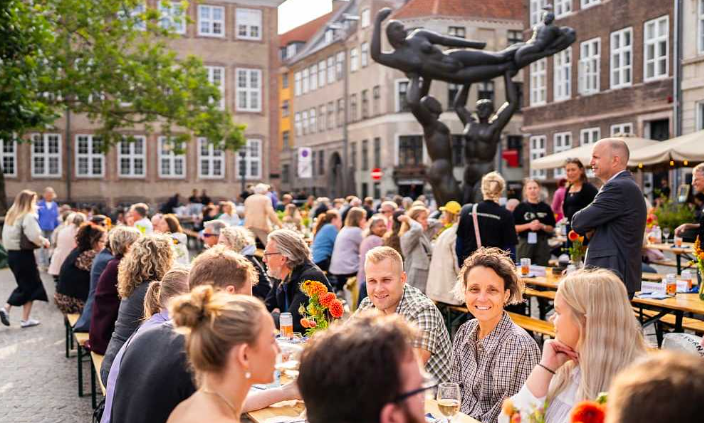
People in Europe host food festivals year-round, and there is something delicious to suit every palate. From the fresh oysters in France to the cheese delicacies in Switzerland, some festivals are worth crossing Europe for.
Truffle Hunting in Italy
Italy has no shortage of food festivals, but its truffle festivals are something else. Autumn is the big season, with towns across Piedmont, Tuscany, and Umbria celebrating truffles and everything that goes with them.
The Alba White Truffle Festival in Piedmont would be at the top of my list. White truffles are hardly an everyday ingredient, so tasting them where they are found is a pretty special experience.
You can see the truffles, meet producers, and experience Alba when its most famous ingredient is taking center stage.
Cheese in Spain
Spain knows its way around food festivals, so if cheese is your thing, I’d definitely put Trujillo on your radar if you’re traveling there during the first week of May. The town hosts the Festival Internacional de Queso, a festival that attracts hundreds of cheesemakers and a wide variety of cheeses to its medieval streets. It’s that type of festival where you walk in expecting to have a few tastes but end up losing track of time getting lost in all the assortment.
The types of cheese available at the festival range from those within the region to some wine and other regional produce. Remember to taste Torta del Casar.
Oysters in France
France has food festivals dedicated to everything from truffles and ham to garlic and champagne. But there is something particularly appealing about an oyster festival by the sea, especially Fêtes de l’Huître. Summer is oyster season in the Bassin de Thau, where local celebrations combine seafood, producers, and communal tables. You can eat oysters, go to farms, and see where the food on your plate really comes from.
And that’s part of what makes European food festivals so great, they can take the experience of eating an oyster and make it a whole travel experience.
Pulpo in Galicia
For something a little more chaotic, head to Galicia for the Festa do Pulpo de O Carballiño. Thousands of people descend on the town for a celebration of octopus. Huge pots are used to cook the octopus, which is then served as pulpo á feira with olive oil, salt, and paprika. There are long communal tables, music, and plenty of people eating together.
You are not just watching someone cook. You are right in the middle of it.
Calçots in Catalonia
There are few foods more fun to eat than calçots. These Catalan spring onions are grilled over an open fire before being peeled and dipped into romesco sauce. The Gran Festa Calçotada takes place in Valls, the home of the calçot, with cooking competitions, eating competitions, and plenty of opportunities to get involved.
And yes, when you eat calçots the right way, it gets messy. But that’s part of the fun of it!
A Few More Worth Planning Around
If you’re already in Europe and want to visit as many food festivals as possible, I would keep these on my list:
- Beaujolais Nouveau in France for wine and food.
- Fête du Citron in Menton for an enormous celebration of lemons.
- Tapapiés in Madrid for tapas in Lavapiés.
- Braderie de Lille for shopping and enormous quantities of mussels.
The Practical Side of Festival Travel
Food festivals can get busy, particularly the popular ones. You will probably use your phone to check train times, navigate unfamiliar streets, translate menus, and check your finances.
Whenever I connect to public Wi-Fi while traveling, I use a VPN and a privacy screen to handle personal matters. It protects my data and lets me safely access the things I need back home without the risk of it being stolen or snooped on.
Why Food Festivals Are Worth the Trip
There is a big difference between eating a regional dish in a restaurant and eating it at the festival that celebrates it. You get the producers, locals, traditions, and usually a fair amount of chaos thrown into the mix.
That is why these are the trips I’d happily cross Europe for. The food is the main attraction, but the real reward is seeing how deeply it is connected to the place that produced it.