
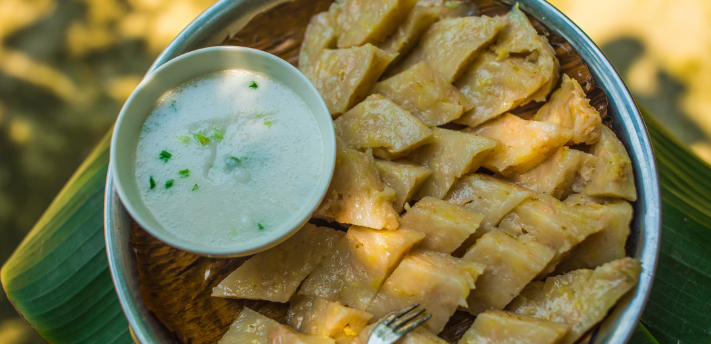
Saigon doesn’t really do three meals a day. It does three meals plus a constant stream of snacks. Between breakfast phở and late-night beers, the city keeps grazing on rice paper grilled over charcoal, rolls fried in giant woks, and paper bags of sour green mango shaken with chili salt.
The snacks are only half the story, though. Almost every Vietnamese snack comes with its own dip, and getting the dip right matters as much as the food. Here are 12 Saigon street snacks worth hunting down, with what each one is dipped in so you know what to expect when the plastic stool hits the pavement.
1. Bánh Tráng Nướng (Grilled Rice Paper)
Often nicknamed “Vietnamese pizza,” bánh tráng nướng comes from Đà Lạt but has become a Saigon evening staple. A sheet of rice paper goes on a small charcoal grill. It gets topped with a cracked quail egg, scallions, dried shrimp, and minced pork, then finished with chili sauce and squiggles of mayonnaise. It crisps up like a cracker in under two minutes.
- Dip: None needed. The sauces go on top.
- Where to look: The area around Hồ Con Rùa (Turtle Lake) is famous for it after dark.

2. Bánh Tráng Trộn (Rice Paper Salad)
This is the snack Saigon school kids grew up on. Strips of rice paper are tossed in a bag with shredded green mango, dried beef, quail eggs, Vietnamese coriander (rau răm), roasted peanuts, and a spoonful of chili satay oil. The result is chewy, sour, sweet, and spicy all at once.
- Dip: None. Everything gets shaken together.
- How to order: Point and say ít cay if you want less heat.

3. Bò Bía (Jicama and Chinese Sausage Rolls)
A Saigon snack with Teochew Chinese roots. Thin rice paper is wrapped around steamed jicama, Chinese sausage, scrambled egg, dried shrimp, and lettuce. It’s lighter than it sounds and perfect in the afternoon heat.
- Dip: Hoisin-peanut sauce (tương đậu), the same sauce used for gỏi cuốn.

4. Gỏi Cuốn (Fresh Spring Rolls)
The roll most travelers already know. Rice paper is wrapped around shrimp, pork, rice vermicelli, herbs, and lettuce, with a garlic chive often poking out of one end. In Saigon you’ll find them at market stalls, pre-rolled and stacked under plastic wrap.
- Dip: In the south, it’s usually the thick hoisin-peanut sauce. Some stalls also offer fish sauce.

5. Chả Giò (Crispy Fried Rolls)
Chả giò is the south’s answer to the egg roll, and it’s better than any you’ve had at home. The rolls are filled with pork, taro or jicama, glass noodles, and wood ear mushrooms. Many vendors wrap them in rice paper, which fries up blistered and shatteringly crisp.
- Dip: This is where you meet nước chấm, the sweet-sour fish sauce dip that shows up on nearly every Vietnamese table. It’s a balance of fish sauce, sugar, lime, garlic, and chili, often with a few slivers of pickled carrot floating on top.
- How to eat: Wrap a roll in lettuce with mint and perilla before dipping. The cold leaves make the hot roll even better.

6. Bánh Bột Lọc (Tapioca Dumplings)
These translucent, chewy little dumplings come from Huế. Each one holds a whole shrimp and a bit of pork belly, and you can see the pink shrimp through the clear tapioca wrapper. You’ll find them at central Vietnamese food stalls around the city, sometimes wrapped and steamed in banana leaves. Read our full guide to bánh bột lọc for more.
- Dip: A sweeter, more chili-forward fish sauce, spooned over the top rather than dipped.

7. Bánh Khọt (Mini Coconut Rice Cakes)
Bánh khọt comes from the coastal city of Vũng Tàu, but Saigon has plenty of specialists. Rice-and-coconut batter is poured into a cast-iron mold, topped with a shrimp, and fried until the edges are lacy and crisp while the center stays soft.
- Dip: Nước chấm with shredded green papaya or carrot pickles.
- How to eat: Wrap each cake in mustard greens or lettuce with herbs, then dip.

8. Bột Chiên (Fried Rice Flour Cake)
Bột chiên is a Chinese-Vietnamese snack especially popular in the old Chinatown (Chợ Lớn) area. Cubes of rice flour cake are pan-fried until crisp, then an egg is cracked over them and everything is fried together. It’s topped with scallions and served with shredded green papaya. It’s a good example of how Chinese migrants shaped Saigon food, alongside dishes like hủ tiếu.
- Dip: Not fish sauce. It comes with a soy-vinegar-chili sauce that’s tangy and a little sweet.

9. Ốc (Snails)
Snail joints are a Saigon institution. Vĩnh Khánh Street, in what locals still call District 4, is lined with them. You order by species and cooking style: grilled with scallion oil, stir-fried with tamarind, steamed with lemongrass, or cooked in coconut milk. Then you dig in with a safety pin and a cold beer.
- Dip: It depends on the snail. Ginger fish sauce (nước mắm gừng) is the classic pairing for steamed snails. Salt, pepper, and lime (muối tiêu chanh) goes with grilled snails.

10. Hột Vịt Lộn (Balut)
This one isn’t for everyone. Hột vịt lộn is a fertilized duck egg, boiled and eaten from the shell with a small spoon. Locals swear by it as a cheap, filling evening snack, often alongside beer. If you’re curious, try the tamarind stir-fried version (hột vịt lộn xào me) first. The sweet-sour sauce makes it easier to get into.
- Dip: Salt, pepper, and lime, with a few sprigs of rau răm on the side.

11. Xoài Lắc (Shaken Green Mango)
Walk past any school gate and you’ll see someone shaking a plastic bag of sliced green mango. It’s mixed with sugar, chili salt, and sometimes dried shrimp. The mango is crunchy and sour, and the seasoning clings to every slice.
- Dip: Some vendors also offer mắm đường, a thick, sweet fish sauce caramel for dipping the mango.

12. Bánh Flan (Vietnamese Caramel Flan)
A French leftover that Saigon made its own. Vietnamese flan is often served with a splash of strong black coffee and crushed ice. That makes it the best way to end a snack crawl in the heat.
- Dip: None, but say yes to the coffee.

A Quick Guide to Saigon’s Dipping Sauces
If you’re new to Vietnamese street food, the sauce lineup can be confusing. Here’s a quick cheat sheet:
| Sauce | What It Tastes Like | Goes With |
| Nước chấm | Sweet, sour, salty, garlicky | Chả giò, bánh khọt, grilled meats, rice noodle dishes |
| Tương đậu (hoisin-peanut) | Thick, sweet, nutty | Gỏi cuốn, bò bía |
| Nước mắm gừng | Fish sauce with sharp fresh ginger | Steamed snails, poached chicken, duck |
| Muối tiêu chanh | Salt, pepper, and lime | Grilled seafood, snails, balut |
| Soy-vinegar-chili | Tangy, light, a little sweet | Bột chiên |
| Mắm đường | Sticky, sweet fish sauce caramel | Green mango and other sour fruit |
Tips for Snacking Your Way Through Saigon
- Go in the late afternoon. Many snack vendors set up around 3–4 p.m., when schools let out and the heat starts to break.
- Follow the crowds. A stall packed with locals and plastic stools almost always means fresh, fast-moving food.
- Carry small bills. Most snacks are cheap, and small street vendors won’t have change for big notes.
- Learn two phrases. Cái này (“this one”) with a point, and ít cay (“less spicy”).
- Don’t skip the herbs. The plate of lettuce and herbs isn’t a garnish. It’s part of how most of these snacks are meant to be eaten.
Bring the Flavors Home
Many of these snacks are surprisingly doable in a home kitchen. Chả giò, gỏi cuốn, and bánh khọt all show up on Vietnamese family tables as starters. If you want to recreate the experience after your trip, this guide to Vietnamese appetizers you can make at home covers many of the bites in this list and more, from nem nướng to bò lá lốt. Each comes with the dipping sauce it’s traditionally served with.