
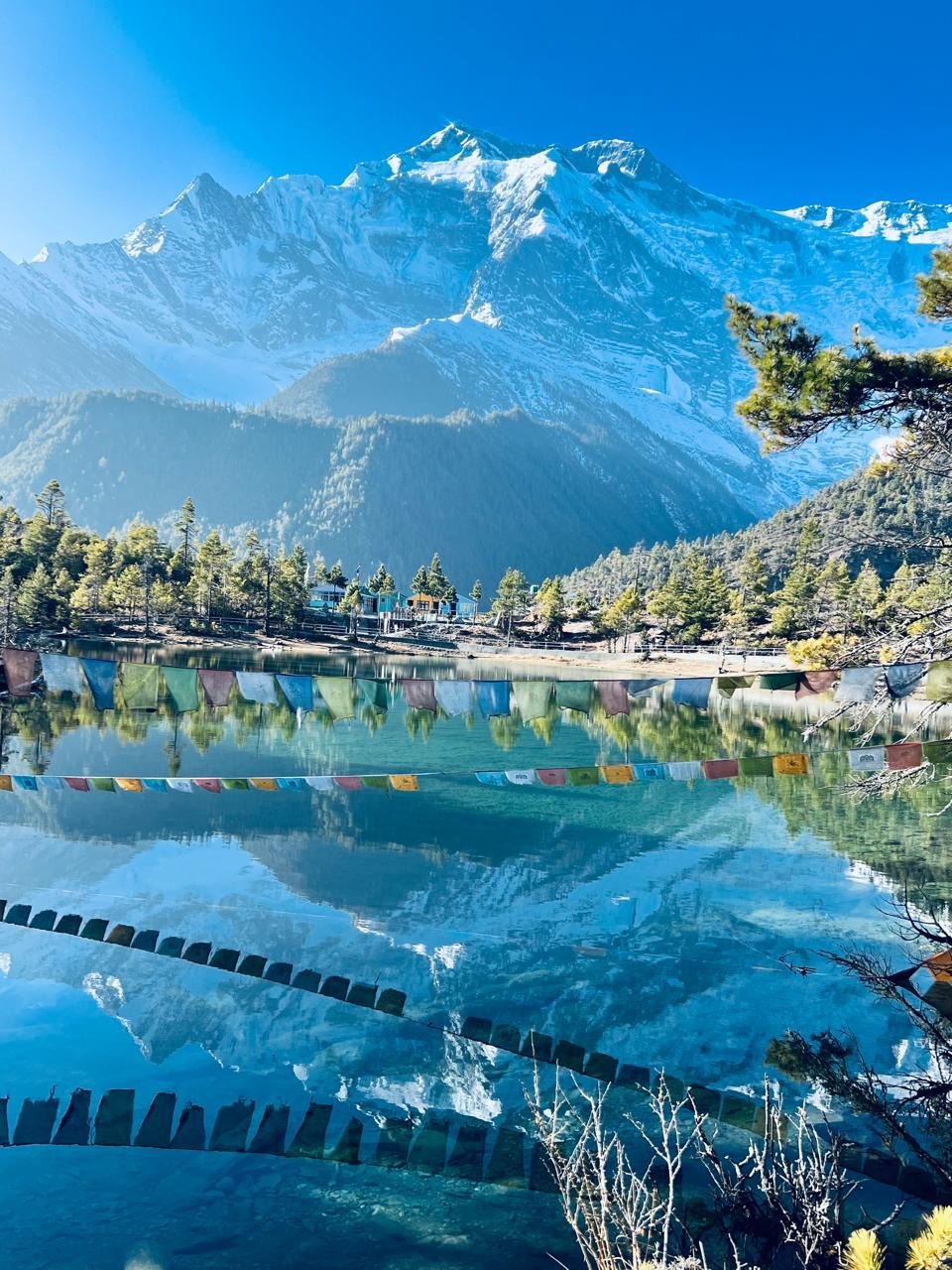
The Annapurna Circuit trek does not rely on one dramatic viewpoint to define it. Instead, it builds its identity through change—gradual, consistent, and grounded in the terrain itself.
Trekkers begin in warm river valleys where daily life continues much as it has for generations. Over time, the trail leads higher into quieter regions where altitude, climate, and culture begin to reshape the experience.
By the time Thorong La Pass is reached at 5,416 meters, the journey reflects far more than distance covered. It reflects a complete transition across landscapes and conditions that define trekking in Nepal.
A Trek Designed by Geography, Not by Itinerary

Unlike shorter routes that move toward a fixed destination, the Annapurna Circuit follows the natural structure of the Himalayas.
The trail begins along the Marsyangdi River, where the environment is humid and green. Fields, stone villages, and forested hills dominate the early days, creating a setting that feels accessible and familiar.
As elevation increases, this environment changes steadily. Forest gives way to open slopes, and the air becomes noticeably cooler and drier.
By the time trekkers reach Manang, the landscape reflects the rain-shadow effect of the Himalayas, where vegetation is sparse and the terrain more exposed.
This shift is not abrupt. It happens day by day, allowing the body and the experience to adjust together.
Understanding the Physical Demands of the Circuit
The Annapurna Circuit is often described as moderate to challenging, though this depends largely on pacing and preparation.
The difficulty does not come from technical terrain.

It comes from sustained effort over time. Early sections build endurance through long walking days on varied terrain, including stone steps, river crossings, and gradual ascents. These days establish the rhythm needed for higher elevations.
Beyond Manang, the challenge becomes more physiological. Reduced oxygen levels affect pace, recovery, and energy. Even short distances require steady movement and attention to hydration and rest.
Crossing Thorong La Pass is the most demanding day. The climb is long, the temperatures are low, and the margin for poor pacing becomes smaller.
With proper acclimatization and a realistic itinerary, these challenges remain manageable for prepared trekkers.
Cultural Transitions Along the Trail
One of the defining aspects of the Annapurna Circuit is how culture shifts alongside geography.
In the lower sections, villages reflect a strong Hindu influence, with farming communities and traditional lifestyles closely tied to the land.
As the trail moves higher toward Manang and beyond, Tibetan Buddhist culture becomes more visible.
Monasteries, prayer wheels, and mani walls appear more frequently. Architecture changes, and daily life reflects the harsher environment of higher altitudes.
These transitions are not presented as attractions. They are part of the living environment, experienced naturally as the trek progresses.
The Role of Acclimatization and Decision-Making

A successful Annapurna Circuit trek depends on how well trekkers adapt to altitude.
The acclimatization day in Manang is a critical part of the journey. Short hikes to higher elevations, followed by descent, help the body adjust before moving toward Thorong Phedi.
Decisions made in this phase often determine how comfortably the higher sections are completed.
Experienced guides play an important role here. They monitor pace, identify early signs of altitude strain, and adjust plans when needed.
This level of awareness is not visible in an itinerary, but it directly affects the outcome of the trek.
Why Structure Matters More Than Speed
One of the most common mistakes on the Annapurna Circuit is attempting to complete the route too quickly.
While road access has shortened parts of the traditional trail, the altitude profile remains unchanged. Skipping acclimatization or compressing walking days increases physical stress and reduces overall safety.
A well-structured itinerary allows
- Gradual altitude gain
- Balanced walking hours
- Time for recovery and adaptation
Nepal Hiking Team follows this approach by maintaining realistic pacing across key sections such as Manang, Yak Kharka, and Thorong Phedi, ensuring that the crossing of Thorong La is approached with proper preparation.
Choosing the Right Support on the Trail
On a trek that spans multiple climate zones and elevation levels, consistent support becomes essential.
Local operators with long-term experience on the Annapurna Circuit understand how conditions change throughout the route. They coordinate accommodation, manage daily logistics, and adjust plans when weather or altitude requires flexibility.
Trekkers who travel with Nepal Hiking Team often highlight the consistency of guidance and the clarity of communication throughout the journey.
This support is not limited to navigation. It extends to pacing decisions, safety awareness, and overall coordination from arrival to departure.
Final Reflection
The Annapurna Circuit trek stands out because it presents the Himalayas as a complete system rather than a single destination.
Each stage introduces a new environment, a new level of effort, and a different perspective on life in the mountains.
From the river valleys of the Marsyangdi to the high crossing at Thorong La and the descent into the Kali Gandaki, the journey develops through progression, not repetition.
With the right preparation and experienced support, the trek offers a clear and grounded understanding of what long-distance trekking in Nepal truly involves.