
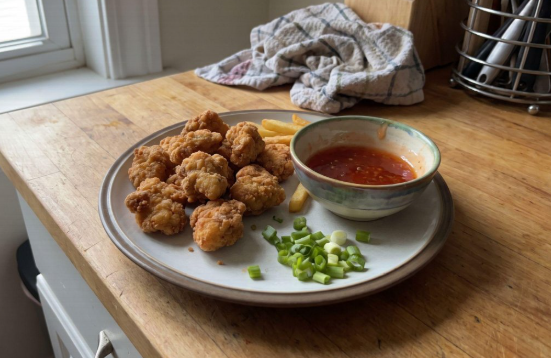
A lot of street food is remembered for the sauce or the seasoning, but texture is usually doing just as much work. The first bite of a good fried snack has that dry, crisp exterior followed by something hot and softer inside. By the time it has been sitting around for twenty minutes, half the appeal is gone.
Deep frying is the obvious way to get there, but it is not always something you want to do at home. It uses a lot of oil, the kitchen smells like frying afterward, and cleaning splatter from the stove is less appealing than eating the food.
For many dishes, though, you can get surprisingly close without filling a pot with oil. The trick is to pay attention to how the surface is prepared and how moisture escapes during cooking.
What Actually Makes Street Food Crispy
One of the easiest things to get wrong is putting wet food straight into a coating.
Chicken fresh from a marinade, tofu that has not been pressed properly, or vegetables with water clinging to the surface all have the same problem: that moisture has to go somewhere. Instead of browning immediately, the outside starts steaming.
Drying the ingredient first gives flour, starch, or crumbs a much better chance of forming a crust.
The coating itself does not need to be heavy. In fact, some of the best results come from fairly thin layers. Flour gives a familiar fried coating, cornstarch produces something lighter and more brittle, and panko is useful when you want larger crunchy edges rather than a smooth shell.
A little fat still helps. Oven-baked or air-cooked breading with no oil at all can come out dry and dusty-looking rather than fried-looking. A light spray or brush is often enough.
Then there is space. Put ten pieces of chicken shoulder to shoulder on a tray and the moisture coming off them has nowhere to escape quickly. Cook six with gaps between them and the result can be completely different.
This is one of those occasions where two batches are less annoying than one bad batch.
Using an Air Fryer Without Making Everything an Air Fryer Recipe
An air fryer happens to work well for this kind of cooking because it moves hot air aggressively around a fairly small space. For breaded chicken, potatoes, tofu, shrimp, and similar foods, that can dry and brown the exterior faster than a conventional oven.
But the basket still has limits.
A pile of fries does not suddenly become evenly crisp because a fan is blowing over it. Smaller pieces need shaking, larger pieces may need turning, and heavily packed food tends to develop soft sides wherever the pieces are touching.
Ingredient size matters too. Small chicken bites behave differently from whole chicken thighs, and thin zucchini rounds obviously do not need the same treatment as thick potato wedges. Looking through recipes for different ingredients on simpleairfryer.com can also help you compare how basket space, coating, size, and temperature change from one food to another.
For foods with a dry coating, a small amount of oil on the surface usually gives better color. I would rather add a little oil and get a properly browned crust than avoid it completely and end up with breadcrumbs that still look pale when the center is cooked.
The Street Foods That Adapt Best
Not every fried snack makes sense without a deep fryer, but quite a few do.
Small pieces of chicken are among the easiest. Korean-style chicken bites, for example, do not need a thick coating to work. A light starch layer gives plenty of crisp surface area, and the pieces are small enough to cook before the outside gets too dark. The sauce goes on afterward.
Spring rolls are another good candidate. The wrapper is already thin and dry, so the main job is getting it hot enough to blister and crisp without drying out the filling.
Potatoes need a little more patience. Whether you are making wedges or thinner fries, drying them well before cooking matters. If they are still wet after rinsing, they tend to go soft before they brown. Trying to cook a huge pile at once only makes that worse.
Tofu works for similar reasons. Press out as much moisture as practical, cut it into pieces with plenty of exposed surface, and dust it lightly with starch. It will not become identical to deep-fried tofu, but the edges can get crisp enough to hold up well under a sauce.
Breaded shrimp and vegetables can work too, especially with panko. The main advantage is speed: the coating can brown before the inside needs much cooking.
I would stop there rather than trying to turn every street-food favorite into a dry-heat version. Some dishes simply belong in oil.
Do Not Sauce the Food Too Early
This is probably the easiest way to ruin an otherwise good crust.
If crispy chicken comes out properly browned and is immediately buried in a wet sauce for ten minutes before serving, it will not stay crispy.
Gochujang sauces, sweet chili, honey garlic, garlic soy, and buffalo sauce are all better added after the food has finished cooking. Toss quickly and serve, or drizzle the sauce over the top if you want more of the crust to stay exposed.
For a sticky chicken dish, I would usually rather have slightly less sauce and a better texture than completely coat every millimeter of breading.
Fresh garnishes go on after that. Scallions, sesame seeds, herbs, chopped peanuts, pickled vegetables — those small things do a lot of the work when you are trying to make home-cooked food feel closer to something served from a stall or market counter.
Some Street Food Should Still Be Fried
Tempura is the obvious example.
A loose tempura batter is supposed to hit hot oil and set almost immediately. Put the same batter into an air fryer basket and you are likely to lose part of it through the basket before anything useful happens.
The same issue comes up with very wet batters, some fritters, battered fish, and dough-based snacks where immersion in hot oil is part of what creates the structure.
And then there are foods that should not be part of this conversation at all. Wok noodles need contact with a very hot pan, not circulating hot air. Fried rice depends on a completely different style of cooking. Trying to force those dishes into an air fryer because the original came from a street-food stall misses the point.
Sometimes a skillet with a shallow layer of oil is the better compromise. You still avoid using a full pot of oil, but you get direct contact with hot fat where it actually helps.
Recreating Something You Remember From a Trip
When trying to copy a street-food dish at home, the long ingredient list is not always the best place to start.
Think about the part you actually remember.
Was the chicken covered in a thick breadcrumb shell, or was there just a very thin crisp coating? Was the sauce sticky enough to cling to every piece, or was it more like a drizzle? Did the dish have something fresh and sharp on top that cut through the fried food?
Those details usually get you closer than obsessing over whether the original recipe contained six or seven spices.
Take something simple like crispy chicken with a spicy sauce, scallions, and sesame. You already know most of the structure of the dish. The chicken needs a crust that will survive a quick toss in sauce. The sauce should go on near serving time. The scallions and sesame do not need to see any heat at all.
The exact seasoning can take a few attempts.
That is normal. Street vendors are often making the same dish hundreds of times, on equipment that behaves very differently from a home oven or countertop appliance. Recreating the general texture and balance is a more realistic target than producing an exact copy on the first try.
A Better Way to Think About Crispy Food at Home
The biggest difference between good and disappointing results usually happens before the food reaches the plate.
Dry wet ingredients properly. Pick a coating that makes sense for the texture you want. Give the pieces enough room while they cook. Use a little oil where it helps rather than treating oil as something that has to disappear completely.
And once the food is crisp, do not leave it sitting around.
Street food is at its best when it has just come off the heat. That part is easy to reproduce at home, whatever cooking method you use.