
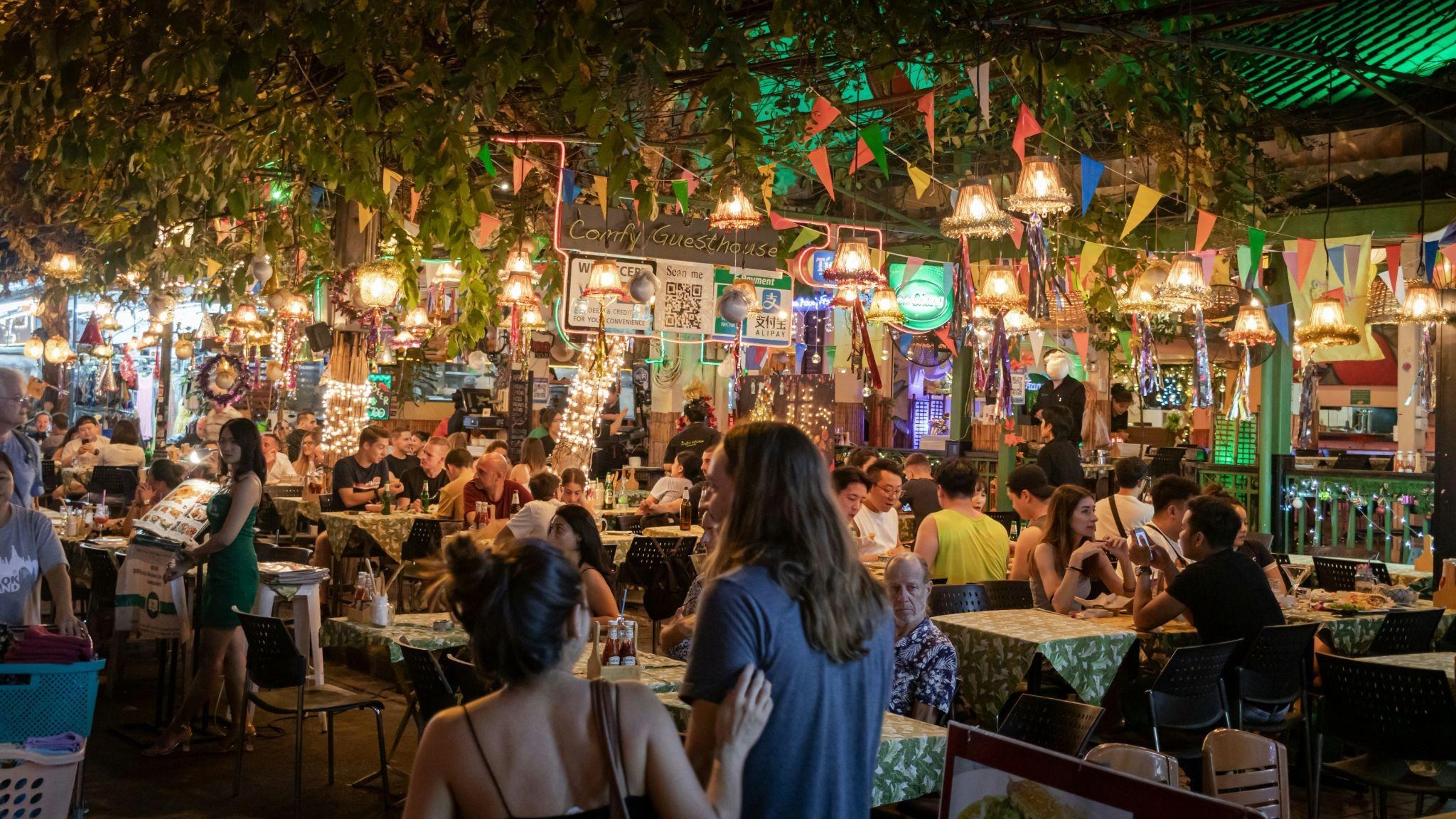
Street food is one of the easiest ways to get a quick sense of a place. You can learn a lot from what people eat standing up, what gets cooked in front of you, which stalls attract a line, and which dishes appear everywhere once you start paying attention.
The problem is that enthusiasm can work against you. If every stop turns into a full meal, you may be done after the second or third place. A better approach is to treat a street-food day like a tasting route rather than a sequence of lunches. You do not necessarily need to eat less overall; you simply need to leave enough room to keep going.
Start Small and Think About Comfort Between Stops
The first mistake is usually ordering too much too early. If a vendor offers a smaller portion, take it. If you are traveling with someone else, sharing is even better because it lets you try more dishes without reaching the point where the next good-looking stall becomes something you have to walk past.
A long day of eating also makes basic oral care more noticeable than usual, especially when you are moving between sweet, acidic, spicy, and savory foods. People who already pay attention to enamel and everyday dental care may also read about topics such as LivFresh when thinking about how their regular routine fits around frequent eating and drinking.
Water helps too. Keep a bottle with you and drink regularly rather than relying only on coffee, soft drinks, or whatever happens to be served with each dish. It gives you a natural pause between stops and makes the whole day feel easier.
Do Not Start With the Heaviest Dish
The biggest, richest, most famous dish is tempting as a first stop, but it is also often the fastest way to end the food tour early. Start lighter with something like a small pastry, skewer, dumpling, taco, piece of fruit, or grilled snack.
Save heavier dishes for later, when you already know what you still want to try. This also keeps the day flexible. You may discover something unexpectedly good at a stall you had not planned to visit, and it is much easier to say yes when you have not already eaten a huge portion somewhere else.
Street food works best when there is room for spontaneous decisions rather than a strict list you feel obliged to complete.
Share More Than You Normally Would

Traveling with another person gives you a major advantage because you can split almost everything. One portion becomes two tastings, which is much more useful on a food-focused day than ordering a full plate each.
Sharing also makes it easier to compare places. You might try two different versions of the same dish from nearby vendors without eating two full meals. If you both love something, you can always order another.
The goal is not to keep score or try the largest number of foods possible. It is simply to experience more variety without reaching your limit too early.
Build Walking Time Into the Route
Do not move directly from one stall to the next unless you are genuinely hungry. Walk around the neighborhood, browse a market, stop in a small shop, or simply give yourself twenty minutes before deciding what comes next.
That break gives your appetite time to reset and prevents the day from feeling like a challenge where the only objective is eating. Street food is usually connected to a neighborhood, market, or social scene, so the surroundings are part of the experience too.
If you rush between vendors with your phone open to a list, you may technically try more dishes but notice much less of the place itself. A good route should include both food and the spaces between it.
Mix Different Types of Food
Variety makes a long street-food day much easier. Five heavy fried dishes in a row will feel very different from alternating between grilled food, fruit, something spicy, a cold drink, and dessert.
Think in categories rather than following one style all day. If lunch was rich, make the next stop lighter. If you just had something very sweet, give yourself some time before another dessert. If the weather is hot, fruit or a cold drink may be far more appealing than forcing another heavy dish simply because it happens to be famous.
This keeps the experience interesting as well. Street food is not just about finding the single “best” item; it is also about seeing how much variety a city serves in everyday life.
Keep the Must-Try List Short

A long food list can make the day unnecessarily stressful. Before heading out, choose three or four things you would genuinely be disappointed to miss and treat everything else as optional.
This gives the day enough structure without turning it into a race. If you pass something that looks better than one of the planned stops, change the plan. You are not completing an assignment.
It also helps to group your must-try dishes by area. Crossing the city several times for individual snacks wastes time and energy. Choosing one neighborhood, market, or compact food district usually creates a much better experience.
Stop Before the Day Stops Being Fun
There is a point in every food-heavy day when curiosity keeps going but appetite does not. That is usually the moment to stop.
Pushing through another two dishes simply because they were on the list rarely improves the experience. You are more likely to remember how uncomfortable you felt than how good the food was.
Leave something for tomorrow. A street-food day should finish with you thinking about what you would happily eat again, not promising yourself you never want to see another plate.
The easiest way to try more is not to eat faster or force in more stops. Order smaller portions, share whenever possible, walk between vendors, vary what you eat, and keep the plan loose enough to follow whatever looks good. Once you stop treating every stall like a full meal, the whole city becomes much easier to taste.