
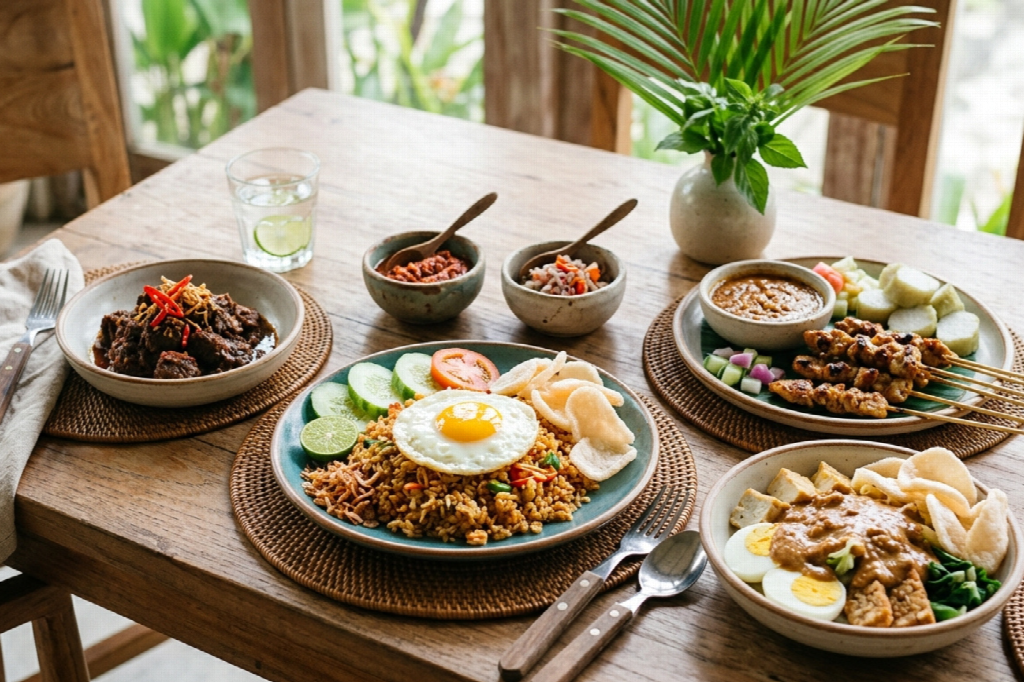
Plenty of people eat badly their first few days in Indonesia. Not because the food is bad. Because they walk past the carts, decide they’ll try one later, and end up in a hotel restaurant paying five times as much for the same plate, which usually never happens.
The thing is, the food here runs across a much wider range than most visitors realise. There’s the cart on the corner doing one dish for a couple of dollars. There’s the family-run place with plastic chairs. There’s the Padang restaurant with twenty bowls on the table. And there’s proper fine dining doing regional recipes with serious technique. This article will cover what to eat at each level, what it costs, how to pick a good spot, and how to fit it into a day without much effort.
How People Actually Eat Here?
Most guides get this backwards. Roadside food here isn’t some brave thing you try once for the story. It’s what most of the country eats, most days. The carts aren’t a tourist attraction. They’re the food supply.
So the question isn’t whether to risk it. It’s which one to pick. And locals answer that the same way every day: go where it’s busy, go where they cook it in front of you, go where people who live there are eating. Same rule works at every price level, as it turns out.
Three Tiers of Indonesian Cuisine
There are more setups than you’d think. Knowing the difference helps when you’re deciding where to sit. The gap between them isn’t really about quality either, it’s about comfort and how much you feel like spending that day. Plenty of locals eat across all three in the same week without thinking twice about it. Once you can tell them apart, picking somewhere stops being a decision and starts being a mood.
Cart, Warung or Restaurant?
The three main setups are easy enough to tell apart once you know what you’re looking at:
- Kaki lima, the classic cart, pushed by hand or bolted to a motorbike. Usually sells one dish and nothing else. Cheapest option going. No tables, so you eat standing up or take it away.
- Warung, a small permanent stall or shop, normally family-run, with a few plastic tables out front. Slightly pricier than a cart, still cooked to order. Lots of them do nasi campur, where you just point at what you want in the glass case.
- Restaurant, everything above that, and it’s a wide category here. At the bottom it’s a rumah makan, basically a bigger warung with a proper kitchen. At the top it’s a tasting menu with a wine list.
The price gap between the bottom and the top of that last one is enormous, and both ends are worth doing. For most first-timers though, warungs are the sweet spot for everyday meals. Cart prices, somewhere to sit, food that’s still made properly.
The Food You Shouldn’t Skip
These turn up in pretty much every town. None of them are that spicy as they come, since the chilli’s always on the side.
Nasi Goreng
Fried rice. Usually the first thing people try. Sweet soy sauce, garlic, shallots, fried egg on top, prawn crackers and cucumber on the side. That sweet-savoury thing is what makes it different from fried rice anywhere else in Asia. Cheap, filling, and you can get it at basically any hour.
Mie Goreng
Same idea with noodles instead of rice. Egg noodles, cabbage, spring onion, and chicken or prawn or just egg. Bit sweeter than nasi goreng most of the time. Easy order if you’re not sure about spice.
Satay
Grilled meat on skewers with sauce on the side. Best-smelling thing on any street here. Chicken with peanut sauce is standard, but you’ll find pork, goat and beef too depending where you are. It gets marinated before grilling, so it comes out sweet and smoky. Usually ten skewers with rice cakes.
Bakso
Meatball soup. Proper comfort food. Bouncy beef or chicken meatballs, clear broth, noodles, greens, fried shallots on top. Mild and warming, so it’s an easy first go at eating from a cart. Chilli, sweet soy and vinegar are on the table and you add your own.
Gado-Gado
A veg salad that eats like a full meal. Blanched veg, boiled egg, tofu, tempeh, thick peanut sauce over the lot. Sometimes potato or rice cake in there too. Best bet if you’re vegetarian, though ask about shrimp paste in the sauce, some places use it.
Soto
A soup with more versions than anyone can keep track of. Soto ayam is the common one. Yellow turmeric chicken broth, rice or noodles, fried shallots, squeeze of lime. Light enough that a lot of people have it for breakfast, which is when it’s freshest.
Don’t Skip the Sweet Stuff
The sweet side runs on its own schedule here, with different vendors and mostly later in the day. Nobody’s selling martabak at breakfast. Worth saving room for, because a few of these are as good as anything on the savoury list.
Martabak Manis
A thick sweet pancake cooked in a heavy pan, then folded over butter, condensed milk and whatever you pick. Chocolate sprinkles, peanuts, cheese, Nutella. It comes out massive and boxed up, so people share it. The savoury one, martabak telur, is a thin fried pastry with egg, mince and spring onion. Worth a go on its own.
Pisang Goreng
Fried banana. Sold all day from little stalls. Light batter, and the banana goes soft and jammy inside. Some places add cheese, chocolate or palm sugar on top. Cheap, hot, hard to get wrong.
Es Cendol and Es Campur
Iced desserts in a cup. Cendol is green rice-flour jellies with coconut milk and palm sugar syrup. Sounds odd, tastes great. Es campur is a bit of everything: shaved ice, fruit, jelly, condensed milk, syrup. Both are exactly what you want mid-afternoon.
Kopi and Es Teh
Coffee is strong and sweet, with the grounds sitting at the bottom of the glass. Iced tea, es teh manis, comes sweet too unless you say otherwise. Worth knowing before the first sip.
What Makes Indonesian Cuisine Different
Ask someone to describe Indonesian food and they’ll usually say “spicy” and stop there. That’s not really it.
Why does it taste unlike anywhere else?
Fresh spices, mostly. Everything starts with bumbu, a paste of shallots, garlic, chilli, turmeric, ginger and lemongrass, ground that morning and fried off before anything else hits the pan. No jars, no powders. Rendang shows what that does, beef simmered in coconut milk and spice until it’s dark and almost dry, and it tops global food polls most years. That’s a big part of why Indonesia turns up in nearly every conversation about the best cuisines in the world. The rest is patience, since the good dishes cook down for hours until the flavour concentrates.
The other thing is that “Indonesian cuisine” isn’t really one cuisine. Seventeen thousand islands, hundreds of ethnic groups, and the food shifts every few hundred kilometres. Sumatra runs rich and heavily spiced, Java leans sweet, Bali does ceremonial roasts, Sulawesi does grilled fish. The serving style is its own thing too that nasi campur means a bit of everything on one plate, and Padang places go further by bringing out a dozen small bowls unasked, where you only pay for what you touch.
Which Level Is Worth the Money
There’s no single answer, and anyone telling you to eat only street food or only at proper restaurants is missing the point. For everyday meals, carts and warungs win easily. Fresh, a couple of dollars, and better than most hotel restaurants. This is where the bulk of a trip should happen. For a proper sit-down with a few people, rumah makan and Padang places are the sweet spot, still cheap by any Western measure but with hours of work in the dishes. Gulai, dendeng, ayam pop, and in Bali the slow-roasted ayam betutu. It feels like an occasion without costing like one.
For actually celebrating something, fine dining is worth doing once or twice. Jakarta and Bali both have a serious scene now, and the good places aren’t doing European food with a local garnish, they’re cooking regional recipes from islands most visitors never reach. A tasting menu that’d cost a fortune in Europe runs a fraction of that here, though wine is the exception since import duty makes it painful. The one thing not worth it at any level is the generic hotel buffet: resort prices, food no better than a warung, none of the character of either end.
Where You Stay Decides What You Eat
Every area in Bali has its own food ecosystem, and you’re mostly stuck with whichever one you booked into. Nusa Dua and the big resort strips are the clearest example: gated, spread out, nothing walkable, so every meal becomes a hotel meal or a drive. Ubud leans vegetarian cafes and health food with proper Balinese places mixed in. Canggu is brunch, smoothie bowls and expat kitchens, with fewer carts than you’d expect. Kuta is cheap and late. None of that is a problem until you’ve booked somewhere with one kind of food and wanted another all week.
Seminyak works because it has all three tiers within a few streets. Staying at a strategically located villa in Seminyak, Bali usually puts a food court, a night market, everyday warungs and a few proper restaurants inside a short walk, so lunch can come from a cart and dinner from somewhere nicer without planning the day around transport. That counts for more here than most places, since evening traffic in the south is a lottery and a ten-minute drive can take forty. It also gets you the Balinese dishes most visitors miss, like sate lilit, nasi campur Bali and babi guling, which turn up at local spots far more than on tourist menus.
What to Do Between Meals
Eating here runs early and late with a big hole in the middle. Locals have soto, bubur ayam and coffee first thing, and those sell out rather than sit around. Then the carts thin out, midday gets too hot to be walking anywhere, and nothing much happens again until five or six when the streets wake up and the night markets get going. That gap is longer than most visitors expect, and filling it badly with a heavy sit-down lunch is how people end up not hungry when the good food finally appears.
Bali is well set up for this, being about as tourism-focused as Indonesia gets. There’s a temple or a gallery, a cooking class, a surf lesson, or just an hour in the pool. People who’ve been before tend to book something indoors rather than fight the sun, and a nice and rejuvenating Seminyak massage fits the slot about perfectly. Runs an hour or two, keeps you out of the worst heat, and costs a fraction of what you’d pay at home. Best part is it leaves your appetite alone, so you turn up at the evening carts actually wanting to eat.
Should You Consider Takeaway?
Often, yeah. Nearly everything gets packed up as standard, usually in paper or a plastic tub, and vendors are used to it. Satay travels well. So does martabak, which is easier to eat sitting down anyway. One catch: fried stuff goes soft in about fifteen minutes, so eat anything battered where you bought it.
Frequently Asked Questions
What is the most common dish in Indonesian cuisine?
Nasi goreng, with mie goreng and satay not far behind. You’ll find all three almost everywhere. Rendang is the one that gets the international attention.
Is Indonesian cuisine very spicy?
Not as it comes. Most dishes are mild and the chilli sauce is on the side, so you decide. Padang food is the exception, that one runs hotter by default.
Can vegetarians eat well in Indonesia?
Yes, with a bit of care. Gado-gado, tofu and tempeh are everywhere. Just ask about shrimp paste and chicken stock, they show up in a lot of sauces and broths.
Is it safe to eat street food in Bali?
Generally, as long as the place is busy and they cook it in front of you. Most dodgy stomachs come from pre-cooked food sitting out, not from the carts themselves.
How much should a meal cost?
Around Rp 15,000 to 30,000 from a local cart in 2026. Rp 40,000 to 80,000 at a rumah makan. Fine dining starts somewhere around Rp 600,000 a head and climbs from there. Tourist streets cost more at every level.
Is fine dining here worth doing?
For a night or two, yes, especially the places cooking regional Indonesian rather than imported European. Skip the hotel buffets, they’re the worst value in the country.
All in All
Indonesian cuisine doesn’t need much knowledge, just a bit of nerve and a willingness to move between price levels. The carts are where the country actually eats. The Padang places are where the cooking gets serious. And the fine dining, done right, shows you regional food you’d never find otherwise. Stay somewhere the food’s close, eat when the carts are out, spend properly once or twice, and the rest takes care of itself.