
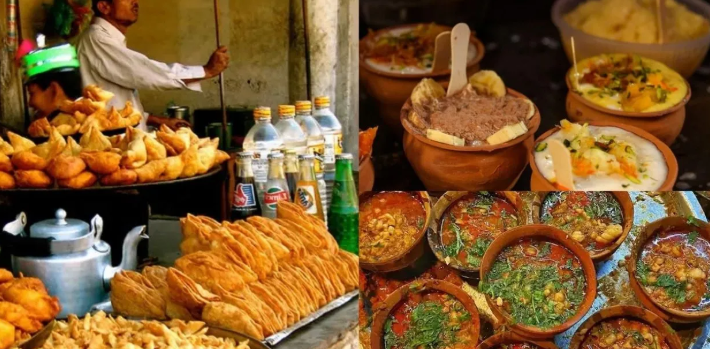
Varanasi does not ease you into eating. It starts early, runs hot, leans sweet, and has very little interest in whether you planned to have a second breakfast. The city is famous for temples and the Ganges, but food is one of the quickest ways to understand how Banaras actually works: breakfast in a lane that has already been awake for hours, chaat in the late afternoon, sweets taken seriously, and paan treated less like a novelty than a punctuation mark.
The mistake is trying to eat everything in one heroic session. Varanasi is much better when you treat its food scene as a series of small stops spread through the day. Some dishes belong to the morning, others make more sense after sunset, and a few depend heavily on the season. If you arrive hungry but not reckless, the city rewards you.
Start in the morning: kachori-sabzi
A classic Banaras morning often begins with kachori-sabzi. The kachori is crisp and rich, while the accompanying potato or vegetable preparation is spiced enough to wake you up properly. This is not a delicate brunch plate. It is functional, satisfying street food designed for a city that gets moving before many visitors have finished their first coffee.
The best way to try it is at a busy, established shop with constant turnover. Freshness matters more than chasing the single most famous name on social media. Order a small portion first. Varanasi has a habit of putting another interesting thing in front of you five minutes later.
Tamatar chaat is where Varanasi gets distinctive
If you already know the colder, crunchy chaat styles of Delhi or Mumbai, Varanasi’s tamatar chaat feels like a different branch of the family. It is warm, soft, tangy, spiced and built around cooked tomato rather than simply using tomato as a garnish. The result is messy in the right way: sweet, sour, savoury and hot all at once.
This is a good example of why Indian street food should never be treated as one national menu. Travel a few hundred kilometres and the same idea can become a completely different dish. Varanasi has its own logic, and tamatar chaat is one of the most accessible ways to taste it.
Lassi, rabri and the city’s serious sweet tooth
Varanasi takes dairy-based sweets and drinks seriously. A thick lassi can be almost a meal by itself, especially when topped generously. Rabri and other milk-based sweets appear across the old city, and the temptation to stack them on top of a heavy breakfast is real.
The smarter move is to space things out. Have one sweet stop, walk for a while, then decide whether you actually want another. The point is to taste the city, not to spend the afternoon recovering from it.
Winter brings malaiyo
One of the most memorable seasonal foods in Banaras is malaiyo, a light, aerated milk preparation associated with the cooler months. It looks almost impossibly delicate compared with the dense sweets around it. Because it is seasonal, it should be treated as a bonus rather than something guaranteed on every trip.
That seasonality is part of what makes a real food city interesting. The best travel eating is not always available 365 days a year, and that is fine. It gives you a reason to come back.
Banarasi paan: finish, do not begin
Banarasi paan is inseparable from the popular image of the city, but it makes more sense at the end of a meal or food walk than as your opening move. Paan can contain a wide range of ingredients, so first-time visitors are better off asking for a mild, non-tobacco version and understanding what is being added.
Treat it as part of the ritual of eating in Banaras rather than a dare. Like most good local habits, it becomes more interesting once someone explains the context.
Where the food fits into the city
The old city is the obvious place to eat, but the food makes more sense when you connect it with the neighbourhoods around it. A walk through Kachori Gali, market lanes and the river-facing parts of the city lets you see commerce, ritual and food operating side by side. For a more locally grounded list of dishes and sensible pacing, Tour Varanasi’s local food guide is a useful reference because it treats food as part of a wider visit rather than as a competitive eating challenge.
What time should you eat?
Timing matters. Breakfast dishes are best when the morning trade is active. Chaat naturally fits the late afternoon and evening. Sweets can appear throughout the day, while seasonal specialties depend on weather and availability. This is why a rigid list of ten compulsory stops is usually a bad idea.
A better food day might look like this: kachori-sabzi in the morning, a normal lunch and break, then two or three small tastings during an old-city walk in the evening. Add lassi or a sweet only if you still want it. You will remember the food more clearly when every dish is not fighting for space.
How to eat street food without ruining tomorrow
Street food always involves judgement. Choose stalls that are busy, where food is being cooked fresh and served hot. High turnover is your friend. Be more cautious with raw garnishes, standing water, ice and anything that has been sitting around in the heat.
Visitors with sensitive stomachs should be particularly conservative on the evening before a sunrise programme. Varanasi mornings can start very early, and there is no glory in missing the Ganges because you decided to sample nine rich snacks at 10 p.m. Bottled or safely filtered water is the easy choice.
Food allergies require more caution than ordinary preferences. Traditional small shops may not be able to control cross-contact to the standard of a specialist restaurant. If an allergy is serious, explain it clearly and do not assume that ‘no nuts’ or ‘no dairy’ can always be guaranteed.
Vegetarians have it easy; vegans need more planning
Varanasi is unusually friendly to vegetarian travellers because so many classic local snacks and meals are vegetarian by default. Vegan travellers can still eat well, but dairy, ghee, curd and milk-based sweets appear frequently, so questions matter.
This is one of those cities where dietary restrictions do not have to reduce the experience — they simply change which stalls and dishes make sense.
The real rule: follow appetite, not a checklist
Varanasi’s food culture works because it is part of everyday life. People are not staging kachori breakfast for visitors or inventing paan for Instagram. These things belong to the city’s rhythm.
So skip the idea that a food trip is successful only if you tick off every famous dish. Eat one good breakfast, one distinctive chaat, one sweet thing, and something you had never heard of before you arrived. Walk between stops. Ask questions. Watch what local customers are ordering.
That is usually enough. In Banaras, the best food day leaves you wanting one more thing tomorrow.
Optional image suggestions for the editor
- Fresh kachori-sabzi being served in a busy morning shop.
- A close-up of tamatar chaat in Varanasi.
- Lassi or rabri in a traditional old-city setting.
- Seasonal malaiyo (winter only), if an authentic image is available.
- A wide old-city food-lane image showing context rather than only plates.