
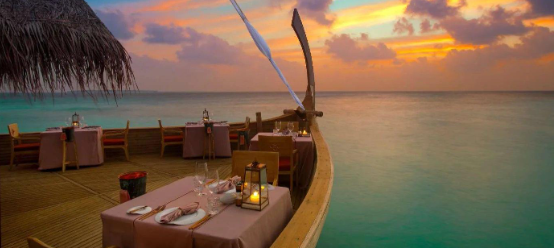
Most people fly to the Maldives, take a seaplane to a resort and eat sushi, pizza and a Thai green curry for a week. Nothing wrong with that. But it means millions of visitors leave without tasting a single Maldivian dish, and the food here is worth the effort.
I live in Malé, and this is what we actually eat, where to find it on the street, and how the best luxury resorts now serve the same dishes on a dhoni deck, a sandbank or your own villa terrace.
Mas huni: the national breakfast
If you eat one Maldivian thing, make it mas huni. It’s smoked, dried tuna shredded fine, then mixed by hand with grated coconut, chopped onion, chilli, lime and salt. You scoop it up with roshi, a thin flatbread cooked dry on a griddle, and wash it down with sweet black tea.
That’s it. Tuna, coconut, chilli. Those three things are the whole Maldivian larder, and you’ll find them in almost everything below. At a local café in Malé a plate costs a couple of dollars. At a resort, if they make it at all, expect to pay three or four times that.
Verdict: better than any hotel omelette station, and it keeps you full until lunch.
Garudhiya: fish soup that runs the country
Garudhiya is a clear broth of skipjack tuna simmered with onion, curry leaves and chilli. You pour it over rice and add lime and more chilli to taste. It looks plain. It isn’t. Boil it down far enough and you get rihaakuru, a thick, dark tuna paste Maldivians spread on roshi or stir into rice the way other countries use soy sauce or Marmite.
Rihaakuru is an acquired taste. I’ve watched visitors try it and pull the face. Try it anyway.
Hedhikaa: 4 pm is the best meal of the day
The real street food of the Maldives happens in the late afternoon at the hotaa, the small teashops you’ll find on every island. Around 4 pm people stop for sai (tea) and a plate of hedhikaa, which locals call short eats. You point at what you want from the glass case and pay a few rufiyaa a piece.
What to order:
- Gulha: little dough balls stuffed with tuna, coconut, onion and chilli, then fried. The one to start with.
- Bajiya: the Maldivian take on a samosa, with a tuna filling.
- Masroshi: roshi wrapped around tuna and coconut, then baked.
- Kulhi boakibaa: a spicy baked fish cake, cut into squares.
- Keemiya: fried rolls of tuna and pea, a bit like a spring roll.
The teashops are loud, cheap and full of people arguing about football. There’s no alcohol: it isn’t sold anywhere outside the resorts. Tea it is.
Verdict: the best-value eating in the country, and the only place you’ll see how Maldivians actually spend an afternoon.
Where to eat it in Malé
Start at the waterfront fish market in the afternoon, when the boats come in and whole yellowfin and skipjack tuna are cut up on the tiled floor. Next door, the local market sells smoked tuna, chillies, breadfruit and bottles of homemade chilli paste. Then walk into the back streets and pick any teashop that’s busy. Busy means fresh.
If you have a long layover, Malé is a 10-minute ferry ride from the airport island, and a teashop afternoon fits easily between flights. On local islands like Maafushi or Dhigurah, the guesthouse will usually point you to the best hotaa in five minutes.
Mas riha and the sweet stuff
Dinner at home is often mas riha, a tuna curry with onion, garlic, ginger and curry leaves, made rich with coconut milk and eaten with rice and roshi. For something sweet, look for bondibai, a coconut-milk rice pudding made for Eid and family celebrations, and dhonkeyo kajuru, little fried banana cakes.
Maldivian food, luxury style
For years the answer to “can you eat Maldivian food at a resort?” was mostly no. Buffets are international, because that’s what most guests ask for, and local food appeared once a week at a Maldivian night, often on a Friday, sometimes with boduberu drumming.
That’s changing at the top end, and it’s the most interesting thing happening in Maldivian food right now.
Dinner on a dhoni. In April 2026, Milaidhoo Maldives in Baa Atoll relaunched its overwater restaurant, Ba’theli by the Reef, as family-style Maldivian dining, served aboard three traditional dhonis moored in the lagoon. The star dish is Fihunu Bodu Ihi, grilled Maldivian lobster with a curry made from the resort’s own garden. Dessert is Dhivehi Raha, little traditional sweets with screw pine ice cream. Dishes arrive to share on a malaayfaiy, the wooden platter Maldivian families use for feasts. It’s the street flavours I grew up with (tuna, coconut, chilli, curry leaves), cooked with lobster and served at sunset over the reef.
Verdict: the best argument yet that Maldivian food belongs on a luxury menu.
Mas huni on your villa deck. Luxury resorts cook to order, and most kitchens will make mas huni, roshi and garudhiya for breakfast if you ask a day ahead, because the staff eat it themselves. Ask for it as an in-villa breakfast and you get the national breakfast with a lagoon view. It costs three or four times the teashop price, and it’s worth it once.
A sandbank or a private dinner with a local menu. Most luxury resorts sell private dinners on the beach, a sandbank or a boat. The menu is usually international, but ask for a Maldivian one: mas riha, theluli mas (spicy fried reef fish), grilled tuna with rihaakuru, and bondibai to finish. A good chef will be delighted to be asked.
How to choose a resort if food matters. Resort websites rarely say how seriously a kitchen takes local cooking. Ask three questions before you book: is there a Maldivian restaurant or only a weekly theme night, will the kitchen cook Maldivian dishes on request, and is there a chef’s garden or local sourcing. If you’d rather not ask each resort yourself, HolidayVibe Maldives compares luxury resorts on things like this, and knows which kitchens will cook Maldivian on request.
The verdict
Maldivian food is simple: tuna, coconut, chilli and rice, done a hundred ways. Eat it at a Malé teashop for a few rufiyaa, then again at a luxury resort with lobster on a dhoni deck. Both will tell you more about this country than a week of resort buffets.
Eat at a teashop at least once. You’ll thank me.